



eDNA Science for Species Management, Ecosystem Health, Biodiversity Monitoring, and Habitat Restoration
Using eDNA to track biodiversity, guide restoration, and safeguard ecosystems for the future.
Environmental DNA (eDNA) is transforming how USGS and partners monitor, protect, and restore native species across North America. By detecting tiny traces of DNA that animals leave behind in water, soil, or even on flowers, scientists can track fish, mussels, pollinators, and other wildlife without needing to catch or disturb them. This powerful tool provides faster, more accurate, and less invasive ways to locate endangered species, understand community biodiversity, and measure ecosystem health. From mapping salmon and lamprey populations to safeguarding freshwater mussels, from monitoring pollinator communities to tracking fish recovery after wildfires or dam removals, eDNA gives managers the early warnings and clear data they need to guide conservation, restore habitats, and protect biodiversity for the future.
Protecting Native Fish Populations with eDNA
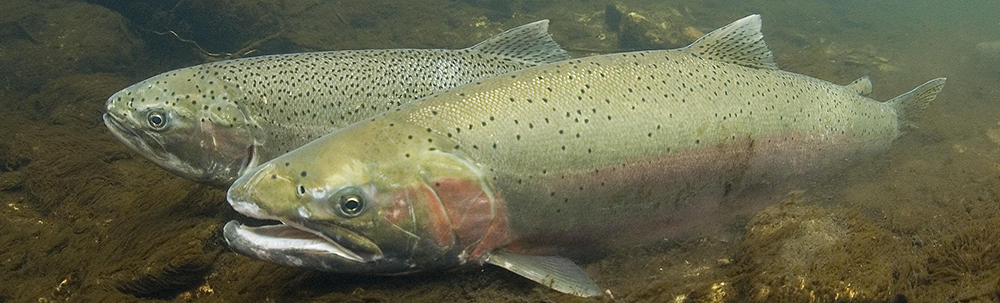
Salmon, trout, and lamprey are not only important to ecosystems, but also to cultures, communities, and economies across North America. Yet many of these species are declining, and traditional surveys to track them can be expensive, time-consuming, and disruptive. Using eDNA sampling, scientists can detect where fish are present, how abundant they might be, and even gather clues about their overall health—all from a single water sample. eDNA can do more than detect a single species — it can reveal the entire community of fish living in a river or lake, giving managers a powerful way to track biodiversity (Euclide et al., 2021). For example, EDNA has helped scientists detect a wider range of native Alaskan fish, even in remote waters and has also been used to track Pacific lamprey, a culturally important species that is difficult to monitor with traditional nets or traps (Ostberg et al., 2019)

eDNA for Detecting and Monitoring Amphibian Species
Amphibians such as wood frogs, spring peepers, and spotted salamanders are key indicators of ecosystem health, but they can be hard to monitor because many are secretive or only active during short breeding seasons. At the Chesapeake & Ohio Canal National Historical Park, USGS scientists are testing eDNA to track these species in vernal pools. By comparing eDNA water samples with traditional acoustic surveys, researchers have shown that eDNA can detect amphibians and reptiles that might otherwise be missed. This gives managers faster, clearer information about biodiversity and early signs of population decline, helping protect these fragile wetlands.

eDNA for Detecting and Monitoring of Cryptic or Secretive Species
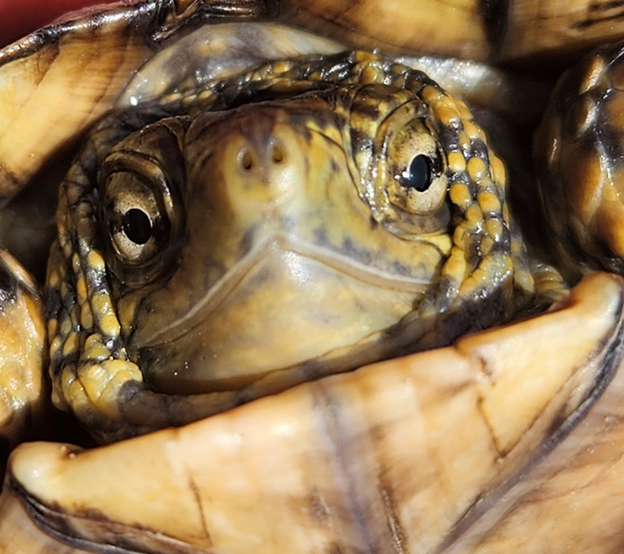
USGS scientists use eDNA to find wildlife that’s hard to see or at risk. This simple, non-invasive approach can spot rare trout by filtering larger water samples, reveal threatened amphibians, such as the eastern hellbender, in small wetlands when visual searches miss them, and even check for shy native turtles while flagging invasive bullfrogs at the same time. These studies show how eDNA gives managers quicker, gentler, and more reliable information to guide conservation decisions.
Monitoring Endangered Native Mussels
USGS scientists are using environmental DNA to help protect North America’s freshwater mussels, which are among the most endangered animals in our rivers and streams. By testing water samples for tiny bits of genetic material mussels leave behind, researchers can find species without disturbing them or their habitats. This approach has already been used to detect endangered mussels and to better understand how mussel DNA moves through rivers, making results more accurate. Freshwater mussels are important because they act as natural water filters, improve water quality, and provide habitat for other aquatic life. Healthy native mussel populations keep whole river ecosystems healthy. These advances give conservation managers more efficient, less invasive tools to locate and monitor mussel populations, guide recovery efforts, and respond quickly to threats.

Monitoring Endangered Pollinator Populations
Pollinators are vital for biodiversity and agriculture, but many are declining due to habitat loss, pesticides, and disease. USGS scientists are turning to environmental DNA (eDNA) as a game‑changing, non‑invasive way to monitor pollinator species like bees. Instead of relying solely on visual surveys or trapping, researchers collect DNA traces left behind on flowers or artificial floral surfaces to determine which pollinators visit an area. eDNA helps USGS detect rare or hard-to-find species without disturbing them, track changes in pollinator communities, and provide data to guide conservation. For example, USGS collected eDNA from flowers and hive debris to detect the endangered Rusty Patched Bumblebee. Even when surveys failed to spot the bees, eDNA confirmed their presence, giving managers a non-invasive tool to map their range, track seasonal activity, and spot early signs of population decline.

Discovering and Identifying Biodiversity: eDNA in the Deep-Sea
The deep sea is one of the least explored places on Earth, yet it holds immense biodiversity, supports global fisheries, and plays a vital role in regulating climate. Traditional sampling in these depths is expensive and difficult, but environmental DNA is opening new doors. Aboard NOAA’s Okeanos Explorer, USGS scientists collected eDNA from the surface to the seafloor to study life in offshore ecosystems that had never been surveyed before. By analyzing genetic traces drifting in the water, they can detect everything from tiny plankton to corals and fish, offering a faster and less invasive way to understand what species are present. These insights provide managers and policymakers with the knowledge needed to work on mining and energy development projects in deep-sea habitats.

eDNA for Restoration and Recovery after Environmental Disturbances or Change
Environmental DNA is helping scientists see how fish and streams respond to big changes, like wildfires, restoration projects, and dam removals. In California’s Big Sur, eDNA showed how steelhead and sculpin populations were affected by post-fire debris flows and how they began to recover (Rundio et al., 2024). eDNA is also guiding stream restoration and helping managers decide where to focus efforts (Adams et al., 2024). After large dams were removed, eDNA even tracked the return of salmon and other migratory fish to reopened rivers (Duda et al., 2021). By giving faster, clearer results, eDNA guides restoration and helps keep freshwater ecosystems healthy.
Using eDNA to track biodiversity, guide restoration, and safeguard ecosystems for the future.
Environmental DNA (eDNA) is transforming how USGS and partners monitor, protect, and restore native species across North America. By detecting tiny traces of DNA that animals leave behind in water, soil, or even on flowers, scientists can track fish, mussels, pollinators, and other wildlife without needing to catch or disturb them. This powerful tool provides faster, more accurate, and less invasive ways to locate endangered species, understand community biodiversity, and measure ecosystem health. From mapping salmon and lamprey populations to safeguarding freshwater mussels, from monitoring pollinator communities to tracking fish recovery after wildfires or dam removals, eDNA gives managers the early warnings and clear data they need to guide conservation, restore habitats, and protect biodiversity for the future.
Protecting Native Fish Populations with eDNA
Salmon, trout, and lamprey are not only important to ecosystems, but also to cultures, communities, and economies across North America. Yet many of these species are declining, and traditional surveys to track them can be expensive, time-consuming, and disruptive. Using eDNA sampling, scientists can detect where fish are present, how abundant they might be, and even gather clues about their overall health—all from a single water sample. eDNA can do more than detect a single species — it can reveal the entire community of fish living in a river or lake, giving managers a powerful way to track biodiversity (Euclide et al., 2021). For example, EDNA has helped scientists detect a wider range of native Alaskan fish, even in remote waters and has also been used to track Pacific lamprey, a culturally important species that is difficult to monitor with traditional nets or traps (Ostberg et al., 2019)
eDNA for Detecting and Monitoring Amphibian Species
Amphibians such as wood frogs, spring peepers, and spotted salamanders are key indicators of ecosystem health, but they can be hard to monitor because many are secretive or only active during short breeding seasons. At the Chesapeake & Ohio Canal National Historical Park, USGS scientists are testing eDNA to track these species in vernal pools. By comparing eDNA water samples with traditional acoustic surveys, researchers have shown that eDNA can detect amphibians and reptiles that might otherwise be missed. This gives managers faster, clearer information about biodiversity and early signs of population decline, helping protect these fragile wetlands.
eDNA for Detecting and Monitoring of Cryptic or Secretive Species
USGS scientists use eDNA to find wildlife that’s hard to see or at risk. This simple, non-invasive approach can spot rare trout by filtering larger water samples, reveal threatened amphibians, such as the eastern hellbender, in small wetlands when visual searches miss them, and even check for shy native turtles while flagging invasive bullfrogs at the same time. These studies show how eDNA gives managers quicker, gentler, and more reliable information to guide conservation decisions.
Monitoring Endangered Native Mussels
USGS scientists are using environmental DNA to help protect North America’s freshwater mussels, which are among the most endangered animals in our rivers and streams. By testing water samples for tiny bits of genetic material mussels leave behind, researchers can find species without disturbing them or their habitats. This approach has already been used to detect endangered mussels and to better understand how mussel DNA moves through rivers, making results more accurate. Freshwater mussels are important because they act as natural water filters, improve water quality, and provide habitat for other aquatic life. Healthy native mussel populations keep whole river ecosystems healthy. These advances give conservation managers more efficient, less invasive tools to locate and monitor mussel populations, guide recovery efforts, and respond quickly to threats.
Monitoring Endangered Pollinator Populations
Pollinators are vital for biodiversity and agriculture, but many are declining due to habitat loss, pesticides, and disease. USGS scientists are turning to environmental DNA (eDNA) as a game‑changing, non‑invasive way to monitor pollinator species like bees. Instead of relying solely on visual surveys or trapping, researchers collect DNA traces left behind on flowers or artificial floral surfaces to determine which pollinators visit an area. eDNA helps USGS detect rare or hard-to-find species without disturbing them, track changes in pollinator communities, and provide data to guide conservation. For example, USGS collected eDNA from flowers and hive debris to detect the endangered Rusty Patched Bumblebee. Even when surveys failed to spot the bees, eDNA confirmed their presence, giving managers a non-invasive tool to map their range, track seasonal activity, and spot early signs of population decline.
Discovering and Identifying Biodiversity: eDNA in the Deep-Sea
The deep sea is one of the least explored places on Earth, yet it holds immense biodiversity, supports global fisheries, and plays a vital role in regulating climate. Traditional sampling in these depths is expensive and difficult, but environmental DNA is opening new doors. Aboard NOAA’s Okeanos Explorer, USGS scientists collected eDNA from the surface to the seafloor to study life in offshore ecosystems that had never been surveyed before. By analyzing genetic traces drifting in the water, they can detect everything from tiny plankton to corals and fish, offering a faster and less invasive way to understand what species are present. These insights provide managers and policymakers with the knowledge needed to work on mining and energy development projects in deep-sea habitats.
eDNA for Restoration and Recovery after Environmental Disturbances or Change
Environmental DNA is helping scientists see how fish and streams respond to big changes, like wildfires, restoration projects, and dam removals. In California’s Big Sur, eDNA showed how steelhead and sculpin populations were affected by post-fire debris flows and how they began to recover (Rundio et al., 2024). eDNA is also guiding stream restoration and helping managers decide where to focus efforts (Adams et al., 2024). After large dams were removed, eDNA even tracked the return of salmon and other migratory fish to reopened rivers (Duda et al., 2021). By giving faster, clearer results, eDNA guides restoration and helps keep freshwater ecosystems healthy.