



NCASC Webinar Series: Incorporating the RAD (Resist-Accept-Direct) Framework into Resource Management Planning
Register now for the quarterly RAD webinars!
Sign up for the RAD Community Distribution List
The National CASC is hosting a quarterly webinar series on the RAD (Resist-Accept-Direct) framework, a tool that helps resource managers make informed choices for responding to change. This series focuses on examples of RAD implementation and reflects on practical applications of RAD concepts.
Webinar Series Overview
“RAD helps managers navigate a transforming world like a compass helps an explorer navigate towards a specific destination.” – John Morton, Alaska Wildlife Alliance

The RAD (Resist-Accept-Direct) Framework is a simple tool that is gaining traction within resource management communities navigating the challenges of system change. RAD helps decision makers evaluate a broader suite of potential strategies beyond traditional options commonly considered. This is especially important as decision makers may need to switch RAD strategies to balance current and future value as systems, feasibility of strategies, and desirability of objectives change.
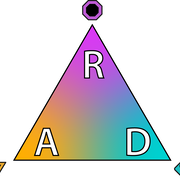
The RAD framework lays out three approaches for making management decisions for systems undergoing ecosystem transformation:
- Resist, where managers work to maintain or restore ecosystem composition, structure, processes, or function on the basis of historical or acceptable current conditions
- Accept, where managers allow ecosystem composition, structure, process, or function to change autonomously
- Direct, where managers actively shape change in ecosystem composition, structure, processes, or function toward preferred new conditions
In this webinar series, speakers explore how RAD is useful for resource managers exploring multiple approaches for addressing future uncertainty. Perspectives include Federal, state, and Tribal agencies, nongovernmental organizations, local communities, and academics. We invite anyone interested in RAD concepts or the potential of applying RAD to view the recordings in this series. We hope these sessions are of particular value to researchers and managers open to considering options beyond resisting ecosystem change and may instead consider whether accepting change or directing it along a preferred pathway might be more appropriate (RAD framework).
Join this webinar series to hear from the RAD community of practitioners on the many applications of the RAD framework!
Sign up for the RAD Community Distribution List to receive the RAD newsletter and other RAD updates from the ‘RADish’ community of practice!
Schedule
| Date and Time | Webinar Title | Presenters | Registration link |
|---|---|---|---|
| July 24, 2025 (3-4:00 PM ET) | RAD Perspectives | Gregor Schuurman (National Park Service) Aaron Shultz (Great Lakes Indian Fish & Wildlife Commission) Nicole Ward (Minnesota Department of Natural Resources) Nifer Wilkening (U.S. Fish and Wildlife Service) | View recording |
| January 22, 2026 (3-4:00 PM ET) | Social Science Perspectives on RAD | Wylie Carr (National Park Service) Amanda Cravens (USGS) Jaclyn Rushing (U.S. Forest Service) | View Recording |
| April 22, 2026 (3-4:00 PM ET | Adaptive Management & RAD | Ellie Brown (USGS) Katherine Siegel (University of Colorado Boulder) Bob Newman (University of North Dakota) Ken Williams (retired, USGS) | View Recording |
| July 23, 2026 (3-4:00 PM ET) | Structured Decision Making & RAD |
Mike Runge (USGS) | View Recording |
| October 22, 2026 (3 - 4:00 PM ET) | Scenario Planning and RAD | Brian Miller (USGS) | TBD |
Who We Are
This webinar series was hosted by the USGS National Climate Adaptation Science Center in partnership with the U.S. Fish and Wildlife Service National Conservation Training Center.
Webinar Recordings
-
Incorporating the RAD (Resist-Accept-Direct) Framework into Resource Management Planning: RAD Perspectives
In this "RAD Perspectives" webinar, RAD (Resist-Accept-Direct) practitioners from the National Park Service, Great Lakes Indian Fish & Wildlife Commission (GLIFWC), Minnesota Department of Natural Resources, and the U.S. Fish and Wildlife Service discuss what RAD is and how they use this framework to inform their management planning efforts to reach their resource management goals. It is part of...
-
-
Incorporating the RAD (Resist-Accept-Direct) Framework into Resource Management Planning: Social Science Perspectives on RAD
In this "RAD Perspectives" webinar, RAD (Resist-Accept-Direct) practitioners from the National Park Service, U.S. Forest Service, and the U.S. Geological Survey will highlight findings and implications at the forefront of RAD research. It is part of the webinar series: " Incorporating the RAD (Resist-Accept-Direct) Framework into Resource Management Planning".
-
-
Incorporating the RAD (Resist-Accept-Direct) Framework into Resource Management Planning: RAD and Adaptive Management Webinar
In this webinar, RAD (Resist-Accept-Direct) practitioners from federal and university institutions place adaptive management within the resist–accept–direct (RAD) framework to assist informed risk taking for transforming ecosystems. It is part of the webinar series: " Incorporating the RAD (Resist-Accept-Direct) Framework into Resource Management Planning".
-
-
Incorporating the RAD (Resist-Accept-Direct) Framework into Resource Management Planning: Structured Decision Making & RAD
In this webinar, Mike Runge talks about the linkages between normative methods of decision analysis (i.e., structured decision making) and the RAD framework. It is part of the webinar series: " Incorporating the RAD (Resist-Accept-Direct) Framework into Resource Management Planning".
Related

The Resist-Accept-Direct (RAD) Framework
Related