



A Review of Sediment Transport Across a Natural Tidal Salt Marsh in Northern San Francisco Bay
Tidal salt marshes—vital ecosystems that protect coastlines, remove excess nutrients and pollutants from coastal waters, and provide habitat for fish and wildlife—depend on a steady supply of inorganic sediment to keep pace with rising sea levels. But how, exactly, does this sediment get to the marsh? And what factors influence this process?
A new monograph tackles these questions head-on, distilling years of scientific research at China Camp State Park in Marin County, California, into a clear, decision-relevant summary. The synthesis is the product of a collaborative process involving resource managers, restoration practitioners, and scientists convened through a National Estuarine Research Reserve Science Collaborative project. The site, located on San Pablo Bay in the San Francisco Estuary, is one of the last remaining salt marshes in the region that has remained largely untouched by human development.
The findings, drawn from a range of field studies, tell a complex and variable story of sediment movement. One major takeaway: shallow areas of the bay serve as an important—though inconsistent—source of sediment for the marsh. Sediment is delivered across the bay-marsh boundary primarily during flood tides and through wave action, in addition to transport through tidal creeks. In some cases, creeks may even export sediment instead of importing it.
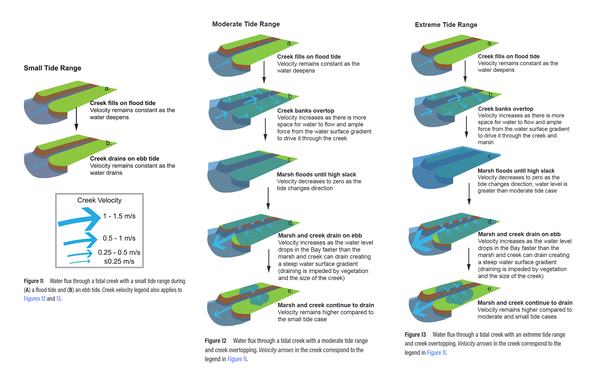
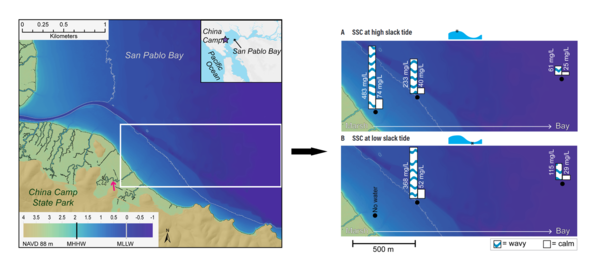
The monograph also highlights the nuanced role of marsh vegetation. Plant species and seasonal growth cycles significantly affect how much sediment is trapped and retained. Denser vegetation in spring and summer, for instance, can slow water flow and promote sediment deposition—but this effect varies widely by plant type and inundation level.
As sea-level rise and human alterations continue to reshape estuaries, these insights are particularly important for assessing tidal marsh resilience. Sediment management is a key factor in whether tidal marshes can survive future climate conditions. For land managers and restoration practitioners, the study offers actionable information for planning sediment interventions—such as enhancing natural sediment delivery or restoring marsh-edge processes.
China Camp’s relatively unaltered condition makes it a valuable reference point, but researchers emphasize that broader studies across different marsh types are essential. Every estuary has its own sediment-flux dynamics; understanding that variability is crucial for protecting these ecosystems.
Read the study, Marsh Sediment in Translation: A Review of Sediment Transport Across a Natural Tidal Salt Marsh in Northern San Francisco Bay, in San Francisco Estuary and Watershed Science.
Related

Sediment Transport in Coastal Environments
Related