



California has lost 60% of its coastal dunes since the 1800s, new study finds
California’s coastal sand dunes are disappearing. A new statewide assessment finds that the state has lost approximately 60% of its coastal dune area since the mid-1800s, as urban development, coastal erosion and changing land uses have dramatically reshaped these important ecosystems.
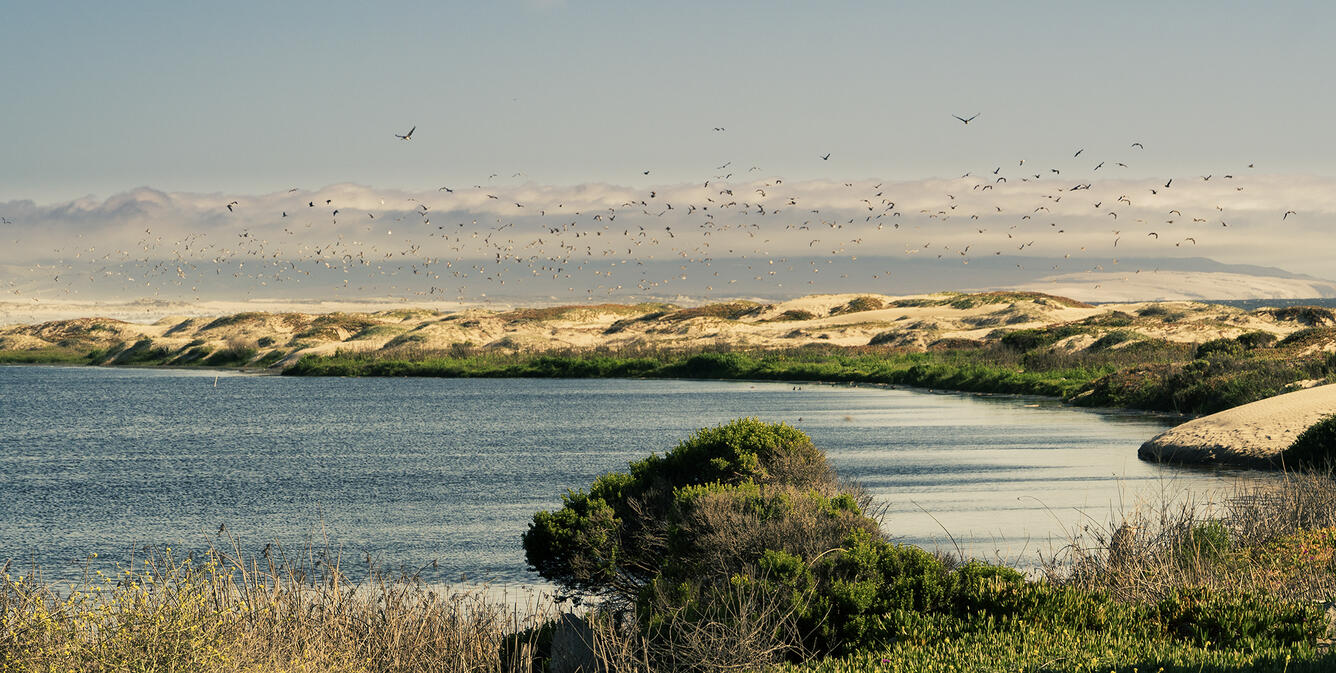
California is home to some of the largest and most ecologically diverse coastal dune systems in North America. Beyond their scenic and recreational value, dunes provide habitat for specialized plants and wildlife, hold cultural significance for coastal communities, and serve as natural barriers that help protect people and infrastructure from coastal flooding.
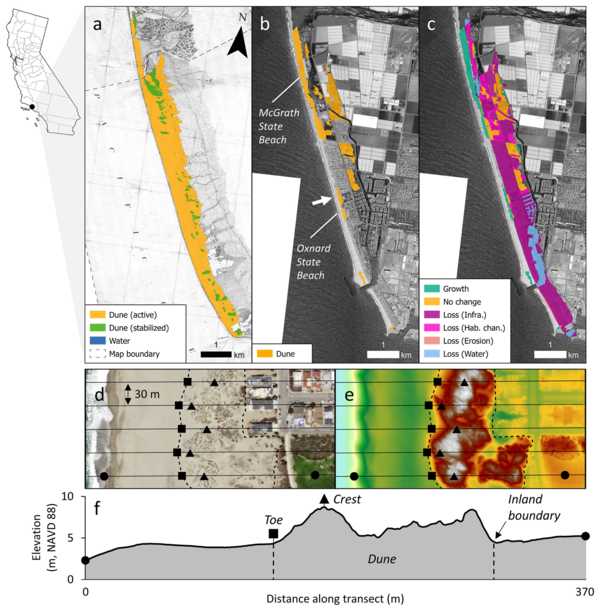
But decades of development and shoreline change have left these ecosystems much smaller and more fragmented than they once were. Coastal dunes currently extend along 352 km (22%) of California's 1,625 km coastline, covering almost 300 km2. This represents a 60% (442 km2) decrease in area since the mid-1800s. The new study provides a comprehensive picture of where California's dunes have been lost and how the remaining ecosystems are distributed.
Mapping more than 165 years of change
To reconstruct the history of California's coastal dunes, researchers from the University of California at Santa Barbara, the University of California at San Diego, the U.S. Fish and Wildlife Service, and USGS compared historical maps dating back to the mid-19th century with modern high-resolution aerial imagery and LiDAR data, combined with a machine-learning tool. This approach allowed them to estimate the former extent of dune ecosystems along the entire California coast and identify areas where they have disappeared.
The results show that roughly three-fifths of California's historical coastal dune area has been lost over the past 165 years. Southern and central California experienced particularly significant declines, with urban development, erosion and land-use changes contributing to the reduction in dune habitat.
"Most of the decreases in dune coverage we found were caused by people building structures directly on top of dune fields." said Dr. Sean Vitousek, USGS Research Oceanographer and study co-author. "Much of the city of San Francisco is an example of this. Sand dunes historically extended from Ocean Beach all the way to what's now downtown San Francisco. And almost of all that area is fully developed now."
Researchers also found that the remaining dune ecosystems are considerably more isolated and fragmented than they were historically. Instead of extensive, connected stretches of dunes, many surviving areas are now separated by development and other landscape changes.
This fragmentation can make it more difficult for dune-dependent plants and animals to persist, move between different coastal habitats, and adapt to changing environmental conditions.
More than sand: Dunes protect communities and ecosystems
Coastal dunes are dynamic natural systems shaped by wind, waves, sediment movement, and vegetation. They provide habitat for a variety of specialized species while also helping absorb wave energy and reduce coastal flooding.
As sea levels rise and storms threaten increasingly developed coastlines, healthy dune systems can play an important role in coastal resilience. But development and other human activities can restrict the natural movement of dunes and limit their ability to adapt to changing conditions.
The study's findings highlight a growing challenge for California: protecting the remaining dune ecosystems while preparing coastal communities for sea-level rise and other climate-related hazards.
Losing these landscapes means losing both valuable wildlife habitat and a natural form of coastal protection. Their increasingly fragmented distribution also complicates efforts to restore connected coastal ecosystems.
A roadmap for restoration
Understanding where dunes once existed—and why they disappeared—is an important first step toward restoring them.
By identifying the locations and extent of historical dune losses, the study provides information that can help coastal managers prioritize restoration opportunities. Reestablishing dune habitat in suitable locations could help recover some of the ecological functions and coastal protection benefits that have been lost.
The researchers note that the methodology developed for this study could be applied beyond California. Combining historical maps with modern aerial imagery and LiDAR offers a framework for assessing large-scale changes in coastal habitats around the world, even in regions where long-term ecological monitoring data are limited.
Read the study, Significant Coastal Dune Loss Challenges California's Climate Resilience and Biodiversity Goals, in Earth's Future.
Related

Remote Sensing Coastal Change
Related