
U.S. flag

An official website of the United States government

Exposure Pathways

Filter Total Items: 91

Ecotoxicology and Ecological Risks of Per‐ and Polyfluoroalkyl Substances

Ecotoxicology and ecological risks of per- and polyfluoroalkyl substances are summarized to highlight critical gaps and uncertainties, and to provide potential approaches to fill those gaps, including the development of targeted monitoring programs and cross-disciplinary approaches.
Ecotoxicology and Ecological Risks of Per‐ and Polyfluoroalkyl Substances

Ecotoxicology and Ecological Risks of Per‐ and Polyfluoroalkyl Substances

Ecotoxicology and ecological risks of per- and polyfluoroalkyl substances are summarized to highlight critical gaps and uncertainties, and to provide potential approaches to fill those gaps, including the development of targeted monitoring programs and cross-disciplinary approaches.
Learn More

Scientists Provide an Understanding of Anticoagulant Rodenticide Exposure in Non-Target Bird Species

U.S. Geological Survey scientists and their partners utilize laboratory and field studies and existing information to improve understanding of anticoagulant rodenticide exposure and effects to wild birds.
Scientists Provide an Understanding of Anticoagulant Rodenticide Exposure in Non-Target Bird Species

Scientists Provide an Understanding of Anticoagulant Rodenticide Exposure in Non-Target Bird Species

U.S. Geological Survey scientists and their partners utilize laboratory and field studies and existing information to improve understanding of anticoagulant rodenticide exposure and effects to wild birds.
Learn More

Advanced PFAS Measurement Methods

Environmental Health Program scientists, in collaboration with other USGS scientists, are developing complementary field and laboratory methods and capabilities to detect and quantify a range of target and nontarget per- and polyfluoroalkyl substances (PFAS) and indicator compounds at low levels (parts per trillion) in a variety of environmental matrices. The PFAS Integrated Science Team is...
Advanced PFAS Measurement Methods

Advanced PFAS Measurement Methods

Environmental Health Program scientists, in collaboration with other USGS scientists, are developing complementary field and laboratory methods and capabilities to detect and quantify a range of target and nontarget per- and polyfluoroalkyl substances (PFAS) and indicator compounds at low levels (parts per trillion) in a variety of environmental matrices. The PFAS Integrated Science Team is...
Learn More

Bioaccumulation of Mercury in Fish Varied by Species and Location in the Chesapeake Bay Watershed—Summary of Existing Data and a Roadmap for Integrated Monitoring

Fish mercury data from State monitoring programs and research studies within the Chesapeake Bay were compiled and summarized to provide a comprehensive overview of the variation in fish mercury concentrations among species and habitats within the watershed. These data are put into context with existing health benchmarks for humans, birds, and fish. Scientists also provide a roadmap for an...
Bioaccumulation of Mercury in Fish Varied by Species and Location in the Chesapeake Bay Watershed—Summary of Existing Data and a Roadmap for Integrated Monitoring

Bioaccumulation of Mercury in Fish Varied by Species and Location in the Chesapeake Bay Watershed—Summary of Existing Data and a Roadmap for Integrated Monitoring

Fish mercury data from State monitoring programs and research studies within the Chesapeake Bay were compiled and summarized to provide a comprehensive overview of the variation in fish mercury concentrations among species and habitats within the watershed. These data are put into context with existing health benchmarks for humans, birds, and fish. Scientists also provide a roadmap for an...
Learn More

Flood Redistributes Mercury in Grand Canyon Aquatic Food Webs

S cientists coupled the concepts of energy flow through food webs with measurements of mercury in organic matter and animals to estimate mercury fluxes and fate during an experimental flood in the Colorado River. The flood redistributed mercury in simple, upstream food webs but not in more complex, downstream food webs.
Flood Redistributes Mercury in Grand Canyon Aquatic Food Webs

Flood Redistributes Mercury in Grand Canyon Aquatic Food Webs

S cientists coupled the concepts of energy flow through food webs with measurements of mercury in organic matter and animals to estimate mercury fluxes and fate during an experimental flood in the Colorado River. The flood redistributed mercury in simple, upstream food webs but not in more complex, downstream food webs.
Learn More

Science to Understand Low-Level Exposures to Neonicotinoid Pesticides, their Metabolites, and Chlorinated Byproducts in Drinking Water

Scientists reported the discovery of three neonicotinoid pesticides in drinking water and their potential for transformation and removal during water treatment. The research provides new insights into the persistence of neonicotinoids and their potential for transformation during water treatment and distribution, while also identifying granulated activated carbon as a potentially effective...
Science to Understand Low-Level Exposures to Neonicotinoid Pesticides, their Metabolites, and Chlorinated Byproducts in Drinking Water

Science to Understand Low-Level Exposures to Neonicotinoid Pesticides, their Metabolites, and Chlorinated Byproducts in Drinking Water

Scientists reported the discovery of three neonicotinoid pesticides in drinking water and their potential for transformation and removal during water treatment. The research provides new insights into the persistence of neonicotinoids and their potential for transformation during water treatment and distribution, while also identifying granulated activated carbon as a potentially effective...
Learn More

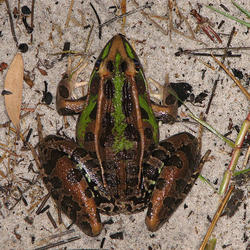
Clothianidin Exposure Associated with Changes in Tadpole Behavior

During a laboratory exposure study, tadpole movement decreased with increased concentrations of clothianidin, a neonicotinoid pesticide. Decreased movement could affect a tadpole’s ability to forage, escape predation, and metamorphose before ponds dry.
Clothianidin Exposure Associated with Changes in Tadpole Behavior

Clothianidin Exposure Associated with Changes in Tadpole Behavior

During a laboratory exposure study, tadpole movement decreased with increased concentrations of clothianidin, a neonicotinoid pesticide. Decreased movement could affect a tadpole’s ability to forage, escape predation, and metamorphose before ponds dry.
Learn More

Bird Hatchling Development Following Exposure to Environmentally Relevant Levels of Brominated Flame Retardants

Scientists performed laboratory studies with American kestrels and zebra finch to determine the effects of brominated flame retardant exposure on hatchlings. They found evidence that exposure while in the egg disrupted thyroid function in female American kestrel hatchlings and affected nestling body condition in zebra finch hatchlings, but no other effects were detected.
Bird Hatchling Development Following Exposure to Environmentally Relevant Levels of Brominated Flame Retardants

Bird Hatchling Development Following Exposure to Environmentally Relevant Levels of Brominated Flame Retardants

Scientists performed laboratory studies with American kestrels and zebra finch to determine the effects of brominated flame retardant exposure on hatchlings. They found evidence that exposure while in the egg disrupted thyroid function in female American kestrel hatchlings and affected nestling body condition in zebra finch hatchlings, but no other effects were detected.
Learn More

Dragonfly Larvae are Effective Bioindicators of Mercury Exposure in Fish and Amphibians—Results of Citizen Science in 100 National Parks and Protected Places

Mercury concentrations were measured in dragonfly larvae across more than 450 sites in 100 national parks and protected places as part of a partnership among Federal agencies, academic researchers, and more than 4,000 citizen scientists. Mercury concentrations in dragonfly larvae were positively correlated with mercury concentrations in fish and amphibians living in the same aquatic environments...
Dragonfly Larvae are Effective Bioindicators of Mercury Exposure in Fish and Amphibians—Results of Citizen Science in 100 National Parks and Protected Places

Dragonfly Larvae are Effective Bioindicators of Mercury Exposure in Fish and Amphibians—Results of Citizen Science in 100 National Parks and Protected Places

Mercury concentrations were measured in dragonfly larvae across more than 450 sites in 100 national parks and protected places as part of a partnership among Federal agencies, academic researchers, and more than 4,000 citizen scientists. Mercury concentrations in dragonfly larvae were positively correlated with mercury concentrations in fish and amphibians living in the same aquatic environments...
Learn More

U.S. Geological Survey Microbiologist Selected as an American Society for Microbiology Distinguished Lecturer

Dale Warren Griffin, a U.S. Geological Survey (USGS) environmental public-health microbiologist, was selected as a Waksman Foundation Distinguished Lecturer for the 2020–22 American Society for Microbiology (ASM) Lecture Series.
U.S. Geological Survey Microbiologist Selected as an American Society for Microbiology Distinguished Lecturer

U.S. Geological Survey Microbiologist Selected as an American Society for Microbiology Distinguished Lecturer

Dale Warren Griffin, a U.S. Geological Survey (USGS) environmental public-health microbiologist, was selected as a Waksman Foundation Distinguished Lecturer for the 2020–22 American Society for Microbiology (ASM) Lecture Series.
Learn More

Framework for Examining Stream Ecosystem Health in Areas of Shale Gas Development—A Multi-Parameter Watershed-Based Case Study in Pennsylvania

In a case study of 25 headwater streams in Pennsylvania, no statistically significant associations were determined between shale gas development and geochemical tracers of produced waters or measures of microbial and macroinvertebrate community composition. Although the results are specific to the region studied, the integrated biological and geochemical framework provides a tool for examining...
Framework for Examining Stream Ecosystem Health in Areas of Shale Gas Development—A Multi-Parameter Watershed-Based Case Study in Pennsylvania

Framework for Examining Stream Ecosystem Health in Areas of Shale Gas Development—A Multi-Parameter Watershed-Based Case Study in Pennsylvania

In a case study of 25 headwater streams in Pennsylvania, no statistically significant associations were determined between shale gas development and geochemical tracers of produced waters or measures of microbial and macroinvertebrate community composition. Although the results are specific to the region studied, the integrated biological and geochemical framework provides a tool for examining...
Learn More

Food Web Changes Dampen Expected Reductions in Lake Trout Mercury Levels in Lake Michigan—Invasive Species Play Major Role

Combined analyses of mercury, nitrogen, and carbon isotopes in archived lake trout ( Salvelinus namaycush) tissues and sediment cores in Lake Michigan from 1978 to 2012 indicated that lake trout mercury concentrations mirrored declines in mercury sources prior to the arrival of invasive species that changed mercury transfer through the food and dampened the expected decreases in mercury...
Food Web Changes Dampen Expected Reductions in Lake Trout Mercury Levels in Lake Michigan—Invasive Species Play Major Role

Food Web Changes Dampen Expected Reductions in Lake Trout Mercury Levels in Lake Michigan—Invasive Species Play Major Role

Combined analyses of mercury, nitrogen, and carbon isotopes in archived lake trout ( Salvelinus namaycush) tissues and sediment cores in Lake Michigan from 1978 to 2012 indicated that lake trout mercury concentrations mirrored declines in mercury sources prior to the arrival of invasive species that changed mercury transfer through the food and dampened the expected decreases in mercury...
Learn More
Was this page helpful?