
U.S. flag

An official website of the United States government

Exposure Pathways

Filter Total Items: 93
A Decade of Data Reveals Imidacloprid (a common insecticide) is Increasing in American Rivers

Imidacloprid, a commonly used insecticide in both agricultural and urban settings, is reaching rivers and streams across the country, where it can potentially harm the aquatic insects and other organisms that support healthy freshwater ecosystems. A decade‑long USGS study found this insecticide in nearly half of all samples, often at levels above chronic health benchmarks and present throughout...
A Decade of Data Reveals Imidacloprid (a common insecticide) is Increasing in American Rivers

A Decade of Data Reveals Imidacloprid (a common insecticide) is Increasing in American Rivers

Imidacloprid, a commonly used insecticide in both agricultural and urban settings, is reaching rivers and streams across the country, where it can potentially harm the aquatic insects and other organisms that support healthy freshwater ecosystems. A decade‑long USGS study found this insecticide in nearly half of all samples, often at levels above chronic health benchmarks and present throughout...
Learn More

Land application of waste to US farmland: Understanding the scope and environmental implications to aid best practices

USGS is studying how different waste materials are reused on farmland and what they might mean for people and the environment. These wastes can offer benefits, but they can also carry substances we don’t fully understand. Because little is known about what’s in these waste materials or how they move through soil and water, more information is needed. USGS research helps fill these gaps so...
Land application of waste to US farmland: Understanding the scope and environmental implications to aid best practices

Land application of waste to US farmland: Understanding the scope and environmental implications to aid best practices

USGS is studying how different waste materials are reused on farmland and what they might mean for people and the environment. These wastes can offer benefits, but they can also carry substances we don’t fully understand. Because little is known about what’s in these waste materials or how they move through soil and water, more information is needed. USGS research helps fill these gaps so...
Learn More

Bioenergy and Pesticides: Lessons from the AltEn Bioenergy Plant

Ethanol production from seed corn, while reducing waste and promoting renewable energy, can have environmental and health implications. A USGS study on a former bioenergy plant that received pesticide-coated seeds used for ethanol production, revealed that the process led to contaminated wastewater and solid residue, resulting in elevated pesticide levels in nearby surface waters even after the...

Bioenergy and Pesticides: Lessons from the AltEn Bioenergy Plant

Bioenergy and Pesticides: Lessons from the AltEn Bioenergy Plant

Ethanol production from seed corn, while reducing waste and promoting renewable energy, can have environmental and health implications. A USGS study on a former bioenergy plant that received pesticide-coated seeds used for ethanol production, revealed that the process led to contaminated wastewater and solid residue, resulting in elevated pesticide levels in nearby surface waters even after the...
Learn More

Healthy Fish and Wildlife: Community Livelihoods, Fishing and Hunting Heritage, Recreation, and Economic Security

Healthy fish and wildlife underpin the economic vitality, food security, recreational enjoyment, and cultural heritage of fishing and hunting in communities across the United States. Fishing and hunting resources scale from the personal recreation of families to multi-billion-dollar industries. Recognizing these critical connections, the U.S. Geological Survey (USGS) works to understand, protect...
Healthy Fish and Wildlife: Community Livelihoods, Fishing and Hunting Heritage, Recreation, and Economic Security

Healthy Fish and Wildlife: Community Livelihoods, Fishing and Hunting Heritage, Recreation, and Economic Security

Healthy fish and wildlife underpin the economic vitality, food security, recreational enjoyment, and cultural heritage of fishing and hunting in communities across the United States. Fishing and hunting resources scale from the personal recreation of families to multi-billion-dollar industries. Recognizing these critical connections, the U.S. Geological Survey (USGS) works to understand, protect...
Learn More

Effective Communication in PFAS Research: Moving Beyond "Ubiquitous"

In recent years, per- and polyfluoroalkyl substances (PFAS), have gained attention for their environmental presence; however, the term "ubiquitous" used to describe them can be misleading. USGS scientists push to use more precise language such as "widespread" and “commonly detected” to avoid confusion and misinformation. This distinction is crucial for understanding the actual occurrence of PFAS...
Effective Communication in PFAS Research: Moving Beyond "Ubiquitous"

Effective Communication in PFAS Research: Moving Beyond "Ubiquitous"

In recent years, per- and polyfluoroalkyl substances (PFAS), have gained attention for their environmental presence; however, the term "ubiquitous" used to describe them can be misleading. USGS scientists push to use more precise language such as "widespread" and “commonly detected” to avoid confusion and misinformation. This distinction is crucial for understanding the actual occurrence of PFAS...
Learn More

Navigating PFAS Contamination: Insights from the USGS Potomac River Watershed Study

The Potomac River is a major watershed in the eastern United States that serves as a crucial water supply for millions of people. USGS researchers conducted a comprehensive investigation to identify the contributions of municipal and industrial wastewater treatment plant effluent to the levels of per-and polyfluoroalkyl substances (PFAS) in the Potomac River. This study included measuring PFAS...
Navigating PFAS Contamination: Insights from the USGS Potomac River Watershed Study

Navigating PFAS Contamination: Insights from the USGS Potomac River Watershed Study

The Potomac River is a major watershed in the eastern United States that serves as a crucial water supply for millions of people. USGS researchers conducted a comprehensive investigation to identify the contributions of municipal and industrial wastewater treatment plant effluent to the levels of per-and polyfluoroalkyl substances (PFAS) in the Potomac River. This study included measuring PFAS...
Learn More

USGS Environmental Health Program: Integrating Science for Public Health and Resource Management

The USGS Environmental Health Program seeks to understand how environmental factors, especially contaminants and pathogens, influence human health and ecosystems. It focuses on studying the distribution and effects of toxic substances, environmental stressors, and their pathways. The program prioritizes collaboration with State, Federal and local governments; Tribes; non-government organizations...
USGS Environmental Health Program: Integrating Science for Public Health and Resource Management

USGS Environmental Health Program: Integrating Science for Public Health and Resource Management

The USGS Environmental Health Program seeks to understand how environmental factors, especially contaminants and pathogens, influence human health and ecosystems. It focuses on studying the distribution and effects of toxic substances, environmental stressors, and their pathways. The program prioritizes collaboration with State, Federal and local governments; Tribes; non-government organizations...
Learn More

Energy Resources Life Cycle Integrated Science Team

The Energy Resources Life Cycle Integrated Science Team focuses on the potential for environmental contaminant exposures that might originate from energy resource activities including extraction, production, transportation, storage, waste management, and restoration. Perceived health risks to humans and other organisms will be distinguished from actual risks, if any. If actual risks are identified...
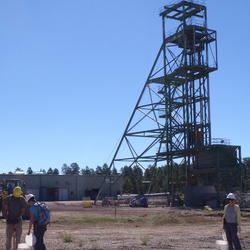
Energy Resources Life Cycle Integrated Science Team

Energy Resources Life Cycle Integrated Science Team

The Energy Resources Life Cycle Integrated Science Team focuses on the potential for environmental contaminant exposures that might originate from energy resource activities including extraction, production, transportation, storage, waste management, and restoration. Perceived health risks to humans and other organisms will be distinguished from actual risks, if any. If actual risks are identified...
Learn More

Minerals Resources Life Cycle Integrated Science Team

The Minerals Resources Life Cycle Integrated Science Team focuses on contaminant exposures in the environment that might originate from mineral resource activities including, transportation, storage, extraction and waste management. Perceived health risks to humans and other organisms will be distinguished from actual risks, if any. If actual risks are identified the science produced by this team...
Minerals Resources Life Cycle Integrated Science Team

Minerals Resources Life Cycle Integrated Science Team

The Minerals Resources Life Cycle Integrated Science Team focuses on contaminant exposures in the environment that might originate from mineral resource activities including, transportation, storage, extraction and waste management. Perceived health risks to humans and other organisms will be distinguished from actual risks, if any. If actual risks are identified the science produced by this team...
Learn More

Innovative Sensor Development for Detecting Low-Micrometer Plastics in Freshwater Systems

Plastic pollution is a significant global issue in aquatic ecosystems, with low-micrometer plastics (LMMPs) posing particular risks owing to their small size and prevalence in various environments. The U.S. Geological Survey and collaborators are developing an innovative sensor to detect and analyze LMMPs in freshwater systems, achieving rapid and accurate results without the need for additional...
Innovative Sensor Development for Detecting Low-Micrometer Plastics in Freshwater Systems

Innovative Sensor Development for Detecting Low-Micrometer Plastics in Freshwater Systems

Plastic pollution is a significant global issue in aquatic ecosystems, with low-micrometer plastics (LMMPs) posing particular risks owing to their small size and prevalence in various environments. The U.S. Geological Survey and collaborators are developing an innovative sensor to detect and analyze LMMPs in freshwater systems, achieving rapid and accurate results without the need for additional...
Learn More

Wildfires Increase Mercury Concentrations in Headwater Streams

The U.S. Geological Survey is researching the effect of wildfires on the release of stored mercury from forest watersheds and subsequent transport, methylmercury formation, and bioaccumulation post-fire. Wildfires not only alter the re-release of mercury into the environment but also affect its reactivity and availability to the food web, complicating predictions of mercury exposure risks to...
Wildfires Increase Mercury Concentrations in Headwater Streams

Wildfires Increase Mercury Concentrations in Headwater Streams

The U.S. Geological Survey is researching the effect of wildfires on the release of stored mercury from forest watersheds and subsequent transport, methylmercury formation, and bioaccumulation post-fire. Wildfires not only alter the re-release of mercury into the environment but also affect its reactivity and availability to the food web, complicating predictions of mercury exposure risks to...
Learn More

Food Resources Lifecycle Integrated Science Team

The team studies the movement of toxicants and pathogens that could originate from the growing, raising, and processing/manufacturing of plant and animal products through the environment where exposure can occur. This information is used to understand if there are adverse effects upon exposure and to develop decision tools to protect health.
Food Resources Lifecycle Integrated Science Team

Food Resources Lifecycle Integrated Science Team

The team studies the movement of toxicants and pathogens that could originate from the growing, raising, and processing/manufacturing of plant and animal products through the environment where exposure can occur. This information is used to understand if there are adverse effects upon exposure and to develop decision tools to protect health.
Learn More
Was this page helpful?