



Methods Development
Methods Development
Filter Total Items: 29

Drinking Water and Wastewater Infrastructure Science Team
The team studies toxicants and pathogens in water resources from their sources, through watersheds, aquifers, and infrastructure to human and wildlife exposures. That information is used to develop decision tools that protect human and wildlife health.
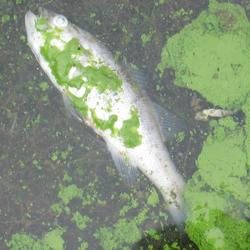
Toxins and Harmful Algal Blooms Science Team
The team develops advanced methods to study factors driving algal toxin production, how and where wildlife or humans are exposed to toxins, and ecotoxicology. That information is used to develop decision tools to understand if toxin exposure leads to adverse health effects in order to protect human and wildlife health.

Large Fraction of Unidentified Organofluorine in a Coastal Watershed has Implications for River to Marine Ecosystems
A group of scientists investigated per- and polyfluoroalkyl substances (PFAS) in watersheds on Cape Cod and identified a unique signature for aqueous film forming foams (AFFF) from legacy firefighting and fire training. A combination of statistical modeling and laboratory measurements indicates that unidentified organofluorine constitutes a large fraction of PFAS in the river systems that...

Ecologically-Driven Exposure Pathways Science Team
The Ecologically-Driven Exposure Pathways Integrated Science Team identifies how ecological pathways and physiological processes within a single organism can alter exposure and toxicity of contaminants and pathogens and seek to understand outcomes at different scales from individuals to populations and ecosystems.

Advanced PFAS Measurement Methods
Environmental Health Program scientists, in collaboration with other USGS scientists, are developing complementary field and laboratory methods and capabilities to detect and quantify a range of target and nontarget per- and polyfluoroalkyl substances (PFAS) and indicator compounds at low levels (parts per trillion) in a variety of environmental matrices. The PFAS Integrated Science Team is...

Technique Used to Distinguish Natural Background from Human-Caused Enrichment of Trace Elements in Soils
Human activities can enrich toxic trace elements like uranium and arsenic in the environment, but these elements also are from natural sources and occur at background levels. Scientists utilized a technique that identifies the background and the elemental fingerprint of human-caused enrichment and tested the new technique on data collected near uranium mines in Arizona.

Can There be Unintended Benefits when Wastewater Treatment Infrastructure is Upgraded?
Science from the U.S. Geological Survey (USGS) and other entities has shown that a mixture of natural and synthetic estrogens and other similar chemicals are discharged from wastewater treatment plants (WWTPs) to streams and rivers.

Unique Methods Used to Understand Frog Exposure to Pesticides in Agricultural Settings
Adult frog exposure to pesticides in aquatic and terrestrial habitats was quantified using a novel combination of radio telemetry and passive sampling techniques to better understand factors affecting frog health and survival in agricultural landscapes.

Bioactive Chemicals Research Laboratory
The Bioactive Chemicals Research Laboratory applies a collaborative transdisciplinary approach to conduct research to minimize the risk to human and aquatic organism health from exposure to contaminants in water supplies.

Michigan Bacteriological Research Laboratory
Microbiologists at the Michigan Bacteriological Research Laboratory (MI-BaRL) use a wide array of traditional and modern molecular approaches to evaluate microbial pathogens and antimicrobial resistance pathways in the environment.

Environmental Chemistry Core Technology Team
About the Research The Environmental Chemistry Laboratory Core Technology Team (CTT) as part of the Environmental Health Program develops and applies innovative methods of sampling and analysis to answer critical questions about the occurrence, distribution, fate and transport, and biological exposure of chemical in all environmental matrices (water, air, tissues, sediments, and others).

New Method Can Measure Naturally Occurring Element Exposure in Hummingbirds Without Harm
Seventeen naturally occurring trace elements, including those associated with adverse health impacts when birds are exposed to toxic levels (iron, lead, mercury, selenium, zinc, cadmium, and arsenic) were measured in small birds without harm. The nonlethal method was developed for hummingbirds, with Anna's hummingbirds ( Calypte anna) as a test species and can be more broadly applied to other...