



Wyoming Cooperative Fish and Wildlife Research Unit
The Wyoming Cooperative Fish and Wildlife Research Unit (est. 1977) is a partnership among the Wyoming Game and Fish Department, University of Wyoming, the U.S. Geological Survey, the U.S. Fish and Wildlife Service, and the Wildlife Management Institute.
The Wyoming Cooperative Fish and Wildlife Research Unit was established in 1977, and is currently one of 43 USGS Cooperative Research Units nationwide. Our offices, programs, and personnel are embedded within the Department of Zoology and Physiology on the campus of the University of Wyoming. We collaborate with the Wyoming Game and Fish Department, federal land and wildlife managers, the Wind River Indian Reservation, private entities, and nonprofit partners to provide actionable scientific information for wildlife and fisheries management.
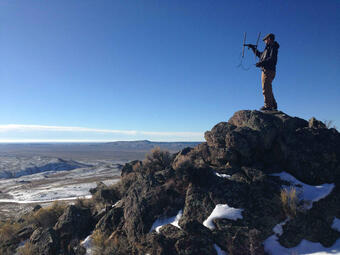
The Wyoming Coop Unit is part of a larger legacy of state, federal, and independent wildlife biologists and mana
gers who have worked to conserve and restore Wyoming wildlife and fisheries for more than a century. Thanks to these past generations, our state has some of the most intact habitats in the continental United States, including the Greater Yellowstone Ecosystem, which is of global importance.
Our unit is led by three USGS-employed research scientists working on large mammals, fisheries, and non-game species. Notable topics of research throughout our history include rare and endemic fish, sagebrush-obligate songbirds, migratory big game, black-footed ferrets, wolves, bats, amphibians, and how to best maintain Wyoming’s species and their habitats amid increasing development and weather severity.
As part of providing research to partners and managers, our major focus is training the next-generation of wildlife biologists at the University of Wyoming. Since the late 1970s, the Wyoming Coop Unit researchers have advised more than 200 graduate students. This includes more than 31 Ph.D. students and 169 MS degree students. The unit has yielded a cadre of professional fish and wildlife biologists working in natural resource management, education, and several other professions throughout Wyoming and beyond.

Corridor Mapping Team: Ungulate Migrations of the West
The Wyoming Cooperative Fish and Wildlife Research Unit (est. 1977) is a partnership among the Wyoming Game and Fish Department, University of Wyoming, the U.S. Geological Survey, the U.S. Fish and Wildlife Service, and the Wildlife Management Institute.
The Wyoming Cooperative Fish and Wildlife Research Unit was established in 1977, and is currently one of 43 USGS Cooperative Research Units nationwide. Our offices, programs, and personnel are embedded within the Department of Zoology and Physiology on the campus of the University of Wyoming. We collaborate with the Wyoming Game and Fish Department, federal land and wildlife managers, the Wind River Indian Reservation, private entities, and nonprofit partners to provide actionable scientific information for wildlife and fisheries management.
The Wyoming Coop Unit is part of a larger legacy of state, federal, and independent wildlife biologists and mana
gers who have worked to conserve and restore Wyoming wildlife and fisheries for more than a century. Thanks to these past generations, our state has some of the most intact habitats in the continental United States, including the Greater Yellowstone Ecosystem, which is of global importance.
Our unit is led by three USGS-employed research scientists working on large mammals, fisheries, and non-game species. Notable topics of research throughout our history include rare and endemic fish, sagebrush-obligate songbirds, migratory big game, black-footed ferrets, wolves, bats, amphibians, and how to best maintain Wyoming’s species and their habitats amid increasing development and weather severity.
As part of providing research to partners and managers, our major focus is training the next-generation of wildlife biologists at the University of Wyoming. Since the late 1970s, the Wyoming Coop Unit researchers have advised more than 200 graduate students. This includes more than 31 Ph.D. students and 169 MS degree students. The unit has yielded a cadre of professional fish and wildlife biologists working in natural resource management, education, and several other professions throughout Wyoming and beyond.