



Corridor Mapping Team: Ungulate Migrations of the West
Wyoming Migration Initiative
World's Longest Mule Deer Migration
Conservation and Stewardship Atlas
Early Mule Deer and Late Ones Get Herbs
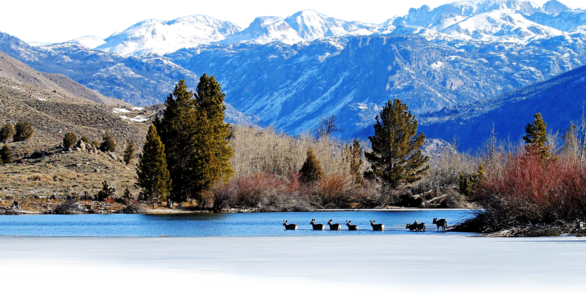
Advancing the conservation and understanding of Wyoming's migratory hooved animals (mule deer, elk, pronghorn, etc.). The Wyoming Cooperative Fish and Wildlife Research Unit is led by USGS federal researchers. The Wyoming Migration Initiative is a University of Wyoming’s Zoology and Physiology Department-based collaborative of biologists, photographers, mapmakers, and writers working to research animal migration and share that information with the public using a variety of engagement platforms, including in-person learning opportunities. This collaborative works closely with the Wyoming Game and Fish Department, often developing collaborative projects designed to provide useful information for state wildlife managers.
Ungulate Migrations of the Western U.S. Volumes 1-5
Many ungulates migrate between distinct summer and winter ranges to take advantage of spatially and temporally variable food sources and avoid threats such as predators and deep snow. In 2018, the U.S. Department of the Interior established Secretarial Order 3362, which provided Federal support to expand existing research efforts to study ungulate populations.
Wild Migrations Atlas of Wyoming
Published in 2018, Wild Migrations is a one-of-a-kind atlas that has revolutionized scientific understanding and public appreciation for ungulate migrations. GPS data from thousands of mule deer, elk, moose, bison, bighorn sheep, and pronghorn are helping state and federal agencies identify and conserve critical migration corridors across millions of acres in the West.
Media and Resources
Mule Deer Gets the Herbs
Migrating mule deer compensate en route for phenological mismatches
Longest Mule Deer Migration
Red Desert to Hoback, Wyoming Mule Deer Migration Assessment
Wild Migrations: Atlas of Wyoming's Ungulates
Landmark Decision: Green River Resource Management Plan
Unwired documentary film
Matt Kauffman Lab
Elk and Mule Deer: Wind River Indian Reservation
Moose in Wyoming
Pronghorn
Mapping out a future for ungulate migrations
Drought reshuffles ungulate green-wave surfing
Migration across the Greater Yellowstone Ecosystem
Western Migrations Route Viewer
Mule Deer Migration Film
Highest greater sage grouse density on earth
Industrial energy development
Atlas of Yellowstone
Big Game Migrations in the West
Bison in Yellowstone
Mule Deer Spring Forage
Fences and Migrating Animals
Follow on Twitter
Like on Facebook
Follow on Instagram
Advancing the conservation and understanding of Wyoming's migratory hooved animals (mule deer, elk, pronghorn, etc.). The Wyoming Cooperative Fish and Wildlife Research Unit is led by USGS federal researchers. The Wyoming Migration Initiative is a University of Wyoming’s Zoology and Physiology Department-based collaborative of biologists, photographers, mapmakers, and writers working to research animal migration and share that information with the public using a variety of engagement platforms, including in-person learning opportunities. This collaborative works closely with the Wyoming Game and Fish Department, often developing collaborative projects designed to provide useful information for state wildlife managers.
Ungulate Migrations of the Western U.S. Volumes 1-5
Many ungulates migrate between distinct summer and winter ranges to take advantage of spatially and temporally variable food sources and avoid threats such as predators and deep snow. In 2018, the U.S. Department of the Interior established Secretarial Order 3362, which provided Federal support to expand existing research efforts to study ungulate populations.
Wild Migrations Atlas of Wyoming
Published in 2018, Wild Migrations is a one-of-a-kind atlas that has revolutionized scientific understanding and public appreciation for ungulate migrations. GPS data from thousands of mule deer, elk, moose, bison, bighorn sheep, and pronghorn are helping state and federal agencies identify and conserve critical migration corridors across millions of acres in the West.