



Uncovering the Mysteries of the Bering Land Bridge
USGS scientists are identifying what plants and animals were present on the (now submerged) Bering Land Bridge. The Land Bridge was an important migration route for plants and animals – including humans - between Asia and North America during the last Ice Age.
USGS scientist Dr. Beth Caissie recently returned from a week of sampling sediment cores that were collected from the bottom of the Bering Sea in summer of 2023. The 2023 research cruise was part of a collaborative project with University of Alaska, Fairbanks and University of California, Santa Cruz investigating the ecology of the Bering Land Bridge. Cores collected during the research cruise are being stored at Oregon State University’s Marine and Geology Repository; the research team has now opened and sampled cores from 31 of their 34 collection sites.

Everything we currently know about the Bering Land Bridge, we know from studies in present-day Alaska or Russia or from small islands in the Bering Sea. This research is providing novel insight into what the environment of the low-lying, and now submerged, central Bering Land Bridge was like. When the land bridge was exposed, it was an important migration pathway for plants, animals, and people between Asia and North America.
During the 2023 research cruise - which was the subject of a new video created in partnership with the Alaska Teen Media Insitute - the team took samples from the sea floor. They targeted small, submerged basins on the shallow continental shelf of the Bering Sea. Their cores revealed marine sediments lying on top of lake sediments. The lakes are from the Bering Land Bridge and existed during the last Ice Age when sea level was lower because there were more glaciers on land. They range in age from about 45,000 years old to 9,000 years old.

The team’s work is challenging the prevailing paradigm of the Bering Land Bridge being a mammoth steppe environment—dry and covered with grasses. Instead, their work indicates that this area was more likely covered in permafrost with many small, crisscrossing rivers and small ponds and bogs.
The team has learned a lot, but many questions still remain. During last week’s lab sampling, the team opened more cores collected during the 2023 research cruise. They also took targeted samples from the cores for better age dating—a key challenge of this project. Other analyses they will be conducting include looking at microfossils in the sediments including pollen grains and diatoms (a singled-celled algae), evaluating the sediment chemistry, and looking for sedimentary ancient DNA bound to the sediments.
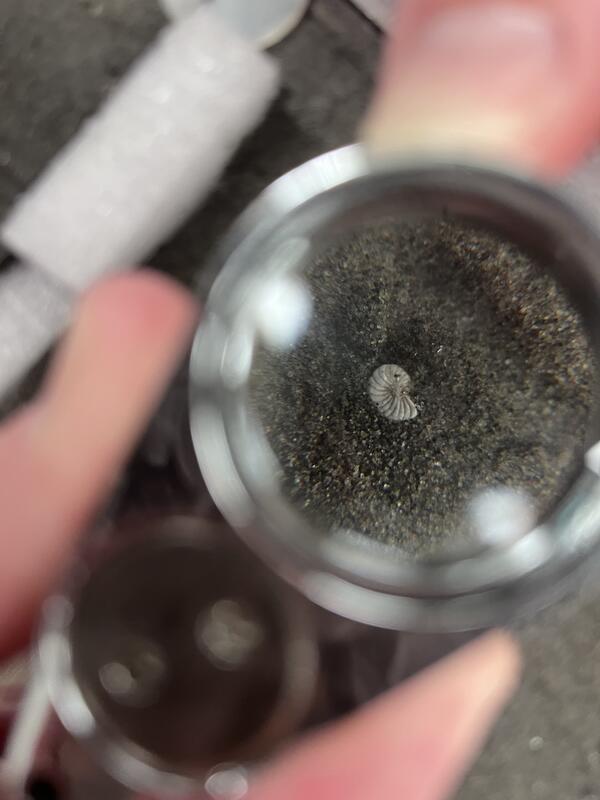
Combined, these analyses will allow the team to identify plants and animals that were present on the low-lying Bering Land Bridge as well as to identify what types of wetlands were present. This will help better understand what conditions were like, particularly for animals (including humans), that migrated between Asia and North America thousands of years ago. Understanding what this ecosystem looked like will help us to understand why some organisms crossed the land bridge and others stayed on one side or another. It will also help us to know what resources and obstacles early humans faced as they crossed.
Contact
-
Beth E. Caissie, PhD
Research GeologistEmailPhone