



Wildlife and Terrestrial Species
Wildlife and Terrestrial Species
We provide rigorous and unbiased information on migratory birds, terrestrial and marine mammals, amphibians and reptiles, native plants, threatened and endangered species, wildlife disease, and on wildlife issues resulting from human activities. Our science contributes toward a more complete understanding of the Nation’s ecosystems and landscapes.
Species We Study
Species We Study

Healthy wildlife populations sustain communities across the Nation, and maintaining ecosystems thriving with biodiversity ensures these resources are available for generations to come.
Outstanding in the Field
Outstanding in the Field

In this episode we head to southern Florida to learn about one of North America’s most misunderstood - yet threatened - mammals: bats
Filter Total Items: 387

Polar Bear Research
Polar bears ( Ursus maritimus) are one of 4 marine mammal species managed by the U.S. Department of Interior. The USGS Alaska Science Center leads long–term research on polar bears to inform local, state, national and international policy makers regarding conservation of the species and its habitat. Our studies, ongoing since 1985, are focused on population dynamics, health and energetics...

Tracking Data for Pacific Walrus (Odobenus rosmarus divergens)
Available here are tracking data of Pacific walrus, a marine mammal that ranges between the Alaska Peninsula, up through the Bering and Chukchi seas, and over to Russia. These data were collected from animals marked in the northern Bering and Chuckchi sea to understand seasonal movement patterns, use of coastal haulouts in northwestern Alaska, and determine estimates of abundance in autumn.

Tracking Data for Spectacled Eiders (Somateria fischeri)
Available here are tracking data of Spectacled Eider, a sea duck species that breeds only in Alaska and Russia and spends the winter exclusively in the Bering Sea. The Alaska breeding population is listed as threatened under provisions of the Endangered Species Act. These data were collected to better understand the winter distribution in the Bering Sea and locate birds for winter aerial surveys...

Molecular Ecology Lab (MEL)
The Molecular Ecology Laboratory applies innovative genetic and genomic technologies to address a variety of complex questions and issues facing the Nation's natural resources. While we continually update the scale and efficiency of laboratory procedures to meet stakeholder needs, we must also be innovative and flexible in addressing those needs that have no off-the-shelf solution. We help...

Tracking Data for Common Eiders (Somateria mollissima)
Available here are tracking data of Common Eider, a sea duck species found across Alaska and the Arctic. Some populations migrate between distant breeding and wintering areas while others are essentially nonmigratory. These data were collected to better understand the migration of the different populations in Alaska and migratory connectivity to adjacent regions, such as Russia.

Walrus Research
The USGS Alaska Science Center conducts long-term research on the Pacific walrus to provide scientific information to Department of Interior management agencies and Alaska Native co-management partners. In addition, the USGS Pacific walrus research program collaborates with the U.S. Fish and Wildlife Service (USFWS) and the State of Alaska’s Department of Fish and Game and Alaska Native co...

North American Bat Monitoring Program (NABat)
Bats are essential contributing members of healthy, functioning ecosystems. They perform numerous ecosystem services like insect pest control and plant pollination, and provide enormous economic benefits through ecotourism, medical research, and novel biotechnologies. North American bats face unprecedented threats including habitat loss and fragmentation, white-nose syndrome, and wind energy...

Avian Influenza Research
Since 2006, the USGS Alaska Science Center has been part of the State and Federal interagency team for the detection and response to highly pathogenic (HPAI) viruses in North America. Avian influenza or "bird flu" is a viral disease that primarily infects domestic poultry and wild birds. Avian influenza viruses are naturally occurring in wild birds such as ducks, geese, swans, and gulls. These...

Changing Arctic Ecosystems
Arctic regions of Alaska are important for cultural and economic sustainability and host a wide variety of wildlife species, many of which are of conservation and management interest to the U.S. Department of the Interior. The USGS and collaborators provide information about Arctic ecosystems that are used by Arctic residents, management agencies, and industry.

Terrestrial Mammal Research
Understanding the population dynamics, predator/prey relationships and habitat ecology of terrestrial mammals, such as caribou and muskoxen, is critical for the management of these species and their habitats in Alaska.
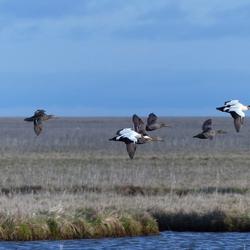
USGS Avian Research: Collaborative Science for Bird Management and Conservation
USGS scientists lead activities that are central to bird conservation and support both wildlife and communities. Through close collaboration with conservation partners, our scientists are meeting real-world needs—from maintaining sustainable harvest opportunities to advancing species recovery efforts.
Waterfowl Research
Scientists at the USGS Alaska Science Center have conducted research on waterfowl species (ducks, geese, and swans) in Alaska since the 1970s. Because Alaska is an international crossroads of migratory bird flyways, with millions of birds from Asia and North America breeding in Alaska each summer, USGS research has also taken place in adjacent countries (Russia, Japan, Canada, Mexico) and in the...