



Bioassays
Bioassays
Filter Total Items: 28

Endocrine Disrupting Chemicals in the Slick Scum that Covers Stones in Streams
The slick scum or biofilm that covers most rocks in streams can accumulate contaminants that disrupt reproductive and other endocrine systems in fish. This is the finding of a team of U.S. Geological Survey (USGS) and University of Colorado Boulder scientists as described in a recent article in Environmental Science and Technology ( Writer and others, 2011). Biofilms are a mixture of algae...
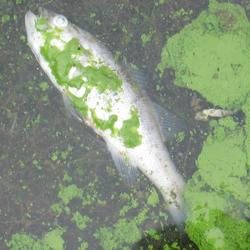
Algal Blooms Consistently Produce Complex Mixtures of Cyanotoxins and Co-Occur with Taste-and-Odor Causing Compounds in 23 Midwestern Lakes
U.S. Geological Survey (USGS) scientists studying the effects of harmful algal blooms on lake water quality found that blooms of blue-green algae (cyanobacteria) in Midwestern lakes produced mixtures of cyanotoxins and taste-and-odor causing compounds, which co-occurred in lake water samples. Cyanotoxins can cause allergic and/or respiratory issues, attack the liver and kidneys, or affect the...

Antidepressants in Stream Waters! Are They in the Fish Too?
For some fish living downstream of sewage treatment plants the answer is yes. U.S. Geological Survey (USGS) scientists and their colleagues published a paper in Environmental Science and Technology documenting that specific antidepressants and their degradates found in wastewater discharged into streams by municipal wastewater treatment plants are taken up into the bodies of fish living downstream...

Tackling Fish Endocrine Disruption
Intersex, the presence of both male and female characteristics within the same fish, is being observed in fish in more streams across the Nation. Intersex is one manifestation of endocrine disruption in fish. Endocrine disruption can result in adverse effects on the development of the brain and nervous system, the growth and function of the reproductive system, and the response to stressors in the...