



Photo of a ponderosa pine tree core, with growth years for each tree ring labeled above. This tree is located in a forest that was thinned in 2008 and burned by prescribed fire in 2010.
Carolina J May (Former Employee)
Science and Products

Impacts of changing climate and disturbance regimes on forest ecosystem resilience in the Southern Rocky Mountains
Climate-driven forest disturbances, particularly drought-induced tree mortality and large high-severity fires from increasingly warm and dry conditions, are altering forest ecosystems and the ecosystem services society depends on (e.g., water supplies) in the Southern Rockies and across the Western U.S. We will combine unique, long-term place-based ecological data, diverse methods (e.g., paleo...

New Mexico Landscapes Field Station: Internship Program
Each year, the New Mexico Landscapes Field Station hires interns through Stewards Individual Placement Program in partnership with the National Park Service. Interns participate in a variety of ecological research and long-term monitoring in Bandelier National Monument and surrounding landscapes in northern New Mexico.

New Mexico Tree-Ring Science
Tree-ring science is a component of our interdisciplinary ecological research program that focuses on the effects of drought and human land use on forest ecology, fire ecology, and ecohydrology.

The New Mexico Landscapes Field Station
The New Mexico Landscapes Field Station is a place-based, globally connected, ecological research group that studies ecosystem and wildlife dynamics, working with land managers, community leaders, and Tribes to deliver solutions that foster the linked health of human and natural systems. For over three decades, we have focused on shifting research needs from forest watershed health to wildlife...

New Mexico Landscapes Field Station: People
Staff associated with the New Mexico Landscapes Field Station.
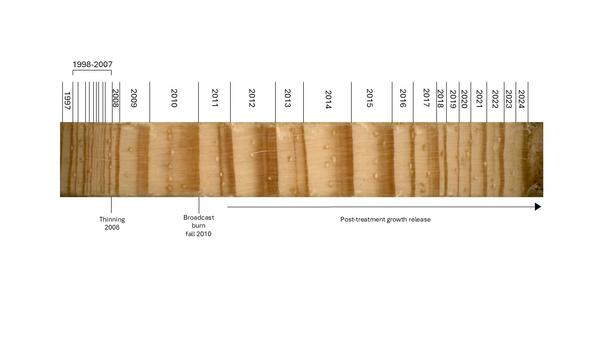
Ponderosa pine tree core used to measure growth
Photo of a ponderosa pine tree core, with growth years for each tree ring labeled above. This tree is located in a forest that was thinned in 2008 and burned by prescribed fire in 2010.
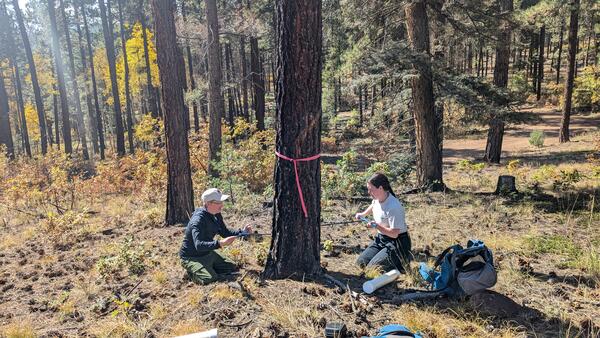
Researchers take tree cores from a ponderosa pine
Andreas Wion and Melanie Wright core opposite sides of a ponderosa pine tree in a forest near Santa Fe, NM. This forest was thinned and treated with prescribed fire to reduce forest density and fuels, thereby reducing the risk of severe wildfire. Photo by Carolina May (USGS).
Andreas Wion and Melanie Wright core opposite sides of a ponderosa pine tree in a forest near Santa Fe, NM. This forest was thinned and treated with prescribed fire to reduce forest density and fuels, thereby reducing the risk of severe wildfire. Photo by Carolina May (USGS).
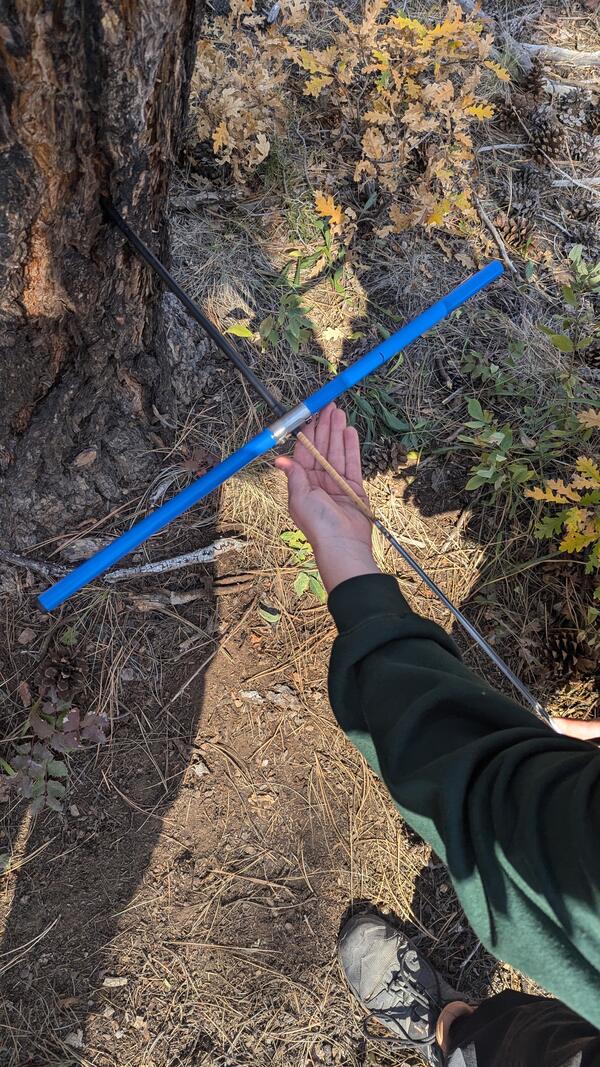
Extraction of a tree core using an increment borer
Extraction of a tree core using an increment borerA researcher demonstrates the extraction of a ponderosa pine tree core from an increment borer, the tool used to core trees. Tree coring allows scientists to learn about tree growth, age, and more without harming the tree. Photo by Carolina May (USGS)
Extraction of a tree core using an increment borer
Extraction of a tree core using an increment borerA researcher demonstrates the extraction of a ponderosa pine tree core from an increment borer, the tool used to core trees. Tree coring allows scientists to learn about tree growth, age, and more without harming the tree. Photo by Carolina May (USGS)
Science and Products
Impacts of changing climate and disturbance regimes on forest ecosystem resilience in the Southern Rocky Mountains
Climate-driven forest disturbances, particularly drought-induced tree mortality and large high-severity fires from increasingly warm and dry conditions, are altering forest ecosystems and the ecosystem services society depends on (e.g., water supplies) in the Southern Rockies and across the Western U.S. We will combine unique, long-term place-based ecological data, diverse methods (e.g., paleo...
New Mexico Landscapes Field Station: Internship Program
Each year, the New Mexico Landscapes Field Station hires interns through Stewards Individual Placement Program in partnership with the National Park Service. Interns participate in a variety of ecological research and long-term monitoring in Bandelier National Monument and surrounding landscapes in northern New Mexico.
New Mexico Tree-Ring Science
Tree-ring science is a component of our interdisciplinary ecological research program that focuses on the effects of drought and human land use on forest ecology, fire ecology, and ecohydrology.
The New Mexico Landscapes Field Station
The New Mexico Landscapes Field Station is a place-based, globally connected, ecological research group that studies ecosystem and wildlife dynamics, working with land managers, community leaders, and Tribes to deliver solutions that foster the linked health of human and natural systems. For over three decades, we have focused on shifting research needs from forest watershed health to wildlife...
New Mexico Landscapes Field Station: People
Staff associated with the New Mexico Landscapes Field Station.
Ponderosa pine tree core used to measure growth
Photo of a ponderosa pine tree core, with growth years for each tree ring labeled above. This tree is located in a forest that was thinned in 2008 and burned by prescribed fire in 2010.
Photo of a ponderosa pine tree core, with growth years for each tree ring labeled above. This tree is located in a forest that was thinned in 2008 and burned by prescribed fire in 2010.
Researchers take tree cores from a ponderosa pine
Andreas Wion and Melanie Wright core opposite sides of a ponderosa pine tree in a forest near Santa Fe, NM. This forest was thinned and treated with prescribed fire to reduce forest density and fuels, thereby reducing the risk of severe wildfire. Photo by Carolina May (USGS).
Andreas Wion and Melanie Wright core opposite sides of a ponderosa pine tree in a forest near Santa Fe, NM. This forest was thinned and treated with prescribed fire to reduce forest density and fuels, thereby reducing the risk of severe wildfire. Photo by Carolina May (USGS).
Extraction of a tree core using an increment borer
Extraction of a tree core using an increment borerA researcher demonstrates the extraction of a ponderosa pine tree core from an increment borer, the tool used to core trees. Tree coring allows scientists to learn about tree growth, age, and more without harming the tree. Photo by Carolina May (USGS)
Extraction of a tree core using an increment borer
Extraction of a tree core using an increment borerA researcher demonstrates the extraction of a ponderosa pine tree core from an increment borer, the tool used to core trees. Tree coring allows scientists to learn about tree growth, age, and more without harming the tree. Photo by Carolina May (USGS)