



The Wisconsin Cooperative Fishery Research Unit (WICFRU) continues to work with the Wisconsin and Michigan Departments of Natural Resources (DNR) to better understand walleye spawning behavior and post-spawning dispersal of walleyes in Green Bay.
Dan Isermann, PhD
Unit Leader - Wisconsin Cooperative Fishery Research Unit
Before his employment with USGS, he was an assistant professor of fisheries at the University of Wisconsin-Stevens Point and worked as a fisheries biologist and research scientist with the Ohio Division of Wildlife and the Minnesota DNR.
Research Interests
Dan's research focuses on the population dynamics and management of exploited fish populations, with special emphasis on the estimation of fish age and growth and the evaluation of harvest regulations and stocking. Most of his research endeavors are direct collaborations with state and federal resource agencies that are designed to address agency questions related to management of recreational and commercial fisheries. Specifically, he serves as co-director of the Fisheries Analysis Center, which was established to provide the Wisconsin DNR and other agencies with analysis of fish population dynamics and demographics as they relate to fisheries management and environmental variability.
Teaching Interests
Dan teaches graduate level courses covering fish population dynamics, fisheries management, and applied statistical methods that are frequently used in the assessment of fish populations.
Science and Products

Wisconsin Cooperative Fishery Research Unit
The Wisconsin Cooperative Fishery Research Unit (est. 1971) is a partnership among the Wisconsin Department of Natural Resources, University of Wisconsin-Stevens Point, the U.S. Geological Survey, and the U.S. Fish and Wildlife Service.
Walleye Fisheries: Bright Spots in a Changing Climate
Habitat loss, pollution, species introductions, and overfishing have been impacting inland fisheries for decades. Climate change threatens to compound the factors that lead to fisheries decline. Walleye, an ecologically, economically and culturally important cool-water sportfish, have been declining in the Upper Great Lakes Region since the early 2000s. Yet while many inland walleye...

Walleye
The Wisconsin Cooperative Fishery Research Unit (WICFRU) continues to work with the Wisconsin and Michigan Departments of Natural Resources (DNR) to better understand walleye spawning behavior and post-spawning dispersal of walleyes in Green Bay.
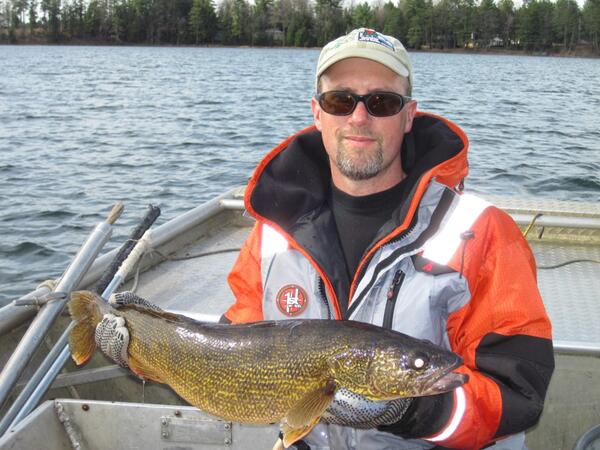
John Kubisiak is a Wisconsin Department of Natural Resources biologist
John Kubisiak is a Wisconsin Department of Natural Resources biologistGreen Bay, Wisconsin, is home to one of North America's most prominent walleye fisheries, attracting anglers from across the continent and contributing millions of dollars to local economies.
John Kubisiak is a Wisconsin Department of Natural Resources biologist
John Kubisiak is a Wisconsin Department of Natural Resources biologistGreen Bay, Wisconsin, is home to one of North America's most prominent walleye fisheries, attracting anglers from across the continent and contributing millions of dollars to local economies.

The Wisconsin Department of Natural Resources conducts annual dip net surveys at sturgeon spawning locations throughout the Lake Winnebago system
The Wisconsin Department of Natural Resources conducts annual dip net surveys at sturgeon spawning locations throughout the Lake Winnebago systemFor nearly a decade, USGS researchers at the Wisconsin Cooperative Fishery Research Unit (WICFRU) have partnered with the Wisconsin Department of Natural Resources to better understand and manage the lake sturgeon population in the Lake Winnebago System.
The Wisconsin Department of Natural Resources conducts annual dip net surveys at sturgeon spawning locations throughout the Lake Winnebago system
The Wisconsin Department of Natural Resources conducts annual dip net surveys at sturgeon spawning locations throughout the Lake Winnebago systemFor nearly a decade, USGS researchers at the Wisconsin Cooperative Fishery Research Unit (WICFRU) have partnered with the Wisconsin Department of Natural Resources to better understand and manage the lake sturgeon population in the Lake Winnebago System.
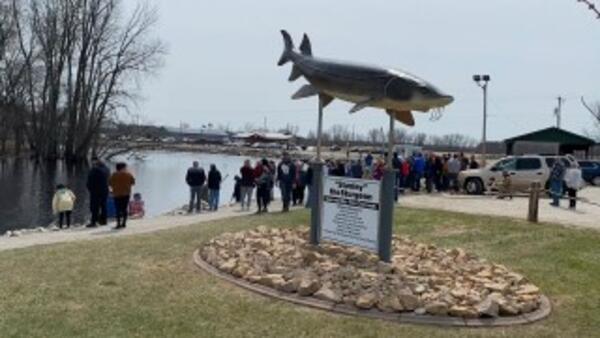
Thousands of people visit lake sturgeon spawning locations on tributaries to Lake Winnebago each year
Thousands of people visit lake sturgeon spawning locations on tributaries to Lake Winnebago each yearGreen Bay supports one of the most prominent walleye fisheries in North America that attracts anglers from across the continent and contributes millions of dollars to local economies.
Thousands of people visit lake sturgeon spawning locations on tributaries to Lake Winnebago each year
Thousands of people visit lake sturgeon spawning locations on tributaries to Lake Winnebago each yearGreen Bay supports one of the most prominent walleye fisheries in North America that attracts anglers from across the continent and contributes millions of dollars to local economies.
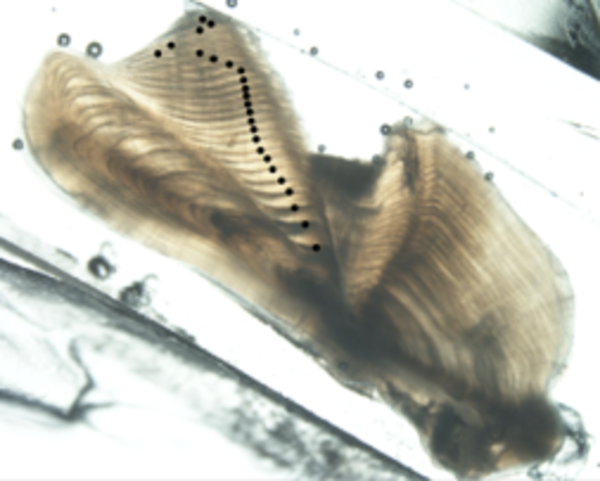
Otolith (ear bone) from a 28-inch walleye
Green Bay supports one of the most prominent walleye fisheries in North America that attracts anglers from across the continent and contributes millions of dollars to local economies.
Green Bay supports one of the most prominent walleye fisheries in North America that attracts anglers from across the continent and contributes millions of dollars to local economies.
Walleye
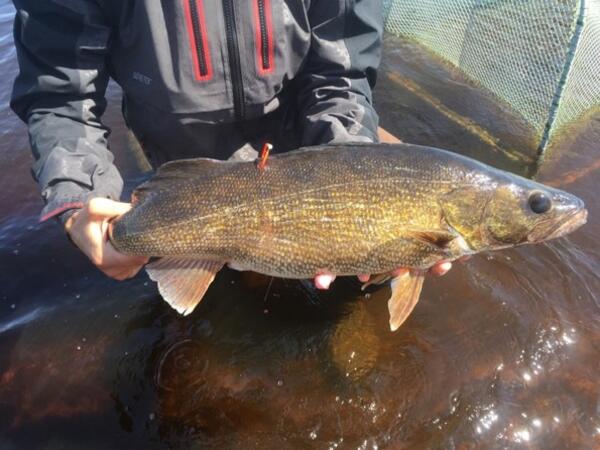
Tagged walleye from the Escanaba River, Michigan. The Wisconsin Cooperative Fishery Research Unit (WICFRU) is working extensively with the Wisconsin and Michigan Departments of Natural Resources to better understand spawning locations and distribution of walleyes in Green Bay.
Tagged walleye from the Escanaba River, Michigan. The Wisconsin Cooperative Fishery Research Unit (WICFRU) is working extensively with the Wisconsin and Michigan Departments of Natural Resources to better understand spawning locations and distribution of walleyes in Green Bay.
Science and Products
Wisconsin Cooperative Fishery Research Unit
The Wisconsin Cooperative Fishery Research Unit (est. 1971) is a partnership among the Wisconsin Department of Natural Resources, University of Wisconsin-Stevens Point, the U.S. Geological Survey, and the U.S. Fish and Wildlife Service.
Walleye Fisheries: Bright Spots in a Changing Climate
Habitat loss, pollution, species introductions, and overfishing have been impacting inland fisheries for decades. Climate change threatens to compound the factors that lead to fisheries decline. Walleye, an ecologically, economically and culturally important cool-water sportfish, have been declining in the Upper Great Lakes Region since the early 2000s. Yet while many inland walleye...
Walleye
The Wisconsin Cooperative Fishery Research Unit (WICFRU) continues to work with the Wisconsin and Michigan Departments of Natural Resources (DNR) to better understand walleye spawning behavior and post-spawning dispersal of walleyes in Green Bay.
The Wisconsin Cooperative Fishery Research Unit (WICFRU) continues to work with the Wisconsin and Michigan Departments of Natural Resources (DNR) to better understand walleye spawning behavior and post-spawning dispersal of walleyes in Green Bay.
John Kubisiak is a Wisconsin Department of Natural Resources biologist
John Kubisiak is a Wisconsin Department of Natural Resources biologistGreen Bay, Wisconsin, is home to one of North America's most prominent walleye fisheries, attracting anglers from across the continent and contributing millions of dollars to local economies.
John Kubisiak is a Wisconsin Department of Natural Resources biologist
John Kubisiak is a Wisconsin Department of Natural Resources biologistGreen Bay, Wisconsin, is home to one of North America's most prominent walleye fisheries, attracting anglers from across the continent and contributing millions of dollars to local economies.
The Wisconsin Department of Natural Resources conducts annual dip net surveys at sturgeon spawning locations throughout the Lake Winnebago system
The Wisconsin Department of Natural Resources conducts annual dip net surveys at sturgeon spawning locations throughout the Lake Winnebago systemFor nearly a decade, USGS researchers at the Wisconsin Cooperative Fishery Research Unit (WICFRU) have partnered with the Wisconsin Department of Natural Resources to better understand and manage the lake sturgeon population in the Lake Winnebago System.
The Wisconsin Department of Natural Resources conducts annual dip net surveys at sturgeon spawning locations throughout the Lake Winnebago system
The Wisconsin Department of Natural Resources conducts annual dip net surveys at sturgeon spawning locations throughout the Lake Winnebago systemFor nearly a decade, USGS researchers at the Wisconsin Cooperative Fishery Research Unit (WICFRU) have partnered with the Wisconsin Department of Natural Resources to better understand and manage the lake sturgeon population in the Lake Winnebago System.
Thousands of people visit lake sturgeon spawning locations on tributaries to Lake Winnebago each year
Thousands of people visit lake sturgeon spawning locations on tributaries to Lake Winnebago each yearGreen Bay supports one of the most prominent walleye fisheries in North America that attracts anglers from across the continent and contributes millions of dollars to local economies.
Thousands of people visit lake sturgeon spawning locations on tributaries to Lake Winnebago each year
Thousands of people visit lake sturgeon spawning locations on tributaries to Lake Winnebago each yearGreen Bay supports one of the most prominent walleye fisheries in North America that attracts anglers from across the continent and contributes millions of dollars to local economies.
Otolith (ear bone) from a 28-inch walleye
Green Bay supports one of the most prominent walleye fisheries in North America that attracts anglers from across the continent and contributes millions of dollars to local economies.
Green Bay supports one of the most prominent walleye fisheries in North America that attracts anglers from across the continent and contributes millions of dollars to local economies.
Walleye
Tagged walleye from the Escanaba River, Michigan. The Wisconsin Cooperative Fishery Research Unit (WICFRU) is working extensively with the Wisconsin and Michigan Departments of Natural Resources to better understand spawning locations and distribution of walleyes in Green Bay.
Tagged walleye from the Escanaba River, Michigan. The Wisconsin Cooperative Fishery Research Unit (WICFRU) is working extensively with the Wisconsin and Michigan Departments of Natural Resources to better understand spawning locations and distribution of walleyes in Green Bay.