Water distillation equipment for methylmercury analysis
Water distillation equipment for methylmercury analysisWater distillation equipment for methylmercury analysis in a mercury research laboratory.


Official websites use .gov
A .gov website belongs to an official government organization in the United States.

Secure .gov websites use HTTPS
A lock () or https:// means you’ve safely connected to the .gov website. Share sensitive information only on official, secure websites.

Jamie Velkoverh is an Information Specialist with the Upper Midwest Water Science Center.
Jamie started her USGS career as a graduate student in 2007, working with the Minnesota Water Science Center conducting research for her master's thesis on the role of calcium in sorption of the herbicide glyphosate to agricultural soil, and implications for subsurface transport in Iowa. After graduating, she continued with the Minnesota Water Science Center as a laboratory chemist, conducting Enzyme-Linked Immunosorbent Assay (ELISA) analyses of agricultural groundwater samples in Minnesota.
After her early experience with the USGS, she worked in the private sector as an environmental engineering consultant in Phoenix, Arizona. Her projects ranged from indoor air quality analyses to water quality studies to health and safety compliance. After utilizing geographic information systems (GIS) technology on-the-job for multiple projects, she pursued a second graduate degree in GIS technology.
Jamie returned to the USGS in 2015 and worked with the Web Informatics and Mapping (WIM) team as a GIS Specialist. She was instrumental in developing and documenting the use of interactive spatial and story-telling web applications, “geonarratives”, as a new and innovative science communication tool to be utilized by the USGS. In the spring of 2016, she was a co-presenter at the plenary session of the ESRI Federal GIS conference, demonstrating the successful use of geonarratives within the USGS. Jamie worked for WIM on various GIS projects through 2020.
Jamie is now an Information Specialist for the Upper Midwest Water Science Center (UMid), managing the web presence of UMid, conducting outreach efforts, managing social media and continuing to work on GIS projects.
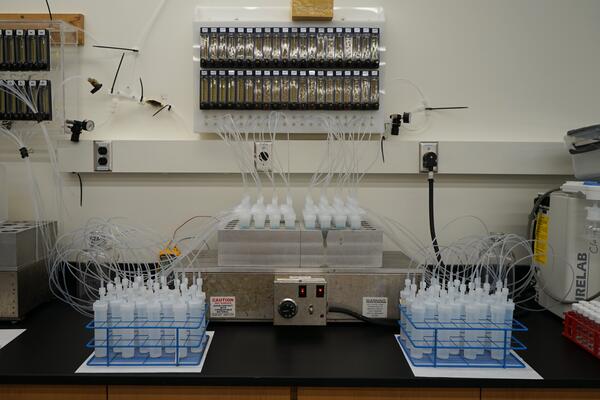
Water distillation equipment for methylmercury analysis in a mercury research laboratory.
Water distillation equipment for methylmercury analysis in a mercury research laboratory.
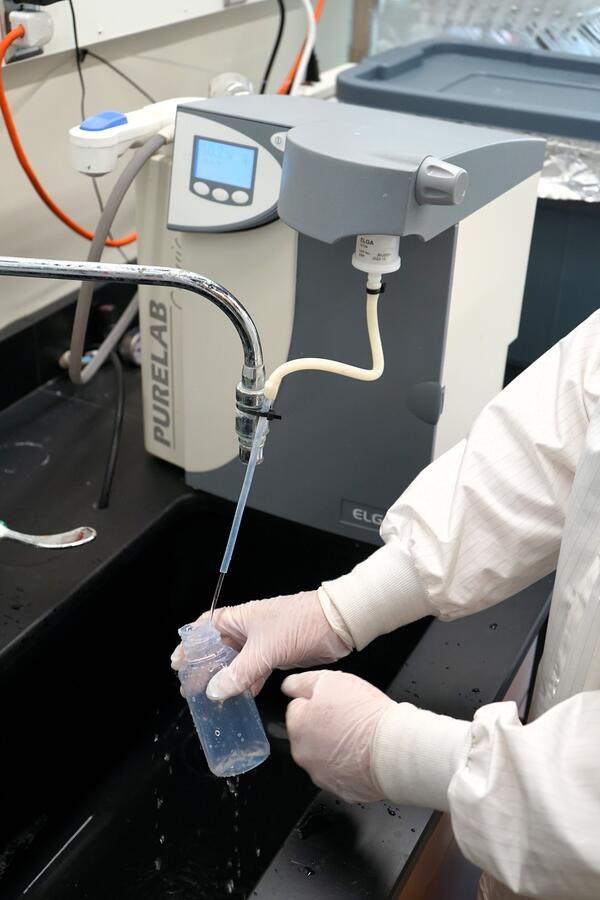
USGS scientist rinsing white plastic Teflon sample bottle with deionized water in a laboratory.
USGS scientist rinsing white plastic Teflon sample bottle with deionized water in a laboratory.
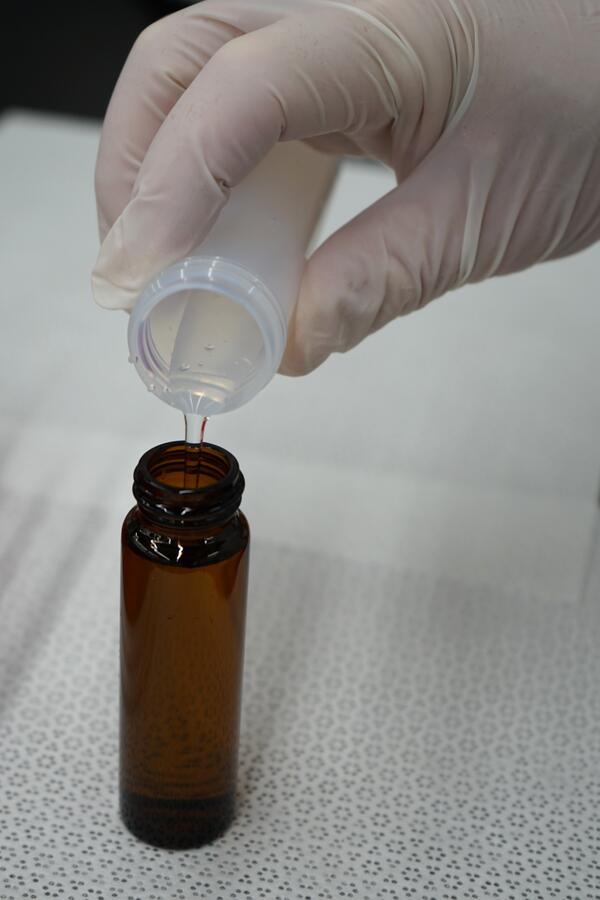
USGS scientist preparing a sample for metal analysis. A close up view of gloved hand pouring water sample from Teflon plastic tube to amber glass sample bottle.
USGS scientist preparing a sample for metal analysis. A close up view of gloved hand pouring water sample from Teflon plastic tube to amber glass sample bottle.

View of downtown Milwaukee, Wisconsin from Pier Wisconsin Cruise Dock in winter.
View of downtown Milwaukee, Wisconsin from Pier Wisconsin Cruise Dock in winter.

View of downtown Milwaukee, Wisconsin from Pier Wisconsin Cruise dock in winter.
View of downtown Milwaukee, Wisconsin from Pier Wisconsin Cruise dock in winter.

Welcome to the Fall/Winter 2022 edition of the Upper Midwest Water Science Center (UMid WSC) newsletter.
This edition contains office news, a 2022 quarter 4 data highlight, thre project features, two employee features, a social media holiday feature, and all UMid WSC products published October 2022 through December 2022.
Welcome to the Fall/Winter 2022 edition of the Upper Midwest Water Science Center (UMid WSC) newsletter.
This edition contains office news, a 2022 quarter 4 data highlight, thre project features, two employee features, a social media holiday feature, and all UMid WSC products published October 2022 through December 2022.

A snow-covered Streamgage 04085074 with a green USGS sign in front of a red barn on an overcast snowy day at Dutchman Creek at Cyrus Street near Ashwaubenon, Wisconsin.
A snow-covered Streamgage 04085074 with a green USGS sign in front of a red barn on an overcast snowy day at Dutchman Creek at Cyrus Street near Ashwaubenon, Wisconsin.
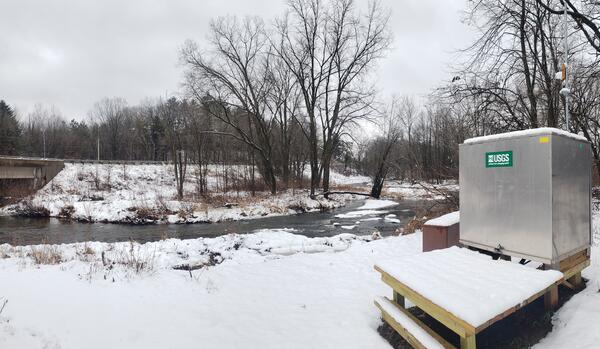
USGS streamgage 04072150 at Duck Creek near Howard, Wisconsin covered in layer of snow overcast December day.
View this streamgage's data here: https://waterdata.usgs.gov/monitoring-location/04072150/
USGS streamgage 04072150 at Duck Creek near Howard, Wisconsin covered in layer of snow overcast December day.
View this streamgage's data here: https://waterdata.usgs.gov/monitoring-location/04072150/
Welcome to the inaugural edition of the USGS Upper Midwest Water Science Center newsletter! We expect this to be the first of a set of regular quarterly publications keeping you informed of the activities of our Center.
Welcome to the inaugural edition of the USGS Upper Midwest Water Science Center newsletter! We expect this to be the first of a set of regular quarterly publications keeping you informed of the activities of our Center.

Map displaying National Park Service Units of the Upper Midwest, including Minnesota, Wisconsin and Michigan.
Map displaying National Park Service Units of the Upper Midwest, including Minnesota, Wisconsin and Michigan.

Helicopter used to tow electromagnetic (AEM) survey equipment at AEM survey in southwest Wisconsin 2022. In March 2022, a helicopter carried an airborne electromagnetic induction sensor over parts of southeast and southwest Wisconsin as part of a USGS study to map the aquifers in the region.
Helicopter used to tow electromagnetic (AEM) survey equipment at AEM survey in southwest Wisconsin 2022. In March 2022, a helicopter carried an airborne electromagnetic induction sensor over parts of southeast and southwest Wisconsin as part of a USGS study to map the aquifers in the region.

Helicopter lifting off with geophysical equipment loop below attached via slingload. Technician on ground for scale. In March 2022, a helicopter carried an airborne electromagnetic induction sensor over parts of southeast and southwest Wisconsin as part of a USGS study to map the aquifers in the region.
Helicopter lifting off with geophysical equipment loop below attached via slingload. Technician on ground for scale. In March 2022, a helicopter carried an airborne electromagnetic induction sensor over parts of southeast and southwest Wisconsin as part of a USGS study to map the aquifers in the region.

Helicopter lifting off with geophysical equipment loop on ground below attached via slingload. Technician on ground for scale. In March 2022, a helicopter carried an airborne electromagnetic induction sensor over parts of southeast and southwest Wisconsin as part of a USGS study to map the aquifers in the region.
Helicopter lifting off with geophysical equipment loop on ground below attached via slingload. Technician on ground for scale. In March 2022, a helicopter carried an airborne electromagnetic induction sensor over parts of southeast and southwest Wisconsin as part of a USGS study to map the aquifers in the region.

Geophysical equipment loop for airborne electromagnetic (AEM) survey on ground prior to liftoff. Technician on ground for scale. In March 2022, a helicopter carried an airborne electromagnetic induction sensor over parts of southeast and southwest Wisconsin as part of a USGS study to map the aquifers in the region.
Geophysical equipment loop for airborne electromagnetic (AEM) survey on ground prior to liftoff. Technician on ground for scale. In March 2022, a helicopter carried an airborne electromagnetic induction sensor over parts of southeast and southwest Wisconsin as part of a USGS study to map the aquifers in the region.

Geophysical equipment loop for airborne electromagnetic (AEM) survey on ground prior to liftoff. Technician on ground for scale. In March 2022, a helicopter carried an airborne electromagnetic induction sensor over parts of southeast and southwest Wisconsin as part of a USGS study to map the aquifers in the region.
Geophysical equipment loop for airborne electromagnetic (AEM) survey on ground prior to liftoff. Technician on ground for scale. In March 2022, a helicopter carried an airborne electromagnetic induction sensor over parts of southeast and southwest Wisconsin as part of a USGS study to map the aquifers in the region.

Research geophysicist Burke Minsley discussing aerial electromagnetic (AEM) survey equipment with group of USGS employees and Cooperators at AEM survey in southwest Wisconsin 2022. In March 2022, a helicopter carried an airborne electromagnetic induction sensor over parts of southeast and southwest Wisconsin as part of a USGS study to map the aquifers in t
Research geophysicist Burke Minsley discussing aerial electromagnetic (AEM) survey equipment with group of USGS employees and Cooperators at AEM survey in southwest Wisconsin 2022. In March 2022, a helicopter carried an airborne electromagnetic induction sensor over parts of southeast and southwest Wisconsin as part of a USGS study to map the aquifers in t

Research geophysicist Burke Minsley discussing aerial electromagnetic (AEM) survey equipment with group of USGS employees and Cooperators at AEM survey in southwest Wisconsin 2022. In March 2022, a helicopter carried an airborne electromagnetic induction sensor over parts of southeast and southwest Wisconsin as part of a USGS study to map the aquifers in t
Research geophysicist Burke Minsley discussing aerial electromagnetic (AEM) survey equipment with group of USGS employees and Cooperators at AEM survey in southwest Wisconsin 2022. In March 2022, a helicopter carried an airborne electromagnetic induction sensor over parts of southeast and southwest Wisconsin as part of a USGS study to map the aquifers in t

Research geophysicist Burke Minsley discussing aerial electromagnetic (AEM) survey equipment with group of USGS employees and Cooperators at AEM survey in southwest Wisconsin 2022. In March 2022, a helicopter carried an airborne electromagnetic induction sensor over parts of southeast and southwest Wisconsin as part of a USGS study to map the aquifers in t
Research geophysicist Burke Minsley discussing aerial electromagnetic (AEM) survey equipment with group of USGS employees and Cooperators at AEM survey in southwest Wisconsin 2022. In March 2022, a helicopter carried an airborne electromagnetic induction sensor over parts of southeast and southwest Wisconsin as part of a USGS study to map the aquifers in t
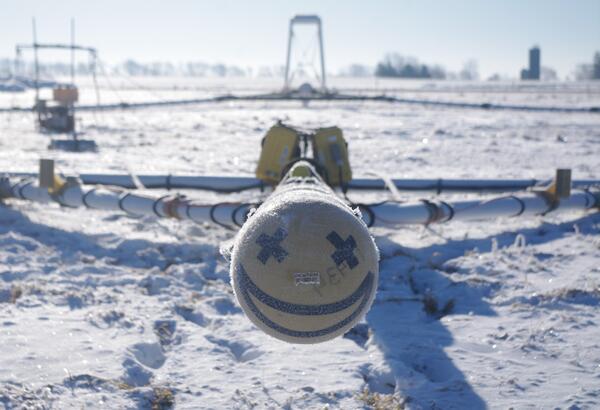
Smiley face on front of electromagnetic (AEM) survey equipment at AEM survey in southwest Wisconsin 2022. In March 2022, a helicopter carried an airborne electromagnetic induction sensor over parts of southeast and southwest Wisconsin as part of a USGS study to map the aquifers in the region.
Smiley face on front of electromagnetic (AEM) survey equipment at AEM survey in southwest Wisconsin 2022. In March 2022, a helicopter carried an airborne electromagnetic induction sensor over parts of southeast and southwest Wisconsin as part of a USGS study to map the aquifers in the region.

Geophysical equipment loop with sensor from SKYTEM for electromagnetic (AEM) survey in southwest Wisconsin 2022. In March 2022, a helicopter carried an airborne electromagnetic induction sensor over parts of southeast and southwest Wisconsin as part of a USGS study to map the aquifers in the region.
Geophysical equipment loop with sensor from SKYTEM for electromagnetic (AEM) survey in southwest Wisconsin 2022. In March 2022, a helicopter carried an airborne electromagnetic induction sensor over parts of southeast and southwest Wisconsin as part of a USGS study to map the aquifers in the region.

Low-flying helicopter with geophysical equipment loop deployed below it via slingload. In March 2022, a helicopter carried an airborne electromagnetic induction sensor over parts of southeast and southwest Wisconsin as part of a USGS study to map the aquifers in the region.
Low-flying helicopter with geophysical equipment loop deployed below it via slingload. In March 2022, a helicopter carried an airborne electromagnetic induction sensor over parts of southeast and southwest Wisconsin as part of a USGS study to map the aquifers in the region.
Water distillation equipment for methylmercury analysis in a mercury research laboratory.
Water distillation equipment for methylmercury analysis in a mercury research laboratory.
USGS scientist rinsing white plastic Teflon sample bottle with deionized water in a laboratory.
USGS scientist rinsing white plastic Teflon sample bottle with deionized water in a laboratory.
USGS scientist preparing a sample for metal analysis. A close up view of gloved hand pouring water sample from Teflon plastic tube to amber glass sample bottle.
USGS scientist preparing a sample for metal analysis. A close up view of gloved hand pouring water sample from Teflon plastic tube to amber glass sample bottle.
View of downtown Milwaukee, Wisconsin from Pier Wisconsin Cruise Dock in winter.
View of downtown Milwaukee, Wisconsin from Pier Wisconsin Cruise Dock in winter.
View of downtown Milwaukee, Wisconsin from Pier Wisconsin Cruise dock in winter.
View of downtown Milwaukee, Wisconsin from Pier Wisconsin Cruise dock in winter.
Welcome to the Fall/Winter 2022 edition of the Upper Midwest Water Science Center (UMid WSC) newsletter.
This edition contains office news, a 2022 quarter 4 data highlight, thre project features, two employee features, a social media holiday feature, and all UMid WSC products published October 2022 through December 2022.
Welcome to the Fall/Winter 2022 edition of the Upper Midwest Water Science Center (UMid WSC) newsletter.
This edition contains office news, a 2022 quarter 4 data highlight, thre project features, two employee features, a social media holiday feature, and all UMid WSC products published October 2022 through December 2022.
A snow-covered Streamgage 04085074 with a green USGS sign in front of a red barn on an overcast snowy day at Dutchman Creek at Cyrus Street near Ashwaubenon, Wisconsin.
A snow-covered Streamgage 04085074 with a green USGS sign in front of a red barn on an overcast snowy day at Dutchman Creek at Cyrus Street near Ashwaubenon, Wisconsin.
USGS streamgage 04072150 at Duck Creek near Howard, Wisconsin covered in layer of snow overcast December day.
View this streamgage's data here: https://waterdata.usgs.gov/monitoring-location/04072150/
USGS streamgage 04072150 at Duck Creek near Howard, Wisconsin covered in layer of snow overcast December day.
View this streamgage's data here: https://waterdata.usgs.gov/monitoring-location/04072150/
Welcome to the inaugural edition of the USGS Upper Midwest Water Science Center newsletter! We expect this to be the first of a set of regular quarterly publications keeping you informed of the activities of our Center.
Welcome to the inaugural edition of the USGS Upper Midwest Water Science Center newsletter! We expect this to be the first of a set of regular quarterly publications keeping you informed of the activities of our Center.
Map displaying National Park Service Units of the Upper Midwest, including Minnesota, Wisconsin and Michigan.
Map displaying National Park Service Units of the Upper Midwest, including Minnesota, Wisconsin and Michigan.
Helicopter used to tow electromagnetic (AEM) survey equipment at AEM survey in southwest Wisconsin 2022. In March 2022, a helicopter carried an airborne electromagnetic induction sensor over parts of southeast and southwest Wisconsin as part of a USGS study to map the aquifers in the region.
Helicopter used to tow electromagnetic (AEM) survey equipment at AEM survey in southwest Wisconsin 2022. In March 2022, a helicopter carried an airborne electromagnetic induction sensor over parts of southeast and southwest Wisconsin as part of a USGS study to map the aquifers in the region.
Helicopter lifting off with geophysical equipment loop below attached via slingload. Technician on ground for scale. In March 2022, a helicopter carried an airborne electromagnetic induction sensor over parts of southeast and southwest Wisconsin as part of a USGS study to map the aquifers in the region.
Helicopter lifting off with geophysical equipment loop below attached via slingload. Technician on ground for scale. In March 2022, a helicopter carried an airborne electromagnetic induction sensor over parts of southeast and southwest Wisconsin as part of a USGS study to map the aquifers in the region.
Helicopter lifting off with geophysical equipment loop on ground below attached via slingload. Technician on ground for scale. In March 2022, a helicopter carried an airborne electromagnetic induction sensor over parts of southeast and southwest Wisconsin as part of a USGS study to map the aquifers in the region.
Helicopter lifting off with geophysical equipment loop on ground below attached via slingload. Technician on ground for scale. In March 2022, a helicopter carried an airborne electromagnetic induction sensor over parts of southeast and southwest Wisconsin as part of a USGS study to map the aquifers in the region.
Geophysical equipment loop for airborne electromagnetic (AEM) survey on ground prior to liftoff. Technician on ground for scale. In March 2022, a helicopter carried an airborne electromagnetic induction sensor over parts of southeast and southwest Wisconsin as part of a USGS study to map the aquifers in the region.
Geophysical equipment loop for airborne electromagnetic (AEM) survey on ground prior to liftoff. Technician on ground for scale. In March 2022, a helicopter carried an airborne electromagnetic induction sensor over parts of southeast and southwest Wisconsin as part of a USGS study to map the aquifers in the region.
Geophysical equipment loop for airborne electromagnetic (AEM) survey on ground prior to liftoff. Technician on ground for scale. In March 2022, a helicopter carried an airborne electromagnetic induction sensor over parts of southeast and southwest Wisconsin as part of a USGS study to map the aquifers in the region.
Geophysical equipment loop for airborne electromagnetic (AEM) survey on ground prior to liftoff. Technician on ground for scale. In March 2022, a helicopter carried an airborne electromagnetic induction sensor over parts of southeast and southwest Wisconsin as part of a USGS study to map the aquifers in the region.
Research geophysicist Burke Minsley discussing aerial electromagnetic (AEM) survey equipment with group of USGS employees and Cooperators at AEM survey in southwest Wisconsin 2022. In March 2022, a helicopter carried an airborne electromagnetic induction sensor over parts of southeast and southwest Wisconsin as part of a USGS study to map the aquifers in t
Research geophysicist Burke Minsley discussing aerial electromagnetic (AEM) survey equipment with group of USGS employees and Cooperators at AEM survey in southwest Wisconsin 2022. In March 2022, a helicopter carried an airborne electromagnetic induction sensor over parts of southeast and southwest Wisconsin as part of a USGS study to map the aquifers in t
Research geophysicist Burke Minsley discussing aerial electromagnetic (AEM) survey equipment with group of USGS employees and Cooperators at AEM survey in southwest Wisconsin 2022. In March 2022, a helicopter carried an airborne electromagnetic induction sensor over parts of southeast and southwest Wisconsin as part of a USGS study to map the aquifers in t
Research geophysicist Burke Minsley discussing aerial electromagnetic (AEM) survey equipment with group of USGS employees and Cooperators at AEM survey in southwest Wisconsin 2022. In March 2022, a helicopter carried an airborne electromagnetic induction sensor over parts of southeast and southwest Wisconsin as part of a USGS study to map the aquifers in t
Research geophysicist Burke Minsley discussing aerial electromagnetic (AEM) survey equipment with group of USGS employees and Cooperators at AEM survey in southwest Wisconsin 2022. In March 2022, a helicopter carried an airborne electromagnetic induction sensor over parts of southeast and southwest Wisconsin as part of a USGS study to map the aquifers in t
Research geophysicist Burke Minsley discussing aerial electromagnetic (AEM) survey equipment with group of USGS employees and Cooperators at AEM survey in southwest Wisconsin 2022. In March 2022, a helicopter carried an airborne electromagnetic induction sensor over parts of southeast and southwest Wisconsin as part of a USGS study to map the aquifers in t
Smiley face on front of electromagnetic (AEM) survey equipment at AEM survey in southwest Wisconsin 2022. In March 2022, a helicopter carried an airborne electromagnetic induction sensor over parts of southeast and southwest Wisconsin as part of a USGS study to map the aquifers in the region.
Smiley face on front of electromagnetic (AEM) survey equipment at AEM survey in southwest Wisconsin 2022. In March 2022, a helicopter carried an airborne electromagnetic induction sensor over parts of southeast and southwest Wisconsin as part of a USGS study to map the aquifers in the region.
Geophysical equipment loop with sensor from SKYTEM for electromagnetic (AEM) survey in southwest Wisconsin 2022. In March 2022, a helicopter carried an airborne electromagnetic induction sensor over parts of southeast and southwest Wisconsin as part of a USGS study to map the aquifers in the region.
Geophysical equipment loop with sensor from SKYTEM for electromagnetic (AEM) survey in southwest Wisconsin 2022. In March 2022, a helicopter carried an airborne electromagnetic induction sensor over parts of southeast and southwest Wisconsin as part of a USGS study to map the aquifers in the region.
Low-flying helicopter with geophysical equipment loop deployed below it via slingload. In March 2022, a helicopter carried an airborne electromagnetic induction sensor over parts of southeast and southwest Wisconsin as part of a USGS study to map the aquifers in the region.
Low-flying helicopter with geophysical equipment loop deployed below it via slingload. In March 2022, a helicopter carried an airborne electromagnetic induction sensor over parts of southeast and southwest Wisconsin as part of a USGS study to map the aquifers in the region.