
Michael Focazio, PhD (Former Employee)
Science and Products
Filter Total Items: 68
Endocrine Disrupting Chemicals in the Slick Scum that Covers Stones in Streams
The slick scum or biofilm that covers most rocks in streams can accumulate contaminants that disrupt reproductive and other endocrine systems in fish. This is the finding of a team of U.S. Geological Survey (USGS) and University of Colorado Boulder scientists as described in a recent article in Environmental Science and Technology ( Writer and others, 2011). Biofilms are a mixture of algae...
Evidence of Endocrine Disruption Unexpectedly Found in Minnesota Lakes
Endocrine disrupting chemicals and indicators of endocrine disruption were found in several Minnesota lakes with surrounding urban, residential, agricultural, and forested land uses. The lakes do not directly receive discharges from industries or wastewater-treatment plants; however, they are used for recreation, and they receive water from widely scattered sources. The presence of both male and...
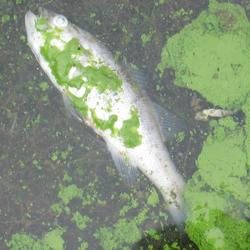
Algal Blooms Consistently Produce Complex Mixtures of Cyanotoxins and Co-Occur with Taste-and-Odor Causing Compounds in 23 Midwestern Lakes
U.S. Geological Survey (USGS) scientists studying the effects of harmful algal blooms on lake water quality found that blooms of blue-green algae (cyanobacteria) in Midwestern lakes produced mixtures of cyanotoxins and taste-and-odor causing compounds, which co-occurred in lake water samples. Cyanotoxins can cause allergic and/or respiratory issues, attack the liver and kidneys, or affect the...
Hormones Degrade in the Environment!
In two separate studies, U.S. Geological Survey (USGS) scientists demonstrated that hormones such as estrogen can biodegrade in stream and groundwater environments. This is an important finding because the science, regulatory, and environmental communities have concerns about the environmental fate of endocrine-disrupting chemicals, such as hormones, in the human wastewaters discharged to the...
Some Ecosystems will Respond to Reductions in Mercury Emissions
An international team of scientists investigating mercury cycling in an experimental watershed in Ontario, Canada, conclusively demonstrated at the ecosystem scale that changes in mercury loadings are expected to result in proportional or near proportional changes in mercury bioaccumulation in fish. Policies to reduce atmospheric emissions of mercury are intended to reduce mercury bioaccumulation...
Antidepressants in Stream Waters! Are They in the Fish Too?
For some fish living downstream of sewage treatment plants the answer is yes. U.S. Geological Survey (USGS) scientists and their colleagues published a paper in Environmental Science and Technology documenting that specific antidepressants and their degradates found in wastewater discharged into streams by municipal wastewater treatment plants are taken up into the bodies of fish living downstream...
Manufacturing Facilities Release Pharmaceuticals to the Environment
In a 2004-2009 study, U.S. Geological Survey (USGS) scientists found that pharmaceutical manufacturing facilities can be a significant source of pharmaceuticals to the environment. Effluents from two wastewater treatment plants (WWTPs) that receive discharge from pharmaceutical manufacturing facilities (PMFs) had 10 to 1000 times higher concentrations of pharmaceuticals than effluents from 24...
Tackling Fish Endocrine Disruption
Intersex, the presence of both male and female characteristics within the same fish, is being observed in fish in more streams across the Nation. Intersex is one manifestation of endocrine disruption in fish. Endocrine disruption can result in adverse effects on the development of the brain and nervous system, the growth and function of the reproductive system, and the response to stressors in the...
Measuring Antidepressants, Fungicides, and Insecticides in the Environment
U.S. Geological Survey (USGS) scientists are developing new laboratory analytical methods to measure contaminants in samples of environmental water, sediment, and soil. The work is part of a continuing effort to provide information on new and understudied contaminants to water-resource managers, environmental regulators, and the public. The new methods are used by USGS scientists and others to...
Emerging Contaminants Targeted in a Reconnaissance of Ground Water and Untreated Drinking-Water Sources
Two national-scale reconnaissance studies recently conducted by the U.S. Geological Survey (USGS) were the first to collect baseline information on the environmental occurrence of pharmaceuticals, personal-care products, detergents, flame retardants, naturally occurring sterols, and other organic contaminants in ground water and untreated sources of drinking water in the United States. These...
Household Chemicals and Drugs Found in Biosolids from Wastewater Treatment Plants
Biosolids, the treated sludge generated by the treatment of sewage at wastewater treatment plants, is something that most people don't think about as they flush everyday chemicals and drugs down the drain. However, U.S. Geological Survey (USGS) scientists found that biosolids contain relatively high concentrations (hundreds of milligrams per kilogram) of the active ingredients commonly found in a...
Pharmaceuticals Found in Soil Irrigated with Reclaimed Water
Many areas of the Nation are faced with water shortages due to significant demand for water. As a result, supplies are being augmented with treated wastewater for uses such as irrigation. In a study recently published in the journal "Environmental Toxicology and Chemistry," a team of U.S. Geological Survey (USGS) scientists reported that pharmaceuticals in wastewater used for irrigation persist in...
Filter Total Items: 67
Occurrence of selected radionuclides in ground water used for drinking water in the United States: A reconnaissance survey, 1998 Occurrence of selected radionuclides in ground water used for drinking water in the United States: A reconnaissance survey, 1998
The U.S. Geological Survey, in collaboration with the U.S. Environmental Protection Agency, the American Water Works Association, and the American Water Works Service Company, completed a targeted national reconnaissance survey of selected radionuclides in public ground-water supplies. Radionuclides analyzed included radium-224 (Ra-224), radium-226 (Ra-226), radium-228 (Ra-228), polonium...
Authors
Michael J. Focazio, Zoltan Szabo, Thomas F. Kraemer, Ann H. Mullin, Thomas H. Barringer, Vincent T. dePaul
Arsenic in Ground-Water Resources of the United States Arsenic in Ground-Water Resources of the United States
Arsenic is a naturally occurring element in rocks, soils, and the waters in contact with them. Recognized as a toxic element for centuries, arsenic today also is a human health concern because it can contribute to skin, bladder, and other cancers (National Research Council, 1999). Recently, the National Research Council (1999) recommended lowering the current maximum contaminant level...
Authors
Alan H. Welch, Sharon A. Watkins, Dennis R. Helsel, Michael J. Focazio
A Retrospective Analysis on the Occurrence of Arsenic in Ground-Water Resources of the United States and Limitations in Drinking-Water-Supply Characterizations A Retrospective Analysis on the Occurrence of Arsenic in Ground-Water Resources of the United States and Limitations in Drinking-Water-Supply Characterizations
The Safe Drinking Water Act, as amended in 1996, requires the U.S. Environmental Protection Agency (USEPA) to review current drinking-water standards for arsenic, propose a maximum contaminant level for arsenic by January 1, 2000, and issue a final regulation by January, 2001. Quantification of the national occurrence of targeted ranges in arsenic concentration in ground water used for...
Authors
Michael J. Focazio, Alan H. Welch, Sharon A. Watkins, Dennis R. Helsel, Marilee A. Horn
Contaminants and drinking-water sources in 2001; recent findings of the U. S. Geological Survey Contaminants and drinking-water sources in 2001; recent findings of the U. S. Geological Survey
As the Nation's principal earth-science agency, the U.S. Geological Survey (USGS) studies numerous issues related to contamination of drinking-water sources. The work includes monitoring to determine the spatial and temporal distribution of contaminants; research to determine sources, transport, transformations, and fate of contaminants, and assessments of vulnerability. Much of the work...
Authors
G. G. Patterson, M. J. Focazio
Source-area characteristics of large public surface-water supplies in the conterminous United States an information resource for source-water assessment Source-area characteristics of large public surface-water supplies in the conterminous United States an information resource for source-water assessment
No abstract available.
Authors
R. B. Alexander, R. A. Smith, M. J. Focazio, M.A. Horn
Source-area characteristics of large public surface-water supplies in the conterminous United States : an information resource for source-water assessment Source-area characteristics of large public surface-water supplies in the conterminous United States : an information resource for source-water assessment
No abstract available.
Authors
Richard B. Alexander, Richard A. Smith, Michael J. Focazio, Marilee A. Horn
Discharge, nitrate load, and residence time of ground water in the Chesapeake Bay watershed Discharge, nitrate load, and residence time of ground water in the Chesapeake Bay watershed
No abstract available.
Authors
Scott Phillips, Michael J. Focazio, L. Joseph Bachman
Preliminary estimates of residence times and apparent ages of ground water in the Chesapeake Bay watershed, and water-quality data from a survey of springs Preliminary estimates of residence times and apparent ages of ground water in the Chesapeake Bay watershed, and water-quality data from a survey of springs
Knowledge of the residence times of the ground-water systems in Chesapeake Bay watershed helps resource managers anticipate potential delays between implementation of land-management practices and any improve-ments in river and estuary water quality. This report presents preliminary estimates of ground-water residence times and apparent ages of water in the shallow aquifers of the...
Authors
Michael J. Focazio, Niel Plummer, John K. Bohlke, Eurybiades Busenberg, L. Joseph Bachman, David S. Powars
Hydrologic characteristics and water budget for Swift Creek Reservoir, Virginia, 1996 Hydrologic characteristics and water budget for Swift Creek Reservoir, Virginia, 1996
No abstract available.
Authors
S. C. Skrobialowski, M. J. Focazio
Selected characteristics of stormflow and base flow affected by land use and cover in the Chickahominy River basin, Virginia, 1989-91 Selected characteristics of stormflow and base flow affected by land use and cover in the Chickahominy River basin, Virginia, 1989-91
The Chickahominy River is the principal source of raw-water supply managed by the Department of Public Utilities, City of Newport News. Selected characteristics of stormflow and base flow, and major land use and cover factors that affect the distribution, movement, and quality of water of the nontidal Chickahominy River were monitored at three continuous-record stations and two partial...
Authors
M. J. Focazio, R.E. Cooper
Potentiometric surface of the middle Potomac Aquifer in Virginia, 1993 Potentiometric surface of the middle Potomac Aquifer in Virginia, 1993
Ground-water level measurements from 50 wells in the middle Potomac aquifer in the Coastal Plain Physiographic Province of Virginia in 1993 were used to prepare a map of the potentiometric surface of the aquifer. The map shows the potentiometric surface of the middle Potomac aquifer sharply declining eastward from nearly 100 feet above sear level near the western boundary of the aquifer...
Authors
E. C. Hammond, E. R. McFarland, M. J. Focazio
Science and Products
Filter Total Items: 68
Endocrine Disrupting Chemicals in the Slick Scum that Covers Stones in Streams
The slick scum or biofilm that covers most rocks in streams can accumulate contaminants that disrupt reproductive and other endocrine systems in fish. This is the finding of a team of U.S. Geological Survey (USGS) and University of Colorado Boulder scientists as described in a recent article in Environmental Science and Technology ( Writer and others, 2011). Biofilms are a mixture of algae...
Evidence of Endocrine Disruption Unexpectedly Found in Minnesota Lakes
Endocrine disrupting chemicals and indicators of endocrine disruption were found in several Minnesota lakes with surrounding urban, residential, agricultural, and forested land uses. The lakes do not directly receive discharges from industries or wastewater-treatment plants; however, they are used for recreation, and they receive water from widely scattered sources. The presence of both male and...
Algal Blooms Consistently Produce Complex Mixtures of Cyanotoxins and Co-Occur with Taste-and-Odor Causing Compounds in 23 Midwestern Lakes
U.S. Geological Survey (USGS) scientists studying the effects of harmful algal blooms on lake water quality found that blooms of blue-green algae (cyanobacteria) in Midwestern lakes produced mixtures of cyanotoxins and taste-and-odor causing compounds, which co-occurred in lake water samples. Cyanotoxins can cause allergic and/or respiratory issues, attack the liver and kidneys, or affect the...
Hormones Degrade in the Environment!
In two separate studies, U.S. Geological Survey (USGS) scientists demonstrated that hormones such as estrogen can biodegrade in stream and groundwater environments. This is an important finding because the science, regulatory, and environmental communities have concerns about the environmental fate of endocrine-disrupting chemicals, such as hormones, in the human wastewaters discharged to the...
Some Ecosystems will Respond to Reductions in Mercury Emissions
An international team of scientists investigating mercury cycling in an experimental watershed in Ontario, Canada, conclusively demonstrated at the ecosystem scale that changes in mercury loadings are expected to result in proportional or near proportional changes in mercury bioaccumulation in fish. Policies to reduce atmospheric emissions of mercury are intended to reduce mercury bioaccumulation...
Antidepressants in Stream Waters! Are They in the Fish Too?
For some fish living downstream of sewage treatment plants the answer is yes. U.S. Geological Survey (USGS) scientists and their colleagues published a paper in Environmental Science and Technology documenting that specific antidepressants and their degradates found in wastewater discharged into streams by municipal wastewater treatment plants are taken up into the bodies of fish living downstream...
Manufacturing Facilities Release Pharmaceuticals to the Environment
In a 2004-2009 study, U.S. Geological Survey (USGS) scientists found that pharmaceutical manufacturing facilities can be a significant source of pharmaceuticals to the environment. Effluents from two wastewater treatment plants (WWTPs) that receive discharge from pharmaceutical manufacturing facilities (PMFs) had 10 to 1000 times higher concentrations of pharmaceuticals than effluents from 24...
Tackling Fish Endocrine Disruption
Intersex, the presence of both male and female characteristics within the same fish, is being observed in fish in more streams across the Nation. Intersex is one manifestation of endocrine disruption in fish. Endocrine disruption can result in adverse effects on the development of the brain and nervous system, the growth and function of the reproductive system, and the response to stressors in the...
Measuring Antidepressants, Fungicides, and Insecticides in the Environment
U.S. Geological Survey (USGS) scientists are developing new laboratory analytical methods to measure contaminants in samples of environmental water, sediment, and soil. The work is part of a continuing effort to provide information on new and understudied contaminants to water-resource managers, environmental regulators, and the public. The new methods are used by USGS scientists and others to...
Emerging Contaminants Targeted in a Reconnaissance of Ground Water and Untreated Drinking-Water Sources
Two national-scale reconnaissance studies recently conducted by the U.S. Geological Survey (USGS) were the first to collect baseline information on the environmental occurrence of pharmaceuticals, personal-care products, detergents, flame retardants, naturally occurring sterols, and other organic contaminants in ground water and untreated sources of drinking water in the United States. These...
Household Chemicals and Drugs Found in Biosolids from Wastewater Treatment Plants
Biosolids, the treated sludge generated by the treatment of sewage at wastewater treatment plants, is something that most people don't think about as they flush everyday chemicals and drugs down the drain. However, U.S. Geological Survey (USGS) scientists found that biosolids contain relatively high concentrations (hundreds of milligrams per kilogram) of the active ingredients commonly found in a...
Pharmaceuticals Found in Soil Irrigated with Reclaimed Water
Many areas of the Nation are faced with water shortages due to significant demand for water. As a result, supplies are being augmented with treated wastewater for uses such as irrigation. In a study recently published in the journal "Environmental Toxicology and Chemistry," a team of U.S. Geological Survey (USGS) scientists reported that pharmaceuticals in wastewater used for irrigation persist in...
Filter Total Items: 67
Occurrence of selected radionuclides in ground water used for drinking water in the United States: A reconnaissance survey, 1998 Occurrence of selected radionuclides in ground water used for drinking water in the United States: A reconnaissance survey, 1998
The U.S. Geological Survey, in collaboration with the U.S. Environmental Protection Agency, the American Water Works Association, and the American Water Works Service Company, completed a targeted national reconnaissance survey of selected radionuclides in public ground-water supplies. Radionuclides analyzed included radium-224 (Ra-224), radium-226 (Ra-226), radium-228 (Ra-228), polonium...
Authors
Michael J. Focazio, Zoltan Szabo, Thomas F. Kraemer, Ann H. Mullin, Thomas H. Barringer, Vincent T. dePaul
Arsenic in Ground-Water Resources of the United States Arsenic in Ground-Water Resources of the United States
Arsenic is a naturally occurring element in rocks, soils, and the waters in contact with them. Recognized as a toxic element for centuries, arsenic today also is a human health concern because it can contribute to skin, bladder, and other cancers (National Research Council, 1999). Recently, the National Research Council (1999) recommended lowering the current maximum contaminant level...
Authors
Alan H. Welch, Sharon A. Watkins, Dennis R. Helsel, Michael J. Focazio
A Retrospective Analysis on the Occurrence of Arsenic in Ground-Water Resources of the United States and Limitations in Drinking-Water-Supply Characterizations A Retrospective Analysis on the Occurrence of Arsenic in Ground-Water Resources of the United States and Limitations in Drinking-Water-Supply Characterizations
The Safe Drinking Water Act, as amended in 1996, requires the U.S. Environmental Protection Agency (USEPA) to review current drinking-water standards for arsenic, propose a maximum contaminant level for arsenic by January 1, 2000, and issue a final regulation by January, 2001. Quantification of the national occurrence of targeted ranges in arsenic concentration in ground water used for...
Authors
Michael J. Focazio, Alan H. Welch, Sharon A. Watkins, Dennis R. Helsel, Marilee A. Horn
Contaminants and drinking-water sources in 2001; recent findings of the U. S. Geological Survey Contaminants and drinking-water sources in 2001; recent findings of the U. S. Geological Survey
As the Nation's principal earth-science agency, the U.S. Geological Survey (USGS) studies numerous issues related to contamination of drinking-water sources. The work includes monitoring to determine the spatial and temporal distribution of contaminants; research to determine sources, transport, transformations, and fate of contaminants, and assessments of vulnerability. Much of the work...
Authors
G. G. Patterson, M. J. Focazio
Source-area characteristics of large public surface-water supplies in the conterminous United States an information resource for source-water assessment Source-area characteristics of large public surface-water supplies in the conterminous United States an information resource for source-water assessment
No abstract available.
Authors
R. B. Alexander, R. A. Smith, M. J. Focazio, M.A. Horn
Source-area characteristics of large public surface-water supplies in the conterminous United States : an information resource for source-water assessment Source-area characteristics of large public surface-water supplies in the conterminous United States : an information resource for source-water assessment
No abstract available.
Authors
Richard B. Alexander, Richard A. Smith, Michael J. Focazio, Marilee A. Horn
Discharge, nitrate load, and residence time of ground water in the Chesapeake Bay watershed Discharge, nitrate load, and residence time of ground water in the Chesapeake Bay watershed
No abstract available.
Authors
Scott Phillips, Michael J. Focazio, L. Joseph Bachman
Preliminary estimates of residence times and apparent ages of ground water in the Chesapeake Bay watershed, and water-quality data from a survey of springs Preliminary estimates of residence times and apparent ages of ground water in the Chesapeake Bay watershed, and water-quality data from a survey of springs
Knowledge of the residence times of the ground-water systems in Chesapeake Bay watershed helps resource managers anticipate potential delays between implementation of land-management practices and any improve-ments in river and estuary water quality. This report presents preliminary estimates of ground-water residence times and apparent ages of water in the shallow aquifers of the...
Authors
Michael J. Focazio, Niel Plummer, John K. Bohlke, Eurybiades Busenberg, L. Joseph Bachman, David S. Powars
Hydrologic characteristics and water budget for Swift Creek Reservoir, Virginia, 1996 Hydrologic characteristics and water budget for Swift Creek Reservoir, Virginia, 1996
No abstract available.
Authors
S. C. Skrobialowski, M. J. Focazio
Selected characteristics of stormflow and base flow affected by land use and cover in the Chickahominy River basin, Virginia, 1989-91 Selected characteristics of stormflow and base flow affected by land use and cover in the Chickahominy River basin, Virginia, 1989-91
The Chickahominy River is the principal source of raw-water supply managed by the Department of Public Utilities, City of Newport News. Selected characteristics of stormflow and base flow, and major land use and cover factors that affect the distribution, movement, and quality of water of the nontidal Chickahominy River were monitored at three continuous-record stations and two partial...
Authors
M. J. Focazio, R.E. Cooper
Potentiometric surface of the middle Potomac Aquifer in Virginia, 1993 Potentiometric surface of the middle Potomac Aquifer in Virginia, 1993
Ground-water level measurements from 50 wells in the middle Potomac aquifer in the Coastal Plain Physiographic Province of Virginia in 1993 were used to prepare a map of the potentiometric surface of the aquifer. The map shows the potentiometric surface of the middle Potomac aquifer sharply declining eastward from nearly 100 feet above sear level near the western boundary of the aquifer...
Authors
E. C. Hammond, E. R. McFarland, M. J. Focazio