
Tonie Rocke
Tonie Rocke is a Research Epidemiologist at the National Wildlife Health Center.
Science and Products
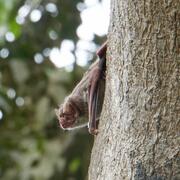
Dynamics of Rabies Transmission in Vampire Bats and Potential for Control Through Vaccination
Vampire bats are the primary spreader of rabies, a lethal disease that harms livestock and people across Latin America. Growth of the livestock industry and environmental changes in this region are leading to the expansion of vampire bats’ habitat range, and it is considered likely this species will move into the southern United States.
White-nose Syndrome Vaccine Updates
Since its emergence in 2006, white-nose syndrome (WNS) continues to spread in North America and has substantially impacted hibernating bat populations, contributing to declines of over 90% in northern long-eared ( Myotis septentrionalis), little brown ( Myotis lucifugus), and tri-colored bat ( Perimyotis subflavus) populations. We are developing tools and management strategies to protect bat...
Field trials for testing of white-nose syndrome vaccine candidates
White-nose syndrome (WNS), caused by the fungus Pseudogymnoascus destructans (Pd), continues to decimate bat populations in North America, and efforts to develop treatment options have intensified. One potential method for controlling WNS is vaccination of bats with specific antigens to elicit a protective immune response.
Development of SARS-CoV-2 vaccine to support black-footed ferret conservation
The SARS-CoV-2 virus is known to infect and cause severe disease, such as respiratory distress and death, in mustelids, including farm-raised mink ( Mustela lutreola and Neovison vison) and domestic ferrets ( M. putorius). This raised concern that the virus may also pose a threat to endangered black-footed ferrets ( Mustela nigripes) managed in captivity for breeding and recovery purposes.
Modeling the response of cave hibernating Myotis species to white-nose syndrome mitigation tactics
Bat Research Research collaboration: Robin Russell (NWHC), Tonie Rocke (NWHC), Wayne Thogmartin (UMESC), Evan Grant (EESC) White-nose syndrome is a fungal disease devastating cave-hibernating bat species ( Myotis spp.) in the eastern United States. Several mitigation tactics have been proposed to alleviate the effects of white-nose syndrome on bats including probiotics and vaccination. Questions...
Vaccines
The USGS National Wildlife Health Center (NWHC) works on developing various disease management tools, including the development of vaccines. Our current work focuses on vaccines for sylvatic plague, white-nose syndrome, and rabies as disease control strategies.
Sylvatic Plague
Sylvatic plague, caused by Yersinia pestis, is a bacterial disease transmitted by fleas that afflicts many mammalian species, including humans.
White-Nose Syndrome
White-nose syndrome (WNS) is an emergent disease of hibernating bats that has spread from the northeastern across United States at an alarming rate.
Vector-Borne Diseases
Vector-borne diseases are transmitted from one animal to another by vectors, including insects, such as mosquitoes or fleas, and arachnids, such as ticks. The USGS National Wildlife Health Center investigates wildlife diseases, including vector-borne diseases, such as West Nile virus and sylvatic plague.
Filter Total Items: 16
No Result Found
Filter Total Items: 139
PCR und ELISA - Alternativen zum Maustest für die Analyse des Botulismus-Neurotoxin-C1 Giftbildungspotentiales in Umweltproben? [PCR and ELISA - in vitro alternatives to the mouse-bioassay for assessing the botulinum-neurotoxin-C1 production potential in PCR und ELISA - Alternativen zum Maustest für die Analyse des Botulismus-Neurotoxin-C1 Giftbildungspotentiales in Umweltproben? [PCR and ELISA - in vitro alternatives to the mouse-bioassay for assessing the botulinum-neurotoxin-C1 production potential in
Botulism is one of the most important bird diseases world-wide and is caused by the intoxication with Botulinum-Neurotoxin-C1 (BoNt-C1), which is produced by toxigenic clostridia under appropriate conditions. Avian botulism leads regularly to large losses among the migrating bird populations breeding and resting at the saltwater pools of the Austrian national park Neusiedler See...
Authors
T.C. Zechmeister, A.H. Farnleitner, Tonie E. Rocke, F. Pittner, R. Rosengarten, R.L. Mach, A. Herzig, A.K.T. Kirschner
Possible importance of algal toxins in the Salton Sea, California Possible importance of algal toxins in the Salton Sea, California
In response to wildlife mortality including unexplained eared grebe (Podiceps nigricollis) die-off events in 1992 and 1994 and other mortality events including large fish kills, a survey was conducted for the presence of algal toxins in the Salton Sea. Goals of this survey were to determine if and when algal toxins are present in the Salton Sea and to describe the phytoplankton...
Authors
Kristen M. Reifel, M. P. McCoy, Tonie E. Rocke, M. A. Tiffany, S. H. Hurlbert, D. J. Faulkner
A serotype-specific polymerase chain reaction for identification of Pasteurella multocida serotype 1 A serotype-specific polymerase chain reaction for identification of Pasteurella multocida serotype 1
A serotype-specific polymerase chain reaction (PCR) assay was developed for detection and identification of Pasteurella multocida serotype 1, the causative agent of avian cholera in wild waterfowl. Arbitrarily primed PCR was used to detect DNA fragments that distinguish serotype 1 from the other 15 serotypes of P. multocida (with the exception of serotype 14). Oligonucleotide primers...
Authors
Tonie E. Rocke, S.R. Smith, A. Miyamoto, D.J. Shadduck
Joining forces to improve our world Joining forces to improve our world
No abstract available.
Authors
W.B. Karesh, S.A. Osofsky, Tonie E. Rocke, P.L. Barrows
A baiting system for delivery of an oral plague vaccine to black-tailed prairie dogs A baiting system for delivery of an oral plague vaccine to black-tailed prairie dogs
Laboratory and field studies were conducted between July and October 1999 to identify bait preference, biomarker efficacy, and bait acceptance rates for delivering an oral plague vaccine to black-tailed prairie dogs (Cynomys ludovicianus). Twenty juvenile captive prairie dogs were offered alfalfa baits containing either alfalfa, alfalfa and 5% molasses, or alfalfa, 5% molasses and 4%...
Authors
Terry E. Creekmore, Tonie E. Rocke, J. Hurley
Clinical features of avian vacuolar myelinopathy in American coots Clinical features of avian vacuolar myelinopathy in American coots
Objective—To characterize clinical features of avian vacuolar myelinopathy (AVM) in American coots. Design—Case-control study. Animals—26 AVM-affected American coots and 12 unaffected coots. Procedures—Complete physical, neurologic, hematologic, and plasma biochemical evaluations were performed. Affected coots received supportive care. All coots died or were euthanatized, and AVM status...
Authors
R. S. Larsen, Felicia B. Nutter, T. Augspurger, Tonie E. Rocke, L. Tomlinson, Nancy J. Thomas, M. K. Stoskopf
Avian vacuolar myelinopathy: a newly recognized fatal neurologic disease of eagles, waterfowl, and other birds Avian vacuolar myelinopathy: a newly recognized fatal neurologic disease of eagles, waterfowl, and other birds
Wildlife biologists and health specialists have been frustrated by a long list of negative findings in their AVM investigations, however studies continue to provide pieces of information to aid the determination of the cause and its source. Available data indicated that AVM may have been present since at least 1990, occurs in at least five states, has been documented during October...
Authors
John R. Fischer, L.A. Lewis, T. Augspurger, Tonie E. Rocke
Pleurochrysis pseudoroscoffensis (Prymnesiophyceae) blooms on the surface of the Salton Sea, California Pleurochrysis pseudoroscoffensis (Prymnesiophyceae) blooms on the surface of the Salton Sea, California
Dense populations of the coccolithophore Pleurochrysis pseudoroscoffensis were found in surface films at several locations around the Salton Sea in February–August, 1999. An unidentified coccolithophorid was also found in low densities in earlier studies of the lake (1955–1956). To our knowledge, this is the first record of this widespread marine species in any lake. Samples taken from...
Authors
Kristen M. Reifel, M. P. McCoy, M. A. Tiffany, Tonie E. Rocke, Charles Trees, S. B. Barlow, D. J. Faulkner, S. H. Hurlbert
Desert bighorn sheep mortality due to presumptive type C botulism in California Desert bighorn sheep mortality due to presumptive type C botulism in California
During a routine telemetry flight of the Mojave Desert (California, USA) in August 1995, mortality signals were detected from two of 12 radio-collared female desert bighorn sheep (Ovis canadensis) in the vicinity of Old Dad Peak in San Bernardino County (California). A series of field investigations determined that at least 45 bighorn sheep had died near two artificial water catchments...
Authors
P. K. Swift, J. D. Wehausen, H. B. Ernest, R. S. Singer, A. M. Pauli, H. Kinde, Tonie E. Rocke, V. C. Bleich
Efficacy of a type C botulism vaccine in green-winged teal Efficacy of a type C botulism vaccine in green-winged teal
We tested the efficacy of a single dose of Botumink toxoid for protecting wild green-winged teal (Anas crecca) during botulism epizootics caused by Clostridium botulinum type C. We challenged control and immunized ducks with four different doses of type C botulinum toxin to determine the LD50 for this species and to evaluate vaccine protection. Fewer immunized ducks were affected with...
Authors
Tonie E. Rocke, M.D. Samuel, P. K. Swift, G.S. Yarris
Type C botulism in dairy cattle from feed contaminated with a dead cat Type C botulism in dairy cattle from feed contaminated with a dead cat
Four hundred twenty-seven of 441 adult Holstein dairy cattle from a 1,200-cow dairy died over a 1-week period during early spring 1998. Affected animals were from 4 late lactation pens, one of which included the bull string. Signs included weakness, recumbency, watery diarrhea, and death. Eighty animals from the 4 pens were dead approximately 8 hours after the first ill cows were noted...
Authors
F.D. Galey, R. Terra, R. Walker, J. Adaska, M.A. Etchebarne, B. Puschener, R.H. Whitlock, Tonie E. Rocke, D. Willoughby, E. Tor
In situ detection of the Clostridium botulinum type C1 toxin gene in wetland sediments with a nested PCR assay In situ detection of the Clostridium botulinum type C1 toxin gene in wetland sediments with a nested PCR assay
A nested PCR was developed for detection of the Clostridium botulinum type C1 toxin gene in sediments collected from wetlands where avian botulism outbreaks had or had not occurred. The C1 toxin gene was detected in 16 of 18 sites, demonstrating both the ubiquitous distribution of C. botulinum type C in wetland sediments and the sensitivity of the detection assay.
Authors
Judy L. Williamson, Tonie E. Rocke, Judd M. Aiken
Science and Products
Dynamics of Rabies Transmission in Vampire Bats and Potential for Control Through Vaccination
Vampire bats are the primary spreader of rabies, a lethal disease that harms livestock and people across Latin America. Growth of the livestock industry and environmental changes in this region are leading to the expansion of vampire bats’ habitat range, and it is considered likely this species will move into the southern United States.
White-nose Syndrome Vaccine Updates
Since its emergence in 2006, white-nose syndrome (WNS) continues to spread in North America and has substantially impacted hibernating bat populations, contributing to declines of over 90% in northern long-eared ( Myotis septentrionalis), little brown ( Myotis lucifugus), and tri-colored bat ( Perimyotis subflavus) populations. We are developing tools and management strategies to protect bat...
Field trials for testing of white-nose syndrome vaccine candidates
White-nose syndrome (WNS), caused by the fungus Pseudogymnoascus destructans (Pd), continues to decimate bat populations in North America, and efforts to develop treatment options have intensified. One potential method for controlling WNS is vaccination of bats with specific antigens to elicit a protective immune response.
Development of SARS-CoV-2 vaccine to support black-footed ferret conservation
The SARS-CoV-2 virus is known to infect and cause severe disease, such as respiratory distress and death, in mustelids, including farm-raised mink ( Mustela lutreola and Neovison vison) and domestic ferrets ( M. putorius). This raised concern that the virus may also pose a threat to endangered black-footed ferrets ( Mustela nigripes) managed in captivity for breeding and recovery purposes.
Modeling the response of cave hibernating Myotis species to white-nose syndrome mitigation tactics
Bat Research Research collaboration: Robin Russell (NWHC), Tonie Rocke (NWHC), Wayne Thogmartin (UMESC), Evan Grant (EESC) White-nose syndrome is a fungal disease devastating cave-hibernating bat species ( Myotis spp.) in the eastern United States. Several mitigation tactics have been proposed to alleviate the effects of white-nose syndrome on bats including probiotics and vaccination. Questions...
Vaccines
The USGS National Wildlife Health Center (NWHC) works on developing various disease management tools, including the development of vaccines. Our current work focuses on vaccines for sylvatic plague, white-nose syndrome, and rabies as disease control strategies.
Sylvatic Plague
Sylvatic plague, caused by Yersinia pestis, is a bacterial disease transmitted by fleas that afflicts many mammalian species, including humans.
White-Nose Syndrome
White-nose syndrome (WNS) is an emergent disease of hibernating bats that has spread from the northeastern across United States at an alarming rate.
Vector-Borne Diseases
Vector-borne diseases are transmitted from one animal to another by vectors, including insects, such as mosquitoes or fleas, and arachnids, such as ticks. The USGS National Wildlife Health Center investigates wildlife diseases, including vector-borne diseases, such as West Nile virus and sylvatic plague.
Filter Total Items: 16
No Result Found
Filter Total Items: 139
PCR und ELISA - Alternativen zum Maustest für die Analyse des Botulismus-Neurotoxin-C1 Giftbildungspotentiales in Umweltproben? [PCR and ELISA - in vitro alternatives to the mouse-bioassay for assessing the botulinum-neurotoxin-C1 production potential in PCR und ELISA - Alternativen zum Maustest für die Analyse des Botulismus-Neurotoxin-C1 Giftbildungspotentiales in Umweltproben? [PCR and ELISA - in vitro alternatives to the mouse-bioassay for assessing the botulinum-neurotoxin-C1 production potential in
Botulism is one of the most important bird diseases world-wide and is caused by the intoxication with Botulinum-Neurotoxin-C1 (BoNt-C1), which is produced by toxigenic clostridia under appropriate conditions. Avian botulism leads regularly to large losses among the migrating bird populations breeding and resting at the saltwater pools of the Austrian national park Neusiedler See...
Authors
T.C. Zechmeister, A.H. Farnleitner, Tonie E. Rocke, F. Pittner, R. Rosengarten, R.L. Mach, A. Herzig, A.K.T. Kirschner
Possible importance of algal toxins in the Salton Sea, California Possible importance of algal toxins in the Salton Sea, California
In response to wildlife mortality including unexplained eared grebe (Podiceps nigricollis) die-off events in 1992 and 1994 and other mortality events including large fish kills, a survey was conducted for the presence of algal toxins in the Salton Sea. Goals of this survey were to determine if and when algal toxins are present in the Salton Sea and to describe the phytoplankton...
Authors
Kristen M. Reifel, M. P. McCoy, Tonie E. Rocke, M. A. Tiffany, S. H. Hurlbert, D. J. Faulkner
A serotype-specific polymerase chain reaction for identification of Pasteurella multocida serotype 1 A serotype-specific polymerase chain reaction for identification of Pasteurella multocida serotype 1
A serotype-specific polymerase chain reaction (PCR) assay was developed for detection and identification of Pasteurella multocida serotype 1, the causative agent of avian cholera in wild waterfowl. Arbitrarily primed PCR was used to detect DNA fragments that distinguish serotype 1 from the other 15 serotypes of P. multocida (with the exception of serotype 14). Oligonucleotide primers...
Authors
Tonie E. Rocke, S.R. Smith, A. Miyamoto, D.J. Shadduck
Joining forces to improve our world Joining forces to improve our world
No abstract available.
Authors
W.B. Karesh, S.A. Osofsky, Tonie E. Rocke, P.L. Barrows
A baiting system for delivery of an oral plague vaccine to black-tailed prairie dogs A baiting system for delivery of an oral plague vaccine to black-tailed prairie dogs
Laboratory and field studies were conducted between July and October 1999 to identify bait preference, biomarker efficacy, and bait acceptance rates for delivering an oral plague vaccine to black-tailed prairie dogs (Cynomys ludovicianus). Twenty juvenile captive prairie dogs were offered alfalfa baits containing either alfalfa, alfalfa and 5% molasses, or alfalfa, 5% molasses and 4%...
Authors
Terry E. Creekmore, Tonie E. Rocke, J. Hurley
Clinical features of avian vacuolar myelinopathy in American coots Clinical features of avian vacuolar myelinopathy in American coots
Objective—To characterize clinical features of avian vacuolar myelinopathy (AVM) in American coots. Design—Case-control study. Animals—26 AVM-affected American coots and 12 unaffected coots. Procedures—Complete physical, neurologic, hematologic, and plasma biochemical evaluations were performed. Affected coots received supportive care. All coots died or were euthanatized, and AVM status...
Authors
R. S. Larsen, Felicia B. Nutter, T. Augspurger, Tonie E. Rocke, L. Tomlinson, Nancy J. Thomas, M. K. Stoskopf
Avian vacuolar myelinopathy: a newly recognized fatal neurologic disease of eagles, waterfowl, and other birds Avian vacuolar myelinopathy: a newly recognized fatal neurologic disease of eagles, waterfowl, and other birds
Wildlife biologists and health specialists have been frustrated by a long list of negative findings in their AVM investigations, however studies continue to provide pieces of information to aid the determination of the cause and its source. Available data indicated that AVM may have been present since at least 1990, occurs in at least five states, has been documented during October...
Authors
John R. Fischer, L.A. Lewis, T. Augspurger, Tonie E. Rocke
Pleurochrysis pseudoroscoffensis (Prymnesiophyceae) blooms on the surface of the Salton Sea, California Pleurochrysis pseudoroscoffensis (Prymnesiophyceae) blooms on the surface of the Salton Sea, California
Dense populations of the coccolithophore Pleurochrysis pseudoroscoffensis were found in surface films at several locations around the Salton Sea in February–August, 1999. An unidentified coccolithophorid was also found in low densities in earlier studies of the lake (1955–1956). To our knowledge, this is the first record of this widespread marine species in any lake. Samples taken from...
Authors
Kristen M. Reifel, M. P. McCoy, M. A. Tiffany, Tonie E. Rocke, Charles Trees, S. B. Barlow, D. J. Faulkner, S. H. Hurlbert
Desert bighorn sheep mortality due to presumptive type C botulism in California Desert bighorn sheep mortality due to presumptive type C botulism in California
During a routine telemetry flight of the Mojave Desert (California, USA) in August 1995, mortality signals were detected from two of 12 radio-collared female desert bighorn sheep (Ovis canadensis) in the vicinity of Old Dad Peak in San Bernardino County (California). A series of field investigations determined that at least 45 bighorn sheep had died near two artificial water catchments...
Authors
P. K. Swift, J. D. Wehausen, H. B. Ernest, R. S. Singer, A. M. Pauli, H. Kinde, Tonie E. Rocke, V. C. Bleich
Efficacy of a type C botulism vaccine in green-winged teal Efficacy of a type C botulism vaccine in green-winged teal
We tested the efficacy of a single dose of Botumink toxoid for protecting wild green-winged teal (Anas crecca) during botulism epizootics caused by Clostridium botulinum type C. We challenged control and immunized ducks with four different doses of type C botulinum toxin to determine the LD50 for this species and to evaluate vaccine protection. Fewer immunized ducks were affected with...
Authors
Tonie E. Rocke, M.D. Samuel, P. K. Swift, G.S. Yarris
Type C botulism in dairy cattle from feed contaminated with a dead cat Type C botulism in dairy cattle from feed contaminated with a dead cat
Four hundred twenty-seven of 441 adult Holstein dairy cattle from a 1,200-cow dairy died over a 1-week period during early spring 1998. Affected animals were from 4 late lactation pens, one of which included the bull string. Signs included weakness, recumbency, watery diarrhea, and death. Eighty animals from the 4 pens were dead approximately 8 hours after the first ill cows were noted...
Authors
F.D. Galey, R. Terra, R. Walker, J. Adaska, M.A. Etchebarne, B. Puschener, R.H. Whitlock, Tonie E. Rocke, D. Willoughby, E. Tor
In situ detection of the Clostridium botulinum type C1 toxin gene in wetland sediments with a nested PCR assay In situ detection of the Clostridium botulinum type C1 toxin gene in wetland sediments with a nested PCR assay
A nested PCR was developed for detection of the Clostridium botulinum type C1 toxin gene in sediments collected from wetlands where avian botulism outbreaks had or had not occurred. The C1 toxin gene was detected in 16 of 18 sites, demonstrating both the ubiquitous distribution of C. botulinum type C in wetland sediments and the sensitivity of the detection assay.
Authors
Judy L. Williamson, Tonie E. Rocke, Judd M. Aiken