



The USGS Earth Mapping Resources Initiative (Earth MRI) is accelerating modern geological and geophysical mapping across the Eastern United States and the nation.
Videos
Videos intro.
Filter Total Items: 30
Earth MRI: A journey beneath the east coast (AD)
The USGS Earth Mapping Resources Initiative (Earth MRI) is accelerating modern geological and geophysical mapping across the Eastern United States and the nation.
Earth MRI: A journey beneath the east coast
The USGS Earth Mapping Resources Initiative (Earth MRI) is accelerating modern geological and geophysical mapping across the Eastern United States and the nation.
The USGS Earth Mapping Resources Initiative (Earth MRI) is accelerating modern geological and geophysical mapping across the Eastern United States and the nation.
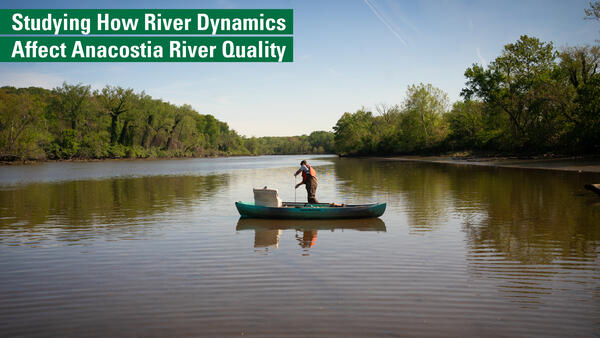
Studying Anacostia River Quality with DOEE
The USGS and D.C.’s DOEE have been working together to monitor water quality in the Anacostia, in support of the District's goal of expanding access to the water for local communities. DOEE relies on data and continuous monitoring from USGS to support important decisions about public safety and the accessibility of the area’s natural resources.
The USGS and D.C.’s DOEE have been working together to monitor water quality in the Anacostia, in support of the District's goal of expanding access to the water for local communities. DOEE relies on data and continuous monitoring from USGS to support important decisions about public safety and the accessibility of the area’s natural resources.
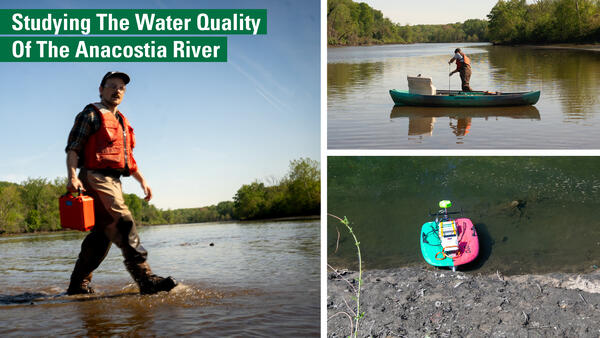
Studying the Water Quality of the Anacostia River
The USGS and D.C.’s DOEE have been working together to monitor water quality in the Anacostia, in support of the District's goal of expanding access to the water for local communities. DOEE relies on data and continuous monitoring from USGS to support important decisions about public safety and the accessibility of the area’s natural resources.
The USGS and D.C.’s DOEE have been working together to monitor water quality in the Anacostia, in support of the District's goal of expanding access to the water for local communities. DOEE relies on data and continuous monitoring from USGS to support important decisions about public safety and the accessibility of the area’s natural resources.

USGS On the Road - Potomac River Measurements
The Potomac River Supplies drinking water for Washington D.C., so it’s important for us to understand what’s going on in the river.
The Potomac River Supplies drinking water for Washington D.C., so it’s important for us to understand what’s going on in the river.

USGS Northeast Region: The Short Story
This video is an introduction of the USGS Northeast Region's science efforts to support society's evolving needs through its engaged and diverse workforce.
This video is an introduction of the USGS Northeast Region's science efforts to support society's evolving needs through its engaged and diverse workforce.

Imagery as Streamflow Data: Introducing the USGS Flow Photo Explorer
Imagery as Streamflow Data: Introducing the USGS Flow Photo ExplorerFlow is a critical variable in streams since it affects aquatic and riparian biological communities and human uses of water (i.e., recreation, public water supply, etc.). Flow regimes are changing due to anthropogenic (e.g., water withdrawals) and natural impacts (e.g., extreme weather events).
Imagery as Streamflow Data: Introducing the USGS Flow Photo Explorer
Imagery as Streamflow Data: Introducing the USGS Flow Photo ExplorerFlow is a critical variable in streams since it affects aquatic and riparian biological communities and human uses of water (i.e., recreation, public water supply, etc.). Flow regimes are changing due to anthropogenic (e.g., water withdrawals) and natural impacts (e.g., extreme weather events).

Imagery as Streamflow Data: Introducing the USGS Flow Photo Explorer (AD)
Imagery as Streamflow Data: Introducing the USGS Flow Photo Explorer (AD)Flow is a critical variable in streams since it affects aquatic and riparian biological communities and human uses of water (i.e., recreation, public water supply, etc.). Flow regimes are changing due to anthropogenic (e.g., water withdrawals) and natural impacts (e.g., extreme weather events).
Imagery as Streamflow Data: Introducing the USGS Flow Photo Explorer (AD)
Imagery as Streamflow Data: Introducing the USGS Flow Photo Explorer (AD)Flow is a critical variable in streams since it affects aquatic and riparian biological communities and human uses of water (i.e., recreation, public water supply, etc.). Flow regimes are changing due to anthropogenic (e.g., water withdrawals) and natural impacts (e.g., extreme weather events).

The Calm Before: The Short Story (AD)
When a major storm is forecasted to affect the Delmarva region, up-to-date information is vital for the response.
That’s when USGS crews spring into action, setting up rapid deployment gages that provide additional surge, wave, and tide hydrodynamics (SWaTH) data that augments our existing streamgage network.
When a major storm is forecasted to affect the Delmarva region, up-to-date information is vital for the response.
That’s when USGS crews spring into action, setting up rapid deployment gages that provide additional surge, wave, and tide hydrodynamics (SWaTH) data that augments our existing streamgage network.

The Calm Before: The Short Story
When a major storm is forecasted to affect the Delmarva region, up-to-date information is vital for the response.
That’s when USGS crews spring into action, setting up rapid deployment gages that provide additional surge, wave, and tide hydrodynamics (SWaTH) data that augments our existing streamgage network.
When a major storm is forecasted to affect the Delmarva region, up-to-date information is vital for the response.
That’s when USGS crews spring into action, setting up rapid deployment gages that provide additional surge, wave, and tide hydrodynamics (SWaTH) data that augments our existing streamgage network.

USGS on the Road: Searching for Striations in the DE Bay (AD)
USGS on the Road: Searching for Striations in the DE Bay (AD)It’s quite the trek to get to Ship John Shoal lighthouse, which is several miles off the Delaware coast and only accessible by boat. There, USGS scientists clean and service equipment that plays an important role in our understanding of the salt front in the Delaware Bay.
USGS on the Road: Searching for Striations in the DE Bay (AD)
USGS on the Road: Searching for Striations in the DE Bay (AD)It’s quite the trek to get to Ship John Shoal lighthouse, which is several miles off the Delaware coast and only accessible by boat. There, USGS scientists clean and service equipment that plays an important role in our understanding of the salt front in the Delaware Bay.

USGS on the Road: "Searching for Striations in the DE Bay"
USGS on the Road: "Searching for Striations in the DE Bay"It’s quite the trek to get to Ship John Shoal lighthouse, which is several miles off the Delaware coast and only accessible by boat. There, USGS scientists clean and service equipment that plays an important role in our understanding of the salt front in the Delaware Bay.
USGS on the Road: "Searching for Striations in the DE Bay"
USGS on the Road: "Searching for Striations in the DE Bay"It’s quite the trek to get to Ship John Shoal lighthouse, which is several miles off the Delaware coast and only accessible by boat. There, USGS scientists clean and service equipment that plays an important role in our understanding of the salt front in the Delaware Bay.

The Calm Before (AD)
When a major storm is forecasted to affect the Delmarva region, up-to-date information is vital for the response.
That’s when USGS crews spring into action, setting up rapid deployment gages that provide additional surge, wave, and tide hydrodynamics (SWaTH) data that augments our existing streamgage network.
When a major storm is forecasted to affect the Delmarva region, up-to-date information is vital for the response.
That’s when USGS crews spring into action, setting up rapid deployment gages that provide additional surge, wave, and tide hydrodynamics (SWaTH) data that augments our existing streamgage network.

The Calm Before
When a major storm is forecasted to affect the Delmarva region, up-to-date information is vital for the response.
That’s when USGS crews spring into action, setting up rapid deployment gages that provide additional surge, wave, and tide hydrodynamics (SWaTH) data that augments our existing streamgage network.
When a major storm is forecasted to affect the Delmarva region, up-to-date information is vital for the response.
That’s when USGS crews spring into action, setting up rapid deployment gages that provide additional surge, wave, and tide hydrodynamics (SWaTH) data that augments our existing streamgage network.

USGS on the Road: The Lake on the Potomac
Why is it important to know how much water is in Jennings Randolph Lake? The U.S. Army Corps of Engineers factors water-level data collected by the USGS into how much water they should release downstream into the North Branch Potomac River.
Why is it important to know how much water is in Jennings Randolph Lake? The U.S. Army Corps of Engineers factors water-level data collected by the USGS into how much water they should release downstream into the North Branch Potomac River.

USGS on the Road: The Lake on the Potomac (AD)
Why is it important to know how much water is in Jennings Randolph Lake? The U.S. Army Corps of Engineers factors water-level data collected by the USGS into how much water they should release downstream into the North Branch Potomac River.
Why is it important to know how much water is in Jennings Randolph Lake? The U.S. Army Corps of Engineers factors water-level data collected by the USGS into how much water they should release downstream into the North Branch Potomac River.

USGS on the Road: Doing Well in DC (AD)
How do we know if D.C. aquifers are protected from human contamination? The USGS samples groundwater for the presence or absence of specific chemical markers known to be of human origin. If we don’t find these markers, it’s a good indication the water is protected.
How do we know if D.C. aquifers are protected from human contamination? The USGS samples groundwater for the presence or absence of specific chemical markers known to be of human origin. If we don’t find these markers, it’s a good indication the water is protected.

USGS on the Road: Stormflow Forensics (AD)
It’s an age-old question: If the river floods and no one sees it, did it flood? Yes! High water events leave behind clues such as debris that USGS scientists can observe to indirectly estimate the water level and streamflow during the event.
It’s an age-old question: If the river floods and no one sees it, did it flood? Yes! High water events leave behind clues such as debris that USGS scientists can observe to indirectly estimate the water level and streamflow during the event.

USGS on the Road: Home Stream Home (AD)
Physical Scientists Leah Staub and Zachary Clifton assess a stream along the Chesterville Branch on the Eastern shore of Maryland.
Physical Scientists Leah Staub and Zachary Clifton assess a stream along the Chesterville Branch on the Eastern shore of Maryland.

USGS on the Road: Stormflow Forensics
It’s an age-old question: If the river floods and no one sees it, did it flood? Yes! High water events leave behind clues such as debris that USGS scientists can observe to indirectly estimate the water level and streamflow during the event.
It’s an age-old question: If the river floods and no one sees it, did it flood? Yes! High water events leave behind clues such as debris that USGS scientists can observe to indirectly estimate the water level and streamflow during the event.

USGS on the Road: Doing Well in DC
How do we know if D.C. aquifers are protected from human contamination? The USGS samples groundwater for the presence or absence of specific chemical markers known to be of human origin. If we don’t find these markers, it’s a good indication the water is protected.
How do we know if D.C. aquifers are protected from human contamination? The USGS samples groundwater for the presence or absence of specific chemical markers known to be of human origin. If we don’t find these markers, it’s a good indication the water is protected.