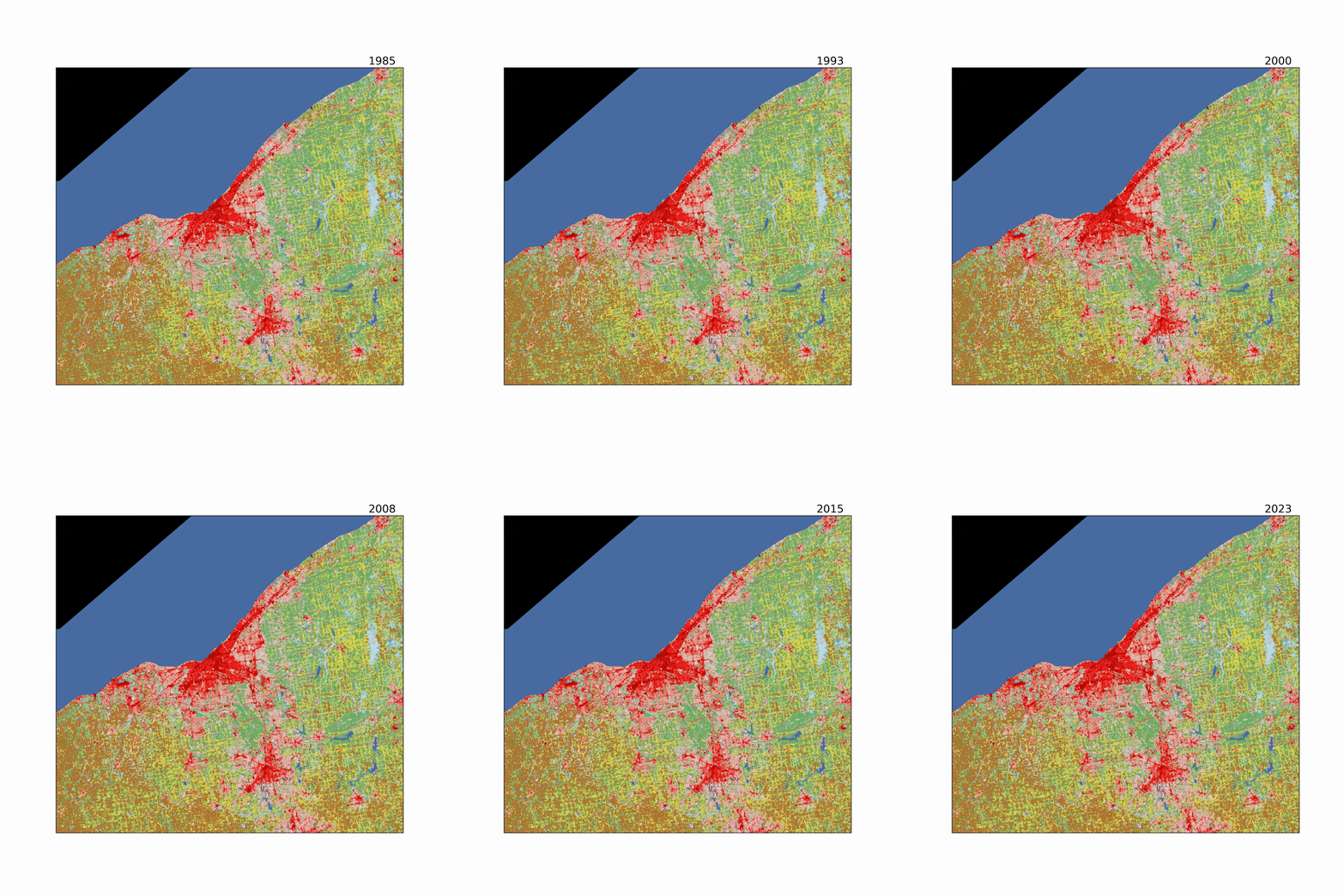
This animation for the years 1985 to 2023, from the Annual National Land Cover Database (NLCD) shows the change in urban development over time in the Cleveland, Ohio, area. Production of Annual NLCD is based at the USGS Earth Resources Observation and Science (EROS) Center.
Images
This animation for the years 1985 to 2023, from the Annual National Land Cover Database (NLCD) shows the change in urban development over time in the Cleveland, Ohio, area. Production of Annual NLCD is based at the USGS Earth Resources Observation and Science (EROS) Center.
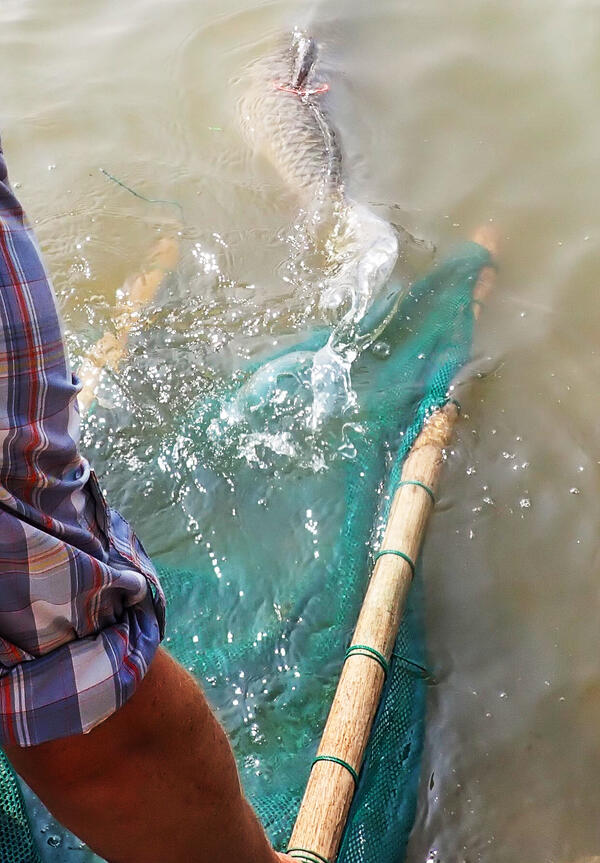
Gill net float at entrance to backwater habitat set to capture Grass Carp in the lower Huron River, OH. Photo credit: James Roberts, USGS.
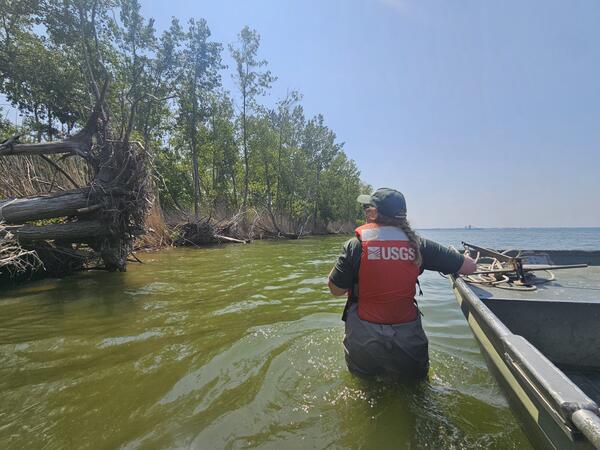
A USGS wetland scientist (GLSC; Ann Arbor, Michigan) pulls a small boat containing cut, invasive Phragmites australis during wetlands field work at Metzger Marsh on the shore of Lake Erie in Ohio. Photo credit: Anthony Rondon, USGS.
A juvenile lake sturgeon (Acipenser fulvescens) captured during a bottom trawl survey in Lake Erie aboard the GLSC’s R/V Muskie. Photo credit: Kevin Keretz, USGS.
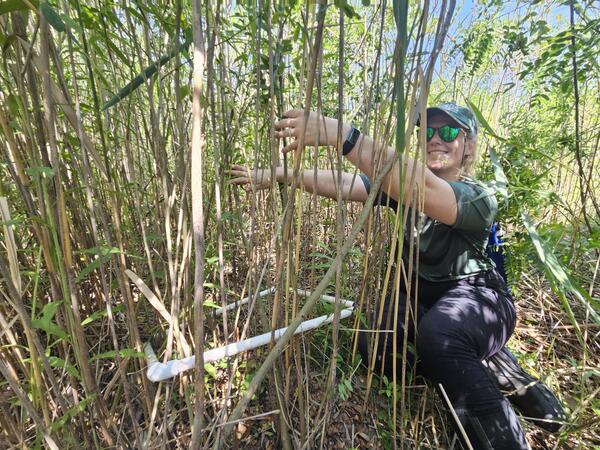
A USGS wetland scientist (GLSC; Ann Arbor, Michigan) counts the number of invasive Phragmites australis stems within a sampling quadrat in an effort to provide information about various control strategies used to manage the plant. Photo credit: Taaja Tucker-Silva, USGS.
A USGS wetland scientist (GLSC; Ann Arbor, Michigan) walks alongside a treated invasive Phragmites australis site. Photo credit: Taaja Tucker-Silva, USGS.
A map of Lake Erie that includes the rough dates of operation of autonomous and crewed vehicles by USGS, Saildrone, Monterey Bay Aquarium Research Institute (MBARI), and State and Ontario partners throughout Lake Erie during summer 2023.
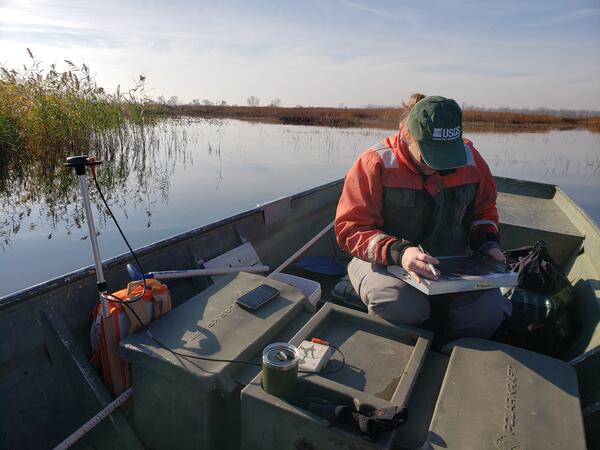
A USGS field crew (GLSC; Ann Arbor, Michigan) on an excursion in Metzger Marsh on Lake Erie to monitor invasive Phragmites australis. Photo credit: Kaira Liggett, USGS Contractor.
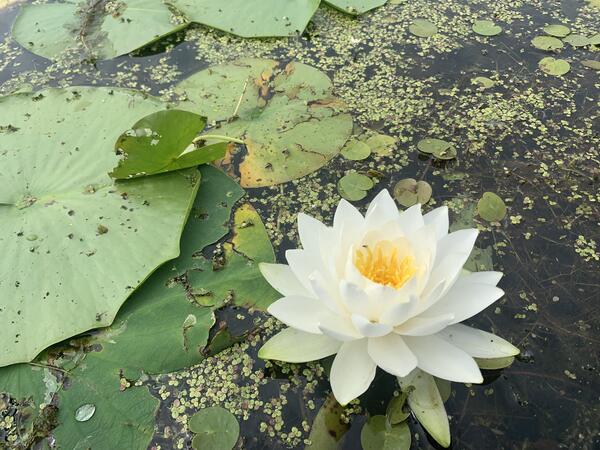
A water lily (Nymphaea) in full bloom surrounded by European frog-bit (Hydrocharis morsus-ranae), and Duckweed (Lemnaceae) in Mezger Marsh, part of the Ottawa National Wildlife Refuge on Lake Erie in Ohio. Photo credit: Kaira Liggett, USGS Contractor.
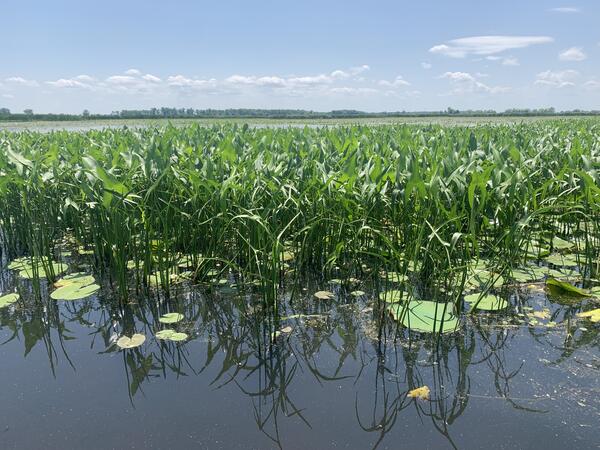
Aquatic vegetation, including arrowhead (Sagittaria), water lily (Nymphaea), lotus (Nelumbo) and European frog-bit (Hydrocharis morsus-ranae), photographed in Metzger Marsh, part of the Ottawa National Wildlife Refuge on Lake Erie in Ohio. Photo credit: Kaira Liggett, USGS Contractor.
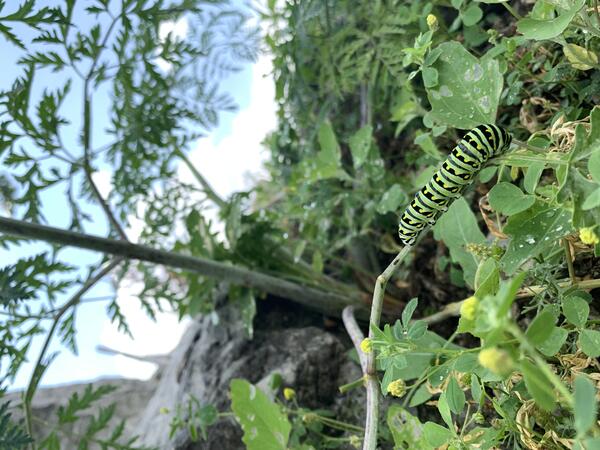
A black swallowtail caterpillar (Papilio polyxenes) feeding on vegetation at the Metzger Marsh boat launch, part of the Ottawa National Wildlife Refuge on Lake Erie in Ohio. Photo credit: Kaira Liggett, USGS Contractor.
A bottom trawl being deployed by USGS biological science technicians (GLSC; Huron, Ohio) aboard the GLSC’s R/V Muskie. Photo credit: Kevin Keretz, USGS.
Tagged Grass Carp swimming away after being release post telemetry surgery into the Sandusky River, OH. Photo credit: James Roberts, USGS.
The USGS research crew (GLSC; Huron, OH) aboard the R/V Muskie celebrate a large catch of adult yellow perch (Perca flavescens) to be tagged with acoustic transmitters and then released back into Lake Erie for tracking. Photo credit: Kevin Keretz, USGS.
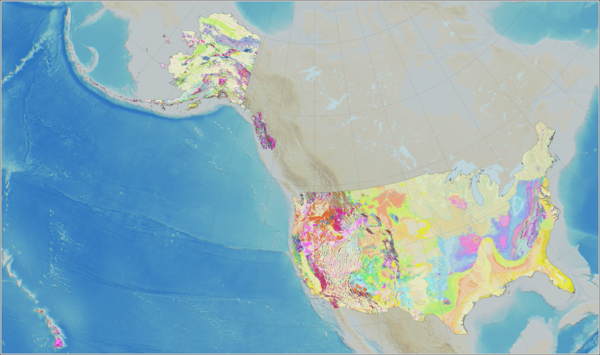
Map showing principal aquifers (PAs) and wells that were sampled as part of a Nationwide assessment of the quality of groundwater used for public supply.
USGS ecologist (GLSC; Ann Arbor, Michigan) uses GPS gear to map wetland vegetation at Metzger Marsh at the Ottawa National Wildlife Refuge on the shore of Lake Erie in Ohio. Photo credit: Kurt Kowalski, USGS.
Lotus pads (Nelumbo lutea) and cattails (Typha sp.) emerging in the Metzger Marsh Wildlife Area adjacent to Lake Erie. Photo credit: Kaira Liggett, USGS (contractor).
GLSC’s Kaira Liggett next to a floating mass of cut Phragmites at Metzger Marsh in Oak Harbor, OH. Photo credit: Wes Bickford, USGS.
USGS Biologist Wes Bickford cutting invasive Phragmites australis underwater. Credit: Spencer Widin, USGS
USGS Great Lakes Science Center technician Jared Lesniewicz processes an ichthyoplankton sample during a survey assessing grass carp spawning in the Cuyahoga River, a Lake Erie tributary in Cleveland, Ohio. As of the 2024 sampling season, no grass carp spawning has been documented in the Cuyahoga River. Photo Credit: James Roberts, USGS.
In Lake Erie, a USGS scuba diver swims with a smallmouth bass (Micropterus dolomieu) who is curious about the diver’s algae and mussel collections. Photo credit: Madeleine Giordano, USGS.