
U.S. flag

An official website of the United States government

Birds

Filter Total Items: 60

Seabirds and Forage Fish Ecology

Alaska's coastal and offshore waters provide foraging habitat for an estimated 100 million birds comprising more than 90 different species; from loons and seaducks that nest inland, to petrels and puffins that breed on islands off shore. All these birds depend on the sea to provide a wide variety of food types— from clams, crabs and urchins nearshore— to krill, forage fish, and squid offshore. The...
Seabirds and Forage Fish Ecology

Seabirds and Forage Fish Ecology

Alaska's coastal and offshore waters provide foraging habitat for an estimated 100 million birds comprising more than 90 different species; from loons and seaducks that nest inland, to petrels and puffins that breed on islands off shore. All these birds depend on the sea to provide a wide variety of food types— from clams, crabs and urchins nearshore— to krill, forage fish, and squid offshore. The...
Learn More

Harmful Algal Bloom Toxins in Alaska Seabirds

Elevated ocean temperatures are linked to the development of harmful algal blooms (HABs). Toxins from these blooms may pose health threats to marine organisms, including seabirds. Since 2015, the USGS has worked with a variety of stakeholders to develop testing methods and research projects to better understand the geographic extent, timing and impacts of algal toxins in Alaska marine ecosystems...
Harmful Algal Bloom Toxins in Alaska Seabirds

Harmful Algal Bloom Toxins in Alaska Seabirds

Elevated ocean temperatures are linked to the development of harmful algal blooms (HABs). Toxins from these blooms may pose health threats to marine organisms, including seabirds. Since 2015, the USGS has worked with a variety of stakeholders to develop testing methods and research projects to better understand the geographic extent, timing and impacts of algal toxins in Alaska marine ecosystems...
Learn More

North Pacific Pelagic Seabird Database

The North Pacific Pelagic Seabird Database (NPPSD) contains survey transect data designed and conducted by numerous partners primarily to census seabirds at sea. The NPPSD includes more than 486,000 transect segments and includes observations of over 20 million birds of 258 species collected over the span of 50 years (from 1973 to 2022).
North Pacific Pelagic Seabird Database

North Pacific Pelagic Seabird Database

The North Pacific Pelagic Seabird Database (NPPSD) contains survey transect data designed and conducted by numerous partners primarily to census seabirds at sea. The NPPSD includes more than 486,000 transect segments and includes observations of over 20 million birds of 258 species collected over the span of 50 years (from 1973 to 2022).
Learn More

Boreal Partners in Flight

Welcome to the Alaska Landbird Resource Information System, the official web page for Boreal Partners in Flight! Thanks for taking the time to learn more about the Boreal Partners in Flight program and our efforts to understand and conserve northern populations of landbirds.
Boreal Partners in Flight

Boreal Partners in Flight

Welcome to the Alaska Landbird Resource Information System, the official web page for Boreal Partners in Flight! Thanks for taking the time to learn more about the Boreal Partners in Flight program and our efforts to understand and conserve northern populations of landbirds.
Learn More

Annual Data and Model-based Estimates of Pacific Black Brant Age Ratios

Pacific brant are an Arctic-breeding sea goose that stage and feed on seagrasses during the non-breeding season in coastal areas of Alaska. Brant are an important subsistence and sport harvest species and the focus of several population surveys by state and federal agencies. Each fall the entire population stages during migration in Izembek Lagoon, Alaska, presenting a unique opportunity to survey...
Annual Data and Model-based Estimates of Pacific Black Brant Age Ratios

Annual Data and Model-based Estimates of Pacific Black Brant Age Ratios

Pacific brant are an Arctic-breeding sea goose that stage and feed on seagrasses during the non-breeding season in coastal areas of Alaska. Brant are an important subsistence and sport harvest species and the focus of several population surveys by state and federal agencies. Each fall the entire population stages during migration in Izembek Lagoon, Alaska, presenting a unique opportunity to survey...
Learn More

Tracking Data for Long-billed Curlews (Numenius americanus)

Available here are tracking data for the largest shorebird in North America, the long-billed curlew. This species nests in deserts and grasslands of central and western North America and spends the nonbreeding season in agriculture fields and pastures or along coastlines in California, Texas, and Mexico. These data were collected to better understand the migratory patterns of this unmistakable and...
Tracking Data for Long-billed Curlews (Numenius americanus)

Tracking Data for Long-billed Curlews (Numenius americanus)

Available here are tracking data for the largest shorebird in North America, the long-billed curlew. This species nests in deserts and grasslands of central and western North America and spends the nonbreeding season in agriculture fields and pastures or along coastlines in California, Texas, and Mexico. These data were collected to better understand the migratory patterns of this unmistakable and...
Learn More

Tracking Data for Buff-Breasted Sandpipers (Calidris subruficollis)

Available here are tracking data of buff-breasted sandpiper, a shorebird species that breeds only in Arctic Alaska and Canada, spending the winter in the grasslands of Brazil, Uruguay, and Argentina after a lengthy migration. These data were collected to determine range-wide migratory routes, migratory timing, and stopover habitats of this species.
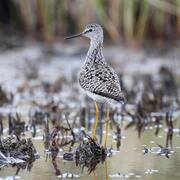
Tracking Data for Buff-Breasted Sandpipers (Calidris subruficollis)

Tracking Data for Buff-Breasted Sandpipers (Calidris subruficollis)

Available here are tracking data of buff-breasted sandpiper, a shorebird species that breeds only in Arctic Alaska and Canada, spending the winter in the grasslands of Brazil, Uruguay, and Argentina after a lengthy migration. These data were collected to determine range-wide migratory routes, migratory timing, and stopover habitats of this species.
Learn More

U.S. Fish and Wildlife Service Tracking Data for Lesser Yellowlegs (Tringa flavipes)

Available here are tracking data of Lesser Yellowlegs ( Tringa flavipes). These data were collected to inform the spatiotemporal migratory patterns of Lesser Yellowlegs between subarctic breeding areas in Alaska and Canada and wintering areas in South America, the Caribbean, Central America, and the contiguous United States.
U.S. Fish and Wildlife Service Tracking Data for Lesser Yellowlegs (Tringa flavipes)

U.S. Fish and Wildlife Service Tracking Data for Lesser Yellowlegs (Tringa flavipes)

Available here are tracking data of Lesser Yellowlegs ( Tringa flavipes). These data were collected to inform the spatiotemporal migratory patterns of Lesser Yellowlegs between subarctic breeding areas in Alaska and Canada and wintering areas in South America, the Caribbean, Central America, and the contiguous United States.
Learn More

Tracking Data for Bar-tailed Godwits (Limosa lapponica)

Available here are tracking data for two subspecies of Bar-tailed Godwits. One of the subspecies, Limosa lapponica baueri, nests in Alaska and spends the nonbreeding season in New Zealand and eastern Australia whereas L.l.menzbieri nests in Siberia and spends the nonbreeding season in western Australia. This study was the first to describe the year-round movements of these extremely long-distance...
Tracking Data for Bar-tailed Godwits (Limosa lapponica)

Tracking Data for Bar-tailed Godwits (Limosa lapponica)

Available here are tracking data for two subspecies of Bar-tailed Godwits. One of the subspecies, Limosa lapponica baueri, nests in Alaska and spends the nonbreeding season in New Zealand and eastern Australia whereas L.l.menzbieri nests in Siberia and spends the nonbreeding season in western Australia. This study was the first to describe the year-round movements of these extremely long-distance...
Learn More

Tracking Data for Red-faced Cormorants (Phalacrocorax urile)

Available here are tracking data for the red-faced cormorant, a seabird species that is found only in the North Pacific Ocean, breeding and wintering from southern Alaska and throughout the Aleutian Islands to Far Eastern Russia. These data were collected to better understand the migratory patterns of red-faced cormorants that breed in the Aleutian Islands.
Tracking Data for Red-faced Cormorants (Phalacrocorax urile)

Tracking Data for Red-faced Cormorants (Phalacrocorax urile)

Available here are tracking data for the red-faced cormorant, a seabird species that is found only in the North Pacific Ocean, breeding and wintering from southern Alaska and throughout the Aleutian Islands to Far Eastern Russia. These data were collected to better understand the migratory patterns of red-faced cormorants that breed in the Aleutian Islands.
Learn More

Tracking Data for Pacific Loons (Gavia pacifica)

Available here are tracking data of Pacific Loons, a species that breeds throughout much of Alaska and winters throughout the Pacific Ocean basin, along the costs of East Asia and the U.S. These data were collected to better understand timing of spring arrival, fall departure, and habitat use patterns on the North Slope of Alaska.
Tracking Data for Pacific Loons (Gavia pacifica)

Tracking Data for Pacific Loons (Gavia pacifica)

Available here are tracking data of Pacific Loons, a species that breeds throughout much of Alaska and winters throughout the Pacific Ocean basin, along the costs of East Asia and the U.S. These data were collected to better understand timing of spring arrival, fall departure, and habitat use patterns on the North Slope of Alaska.
Learn More

Tracking Data for Greater White-fronted Geese (Anser albifrons)

Available here are tracking data of Greater White-fronted Geese, a species that nests in coastal areas of western and northern Alaska and winters across a broad area of North America along the Pacific and Central flyways. These data were collected to better understand the timing and patterns of migratory movements and seasonal use of habitats in breeding, wintering, and migratory areas of North...
Tracking Data for Greater White-fronted Geese (Anser albifrons)

Tracking Data for Greater White-fronted Geese (Anser albifrons)

Available here are tracking data of Greater White-fronted Geese, a species that nests in coastal areas of western and northern Alaska and winters across a broad area of North America along the Pacific and Central flyways. These data were collected to better understand the timing and patterns of migratory movements and seasonal use of habitats in breeding, wintering, and migratory areas of North...
Learn More
Was this page helpful?