U.S. flag

An official website of the United States government

Birds

Filter Total Items: 60

Waterfowl Research

Scientists at the USGS Alaska Science Center have conducted research on waterfowl species (ducks, geese, and swans) in Alaska since the 1970s. Because Alaska is an international crossroads of migratory bird flyways, with millions of birds from Asia and North America breeding in Alaska each summer, USGS research has also taken place in adjacent countries (Russia, Japan, Canada, Mexico) and in the...
Waterfowl Research

Waterfowl Research

Scientists at the USGS Alaska Science Center have conducted research on waterfowl species (ducks, geese, and swans) in Alaska since the 1970s. Because Alaska is an international crossroads of migratory bird flyways, with millions of birds from Asia and North America breeding in Alaska each summer, USGS research has also taken place in adjacent countries (Russia, Japan, Canada, Mexico) and in the...
Learn More

ASC Ecosystems Data Releases

Alaska Science Center Ecosystems data releases are grouped by topic: Terrestrial Ecosystems, Aquatic Ecosystems, Wildlife Health and Genetics, Environmental Health and eDNA, Habitat and Landscape Change, and Ecosystem Analytics.
ASC Ecosystems Data Releases

ASC Ecosystems Data Releases

Alaska Science Center Ecosystems data releases are grouped by topic: Terrestrial Ecosystems, Aquatic Ecosystems, Wildlife Health and Genetics, Environmental Health and eDNA, Habitat and Landscape Change, and Ecosystem Analytics.
Learn More

USGS Alaska Science Center Wildlife Tracking Data Collection

Understanding the short- and long-distance movements of wildlife is critical for a wide variety of ecological research questions and management decisions. Since the mid-1980s, the USGS Alaska Science Center has used information from telemetry devices on wildlife species to determine locations of animals throughout their annual cycles, understand patterns of habitat use, quantify time spent on...
USGS Alaska Science Center Wildlife Tracking Data Collection

USGS Alaska Science Center Wildlife Tracking Data Collection

Understanding the short- and long-distance movements of wildlife is critical for a wide variety of ecological research questions and management decisions. Since the mid-1980s, the USGS Alaska Science Center has used information from telemetry devices on wildlife species to determine locations of animals throughout their annual cycles, understand patterns of habitat use, quantify time spent on...
Learn More

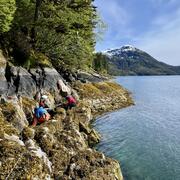
Goose Research

The USGS Alaska Science Center has had a focus on addressing science questions related to geese in Alaska for decades. Information on these species is critical because all are important resources for subsistence and sport hunters in the state and outside of Alaska where these birds spend the winter. The large majority of goose populations in Alaska breed on national wildlife refuges (managed by...
Goose Research

Goose Research

The USGS Alaska Science Center has had a focus on addressing science questions related to geese in Alaska for decades. Information on these species is critical because all are important resources for subsistence and sport hunters in the state and outside of Alaska where these birds spend the winter. The large majority of goose populations in Alaska breed on national wildlife refuges (managed by...
Learn More

Q&A: USGS Ecosystems Provides Objective Science to Manage Lands, Fish, and Wildlife

The USGS Ecosystems Mission Area is the only program within the Department of Interior (DOI) focused on generating science to inform the management of the nation’s lands, fish, and wildlife. The Ecosystems Mission Area is also the only entity with the specific role of meeting the information needs of DOI agencies (e.g., Bureau of Land Management, Bureau of Ocean Energy Management, National Park...
Q&A: USGS Ecosystems Provides Objective Science to Manage Lands, Fish, and Wildlife

Q&A: USGS Ecosystems Provides Objective Science to Manage Lands, Fish, and Wildlife

The USGS Ecosystems Mission Area is the only program within the Department of Interior (DOI) focused on generating science to inform the management of the nation’s lands, fish, and wildlife. The Ecosystems Mission Area is also the only entity with the specific role of meeting the information needs of DOI agencies (e.g., Bureau of Land Management, Bureau of Ocean Energy Management, National Park...
Learn More

Beak Deformities in Landbirds

Over the past 26 years, Alaskans have witnessed a startling increase of beak deformities among Black-capped Chickadees and other species of resident birds. This disease, called avian keratin disorder (AKD), is characterized by debilitating beak overgrowth and other abnormalities of keratinized tissues. Affected birds have difficulty feeding and preening and may suffer high rates of mortality. If...
Beak Deformities in Landbirds

Beak Deformities in Landbirds

Over the past 26 years, Alaskans have witnessed a startling increase of beak deformities among Black-capped Chickadees and other species of resident birds. This disease, called avian keratin disorder (AKD), is characterized by debilitating beak overgrowth and other abnormalities of keratinized tissues. Affected birds have difficulty feeding and preening and may suffer high rates of mortality. If...
Learn More

Loon Research

Scientists at the USGS Alaska Science Center have conducted research on Alaska’s three loon species since the late 1970s. Loons rely on freshwater lakes for nesting habitat and fish and invertebrates inhabiting lakes and marine ecosystems for food. All three loon species in Alaska occur within the National Petroleum Reserve-Alaska (NPR-A) on Alaska’s northern coast. Research by the USGS is...
Loon Research

Loon Research

Scientists at the USGS Alaska Science Center have conducted research on Alaska’s three loon species since the late 1970s. Loons rely on freshwater lakes for nesting habitat and fish and invertebrates inhabiting lakes and marine ecosystems for food. All three loon species in Alaska occur within the National Petroleum Reserve-Alaska (NPR-A) on Alaska’s northern coast. Research by the USGS is...
Learn More

North Pacific Pelagic Seabird Database

The North Pacific Pelagic Seabird Database (NPPSD) contains survey transect data designed and conducted by numerous partners primarily to census seabirds at sea. The NPPSD includes more than 486,000 transect segments and includes observations of over 20 million birds of 258 species collected over the span of 50 years (from 1973 to 2022).
North Pacific Pelagic Seabird Database

North Pacific Pelagic Seabird Database

The North Pacific Pelagic Seabird Database (NPPSD) contains survey transect data designed and conducted by numerous partners primarily to census seabirds at sea. The NPPSD includes more than 486,000 transect segments and includes observations of over 20 million birds of 258 species collected over the span of 50 years (from 1973 to 2022).
Learn More

Dabbling and Diving Duck Research

Dabbling and diving ducks, such as mallards, pintails and scaup, are widespread species throughout North America. Additionally, their migratory flyways pass through Asia and North America overlap in Alaska. Population trends of these species are closely tracked through aerial surveys by management agencies. Results from these and other surveys are then used to formulate management actions to...
Dabbling and Diving Duck Research

Dabbling and Diving Duck Research

Dabbling and diving ducks, such as mallards, pintails and scaup, are widespread species throughout North America. Additionally, their migratory flyways pass through Asia and North America overlap in Alaska. Population trends of these species are closely tracked through aerial surveys by management agencies. Results from these and other surveys are then used to formulate management actions to...
Learn More

Swan Research

USGS research on swans in Alaska has focused on pathogens, contaminants, and demographic rates in each of the different breeding areas of Alaska. The vastly different migration patterns of swans in Alaska means that there are multiple factors on the wintering grounds and during migration that may influence population size and trends.
Swan Research

Swan Research

USGS research on swans in Alaska has focused on pathogens, contaminants, and demographic rates in each of the different breeding areas of Alaska. The vastly different migration patterns of swans in Alaska means that there are multiple factors on the wintering grounds and during migration that may influence population size and trends.
Learn More

Tidewater Glacier Influence on Marine Ecosystems

Where glaciers meet the sea in the Gulf of Alaska (GOA), they create unique and productive marine habitats. Ringed by the continent’s tallest coastal mountains, 20% of the GOA coastal watershed is covered by glacial ice and the annual freshwater discharge into the GOA from glacial melt is comparable to that of the Mississippi river.
Tidewater Glacier Influence on Marine Ecosystems

Tidewater Glacier Influence on Marine Ecosystems

Where glaciers meet the sea in the Gulf of Alaska (GOA), they create unique and productive marine habitats. Ringed by the continent’s tallest coastal mountains, 20% of the GOA coastal watershed is covered by glacial ice and the annual freshwater discharge into the GOA from glacial melt is comparable to that of the Mississippi river.
Learn More

Bird Migration and Influenza

The movement and transmission of avian influenza viruses in wild birds may differ by the migratory nature of each host species.
Bird Migration and Influenza

Bird Migration and Influenza

The movement and transmission of avian influenza viruses in wild birds may differ by the migratory nature of each host species.
Learn More
Was this page helpful?