



Recent findings by USGS Alaska Science Center staff and their collaborators.
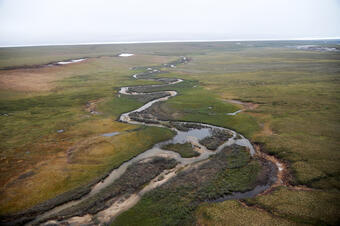
Harmonizing aggregate data for large scale freshwater biology studies
Contact: Sarah Laske, Research Fish Biologist
New and persistent threats to biodiversity and freshwater ecosystems demonstrate a need for information on baselines, trends, or ecological drivers. The aggregation and harmonization of individual datasets can provide a solution for assessing status and trends of biota from freshwater ecosystems in the absence of coordinated monitoring. A new publication, now available in PLOS Water, identifies the challenges associated with harmonizing multiple datasets and offers a workflow to evaluate and make decisions about how to best work with the data. A case study focused on analyses of circumpolar Arctic freshwater data demonstrates the process.
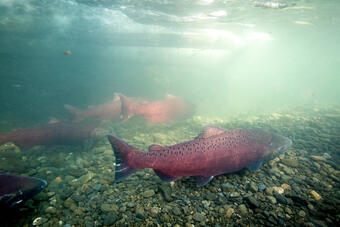
Warming water temperatures in Western Alaska Chinook salmon rivers
Contact: Vanessa von Biela, Research Fish Biologist
Alaska Science Center Research Fish Biologist, Vanessa von Biela, was part of a team that developed a framework to estimate freshwater habitat conditions in western Alaska’s Yukon and Kuskokwim watersheds where Pacific salmon declines are a major concern. Using 40 years of gridded climate data to fill temporal data gaps, researchers predicted streamflow and water temperature —key factors for salmon survival and reproduction. Warming summer water temperature trends of 0.2−0.4 °C per decade for maximum temperature and 20−60 degree-days per decade were typical across rivers, while streamflow did not have long-term trends. Warming waters can increase the risk of heat stress and have been associated with declines in western Alaska Chinook salmon.

Tectonic implications of oceanic rocks preserved within continental eastern interior Alaska
Contact: Erin Todd, Research Geologist
Ophiolites, fragments of ancient oceanic crust that have been pushed onto land, are globally significant as sources of platinum group elements, natural carbon storage, and hydrogen generation for emerging energy applications. However, relative resource potential among different ophiolites depends largely on the specific tectonic setting they originally formed in. A new USGS study published in Geosphere examines the Permian Seventymile terrane ophiolite in eastern Alaska. Using chemical analyses, isotopes, and precise radiometric age dating, researchers found that the terrane includes ultramafic upper mantle rocks that previously produced variable amounts of melt, plus three distinct mafic melt-rock types consistent with formation in discrete tectonic settings: mid-ocean ridge, back-arc basin, and continental arc. Different melt rock types have similar Lu-Hf and primary U-Pb ages, around 270 million years ago, an age also consistent with Slide Mountain ophiolite in Yukon and British Columbia. These findings suggest the Seventymile ophiolite represents tectonically stacked fragments from distinct but coeval oceanic to near-continental settings, refining models of Northern Cordillera tectonic evolution and providing a new piercing point for the Tintina Fault.
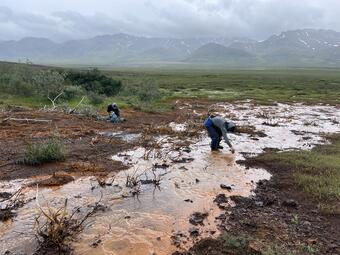
Rusting rivers in Arctic ecosystems
Contact: Mike Carey, Research Fish Biologist
USGS scientists co-authored an article for NOAA's Arctic report card (https://arctic.noaa.gov/report-card/) describing recent work examining Arctic Alaska were more than 200 rivers have changed from clear to orange over the past decade and evidence suggests this “rusting” is due to iron release from thawing permafrost soils. Rusting rivers have degraded water quality and habitat, with increased acidity and toxic trace metal concentrations contributing to a loss of aquatic biodiversity in streams.

Time-space model of graphite mineral systems
Contact: George Case, Research Economic Geologist
Natural graphite is essential to the United States for energy storage and other high-tech applications but is supplied entirely by foreign sources. This paper, published in Mineralium Deposita, synthesizes recent USGS and external research on the geology of when, where, and how graphite deposits are generated, into new mineral system models. Most economically important graphite deposits are found to have formed under high-temperature metamorphic conditions during mountain-building (orogenesis). Orogenic belts are favorable for flake and vein graphite, and possibly vanadium, resources. These models provide the scientific framework for domestic mineral resource assessment, mapping, and exploration of this critical mineral, thereby aiding Administration priorities of securing natural resources and achieving energy independence.
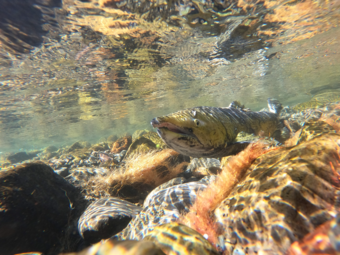
Expanded Chinook salmon heat stress concerns in Alaska
Contact: Vanessa von Biela, Research Fish Biologist
Chinook salmon returns are at record lows across Western Alaska where salmon are a kitchen table issue central to well-being and subsistence priority of the Alaska National Interest Lands Conservation Act (1980). USGS Alaska Science Center biologists have been researching and publishing on heat stress and warm water temperatures as a concern for Yukon River Chinook salmon for a decade with state of Alaska and tribal partners among others. This newest study expanded to adjacent regions, Kuskokwim River and Norton Sound, with heat stress tissue samples of migrating adults and review of water temperature data that included the 2019 riverine heatwave when mortality was observed. Kuskokwim Chinook salmon had high heat stress prevalence during the 2019 heatwave and variable heat stress in subsequent years. Water temperatures in the Kuskokwim region can rise to 25°C/77°F—well beyond water temperatures associated with stress (>18°C/64°F) and death (>21°C/70°F). In Norton Sound, heat stress and warm water temperatures were far less frequent than in the Yukon or Kuskokwim.

Legacy Permafrost Data in Utqiagvik, Alaska
Contact: Alena Giesche, Geologist
USGS Alaska Science Center geologists Alena Giesche, Elizabeth Drewes-Todd, and AVO permafrost geographer Eva Stephani digitized archived permafrost data from the Alaska Technical Data Unit. The dataset includes ground temperatures from four boreholes (60–110 ft deep) in Utqiagvik, measured by Naval Arctic Research Laboratory scientists between 1950 and 1961, along with snow depth, thaw depth, wind speed, and direction. Originally collected to study Arctic permafrost conditions and thermal properties of various terrains, the data now offer a rare historical baseline to validate permafrost models and assess long-term ground temperature trends.
Web tool for visualizing and accessing sea otter survey data in Alaska
Contact: Joe Eisaguirre, Research Wildlife Biologist
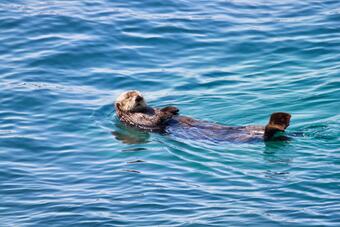
USGS and partners have conducted sea otter population surveys in Alaska for decades. Those data are regularly released as USGS data releases. A new Visualization Tool was designed to pull those data releases directly from ScienceBase and visualize them in an interactive map. The tool allows users to filter the data based on location, time, and other factors and download the files containing specific data of interest, rather than having to download and manipulate the data releases manually. The tool will allow managers and partners to quickly assess where and when sea otter population surveys have occurred to help inform efficient management decisions. The Sea Otter Survey Data Visualization Tool is a R Shiny application developed by the USGS to facilitate viewing and filtering sea otter population survey data using an interactive leaflet map.
Investigating response of black bears to city bear-proofing efforts
Contact: Heather Johnson, Research Wildlife Biologist
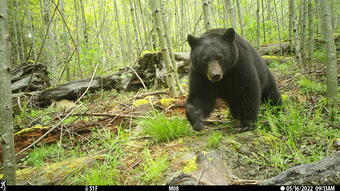
Alaska Science Center scientist Heather Johnson, in collaboration with colleagues from Colorado State University and Colorado Parks and Wildlife, published a paper investigating the behavioral responses of black bears to widescale city bear-proofing efforts. The authors found that bears avoided areas that had received bear-resistant trash containers, and their avoidance of these areas increased over time, suggesting that the bears were learning from the management intervention. These results highlight the importance of reducing human food attractants for changing bear behavior and reducing human-bear conflicts.

Highly pathogenic avian influenza in Alaska
Contact: Andy Ramey, Research Wildlife Geneticist
Since late 2021, highly pathogenic avian influenza (HPAI) has quickly become established as an economically and ecologically important animal disease throughout North America. In a new product, authors from diverse state, federal, tribal, and academic institutions (including the USGS Alaska Science Center) summarized extensive observational, virological, and serological data to evaluate the occurrence and impacts of HPAI upon introduction to the Yukon-Kuskokwim Delta, Alaska circa spring 2022. The authors found that at least seven species of breeding birds were impacted by HPAI, likely accounting for the loss of thousands of individuals and potentially resulting in lower fecundity. However, qualitative and quantitative evidence indicated apparently modest impacts of HPAI to avian health following initial introduction into one of the most expansive and important breeding sites for migratory birds in North America.
Recent findings by USGS Alaska Science Center staff and their collaborators.
Harmonizing aggregate data for large scale freshwater biology studies
Contact: Sarah Laske, Research Fish Biologist
New and persistent threats to biodiversity and freshwater ecosystems demonstrate a need for information on baselines, trends, or ecological drivers. The aggregation and harmonization of individual datasets can provide a solution for assessing status and trends of biota from freshwater ecosystems in the absence of coordinated monitoring. A new publication, now available in PLOS Water, identifies the challenges associated with harmonizing multiple datasets and offers a workflow to evaluate and make decisions about how to best work with the data. A case study focused on analyses of circumpolar Arctic freshwater data demonstrates the process.
Warming water temperatures in Western Alaska Chinook salmon rivers
Contact: Vanessa von Biela, Research Fish Biologist
Alaska Science Center Research Fish Biologist, Vanessa von Biela, was part of a team that developed a framework to estimate freshwater habitat conditions in western Alaska’s Yukon and Kuskokwim watersheds where Pacific salmon declines are a major concern. Using 40 years of gridded climate data to fill temporal data gaps, researchers predicted streamflow and water temperature —key factors for salmon survival and reproduction. Warming summer water temperature trends of 0.2−0.4 °C per decade for maximum temperature and 20−60 degree-days per decade were typical across rivers, while streamflow did not have long-term trends. Warming waters can increase the risk of heat stress and have been associated with declines in western Alaska Chinook salmon.
Tectonic implications of oceanic rocks preserved within continental eastern interior Alaska
Contact: Erin Todd, Research Geologist
Ophiolites, fragments of ancient oceanic crust that have been pushed onto land, are globally significant as sources of platinum group elements, natural carbon storage, and hydrogen generation for emerging energy applications. However, relative resource potential among different ophiolites depends largely on the specific tectonic setting they originally formed in. A new USGS study published in Geosphere examines the Permian Seventymile terrane ophiolite in eastern Alaska. Using chemical analyses, isotopes, and precise radiometric age dating, researchers found that the terrane includes ultramafic upper mantle rocks that previously produced variable amounts of melt, plus three distinct mafic melt-rock types consistent with formation in discrete tectonic settings: mid-ocean ridge, back-arc basin, and continental arc. Different melt rock types have similar Lu-Hf and primary U-Pb ages, around 270 million years ago, an age also consistent with Slide Mountain ophiolite in Yukon and British Columbia. These findings suggest the Seventymile ophiolite represents tectonically stacked fragments from distinct but coeval oceanic to near-continental settings, refining models of Northern Cordillera tectonic evolution and providing a new piercing point for the Tintina Fault.
Rusting rivers in Arctic ecosystems
Contact: Mike Carey, Research Fish Biologist
USGS scientists co-authored an article for NOAA's Arctic report card (https://arctic.noaa.gov/report-card/) describing recent work examining Arctic Alaska were more than 200 rivers have changed from clear to orange over the past decade and evidence suggests this “rusting” is due to iron release from thawing permafrost soils. Rusting rivers have degraded water quality and habitat, with increased acidity and toxic trace metal concentrations contributing to a loss of aquatic biodiversity in streams.
Time-space model of graphite mineral systems
Contact: George Case, Research Economic Geologist
Natural graphite is essential to the United States for energy storage and other high-tech applications but is supplied entirely by foreign sources. This paper, published in Mineralium Deposita, synthesizes recent USGS and external research on the geology of when, where, and how graphite deposits are generated, into new mineral system models. Most economically important graphite deposits are found to have formed under high-temperature metamorphic conditions during mountain-building (orogenesis). Orogenic belts are favorable for flake and vein graphite, and possibly vanadium, resources. These models provide the scientific framework for domestic mineral resource assessment, mapping, and exploration of this critical mineral, thereby aiding Administration priorities of securing natural resources and achieving energy independence.
Expanded Chinook salmon heat stress concerns in Alaska
Contact: Vanessa von Biela, Research Fish Biologist
Chinook salmon returns are at record lows across Western Alaska where salmon are a kitchen table issue central to well-being and subsistence priority of the Alaska National Interest Lands Conservation Act (1980). USGS Alaska Science Center biologists have been researching and publishing on heat stress and warm water temperatures as a concern for Yukon River Chinook salmon for a decade with state of Alaska and tribal partners among others. This newest study expanded to adjacent regions, Kuskokwim River and Norton Sound, with heat stress tissue samples of migrating adults and review of water temperature data that included the 2019 riverine heatwave when mortality was observed. Kuskokwim Chinook salmon had high heat stress prevalence during the 2019 heatwave and variable heat stress in subsequent years. Water temperatures in the Kuskokwim region can rise to 25°C/77°F—well beyond water temperatures associated with stress (>18°C/64°F) and death (>21°C/70°F). In Norton Sound, heat stress and warm water temperatures were far less frequent than in the Yukon or Kuskokwim.
Legacy Permafrost Data in Utqiagvik, Alaska
Contact: Alena Giesche, Geologist
USGS Alaska Science Center geologists Alena Giesche, Elizabeth Drewes-Todd, and AVO permafrost geographer Eva Stephani digitized archived permafrost data from the Alaska Technical Data Unit. The dataset includes ground temperatures from four boreholes (60–110 ft deep) in Utqiagvik, measured by Naval Arctic Research Laboratory scientists between 1950 and 1961, along with snow depth, thaw depth, wind speed, and direction. Originally collected to study Arctic permafrost conditions and thermal properties of various terrains, the data now offer a rare historical baseline to validate permafrost models and assess long-term ground temperature trends.
Web tool for visualizing and accessing sea otter survey data in Alaska
Contact: Joe Eisaguirre, Research Wildlife Biologist
USGS and partners have conducted sea otter population surveys in Alaska for decades. Those data are regularly released as USGS data releases. A new Visualization Tool was designed to pull those data releases directly from ScienceBase and visualize them in an interactive map. The tool allows users to filter the data based on location, time, and other factors and download the files containing specific data of interest, rather than having to download and manipulate the data releases manually. The tool will allow managers and partners to quickly assess where and when sea otter population surveys have occurred to help inform efficient management decisions. The Sea Otter Survey Data Visualization Tool is a R Shiny application developed by the USGS to facilitate viewing and filtering sea otter population survey data using an interactive leaflet map.
Investigating response of black bears to city bear-proofing efforts
Contact: Heather Johnson, Research Wildlife Biologist
Alaska Science Center scientist Heather Johnson, in collaboration with colleagues from Colorado State University and Colorado Parks and Wildlife, published a paper investigating the behavioral responses of black bears to widescale city bear-proofing efforts. The authors found that bears avoided areas that had received bear-resistant trash containers, and their avoidance of these areas increased over time, suggesting that the bears were learning from the management intervention. These results highlight the importance of reducing human food attractants for changing bear behavior and reducing human-bear conflicts.
Highly pathogenic avian influenza in Alaska
Contact: Andy Ramey, Research Wildlife Geneticist
Since late 2021, highly pathogenic avian influenza (HPAI) has quickly become established as an economically and ecologically important animal disease throughout North America. In a new product, authors from diverse state, federal, tribal, and academic institutions (including the USGS Alaska Science Center) summarized extensive observational, virological, and serological data to evaluate the occurrence and impacts of HPAI upon introduction to the Yukon-Kuskokwim Delta, Alaska circa spring 2022. The authors found that at least seven species of breeding birds were impacted by HPAI, likely accounting for the loss of thousands of individuals and potentially resulting in lower fecundity. However, qualitative and quantitative evidence indicated apparently modest impacts of HPAI to avian health following initial introduction into one of the most expansive and important breeding sites for migratory birds in North America.