U.S. flag

An official website of the United States government

Waterbirds and Their Habitat

The Chesapeake Bay lies in the Atlantic Flyway and is home to almost 1 million waterfowl each winter. The waterfowl depend on coastal wetlands and shallow waters for habitat and food. These habitats are being lost to sea-level rise and development. The USGS is assessing the ability of near-shore habitats, from wetlands to shallow waters, to support waterfowl and water birds.

Filter Total Items: 21

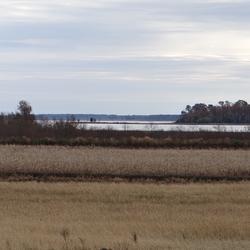
Prioritizing marsh restoration needs throughout Chesapeake Bay

A new USGS study estimates potential losses of Chesapeake Bay salt marshes that could occur in the next 80 years if no marsh restoration is undertaken. Using a suite of models, USGS researchers identified how future potential marsh changes can be used to prioritize present-day site-specific planning and restoration needs.
Prioritizing marsh restoration needs throughout Chesapeake Bay

Prioritizing marsh restoration needs throughout Chesapeake Bay

A new USGS study estimates potential losses of Chesapeake Bay salt marshes that could occur in the next 80 years if no marsh restoration is undertaken. Using a suite of models, USGS researchers identified how future potential marsh changes can be used to prioritize present-day site-specific planning and restoration needs.
Learn More

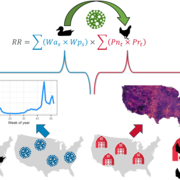
Advancing Risk Modeling for Highly Pathogenic Avian Influenza

Ongoing global outbreaks demonstrate the capacity of highly pathogenic avian influenza virus (HPAIV) to impact poultry, wild birds, and even human health. USGS research is advancing the understanding of the spatial and temporal interface between wild and domestic bird populations from which these viruses emerge to aid biosecurity planning and outbreak response.
Advancing Risk Modeling for Highly Pathogenic Avian Influenza

Advancing Risk Modeling for Highly Pathogenic Avian Influenza

Ongoing global outbreaks demonstrate the capacity of highly pathogenic avian influenza virus (HPAIV) to impact poultry, wild birds, and even human health. USGS research is advancing the understanding of the spatial and temporal interface between wild and domestic bird populations from which these viruses emerge to aid biosecurity planning and outbreak response.
Learn More

Key considerations to accurately predict tidal marsh longevity

A recent study provides key considerations about modeling the timeline of tidal marsh longevity. These timelines can help resource managers envision what future marsh conditions may look like, informing current and long-term adaptive management strategies.
Key considerations to accurately predict tidal marsh longevity

Key considerations to accurately predict tidal marsh longevity

A recent study provides key considerations about modeling the timeline of tidal marsh longevity. These timelines can help resource managers envision what future marsh conditions may look like, informing current and long-term adaptive management strategies.
Learn More

Using Global Telemetry to Understand Avian Movement and Migration

USGS researchers are collaborating with partners around the globe to leverage new and existing telemetry data to answer broad scale questions about factors influencing avian movement and migration.
Using Global Telemetry to Understand Avian Movement and Migration

Using Global Telemetry to Understand Avian Movement and Migration

USGS researchers are collaborating with partners around the globe to leverage new and existing telemetry data to answer broad scale questions about factors influencing avian movement and migration.
Learn More

Identifying Spatial and Temporal Trends in Avian Influenza Prevalence in Wild Waterfowl Across the United States

USGS researchers are at the forefront of building and maintaining datasets that represent the spatial and temporal patterns in avian influenza virus prevalence in wild birds, which is critical information used to estimate transmission risk to domestic poultry.
Identifying Spatial and Temporal Trends in Avian Influenza Prevalence in Wild Waterfowl Across the United States

Identifying Spatial and Temporal Trends in Avian Influenza Prevalence in Wild Waterfowl Across the United States

USGS researchers are at the forefront of building and maintaining datasets that represent the spatial and temporal patterns in avian influenza virus prevalence in wild birds, which is critical information used to estimate transmission risk to domestic poultry.
Learn More

Developing Waterfowl Distribution and Abundance Models to Inform Avian Influenza Transmission Risk

USGS researchers are developing novel methods to improve our understanding of waterfowl distributions and abundance across the United States to inform a variety of ongoing disease studies. Understanding the distribution of wild waterfowl is a critical component to assessing avian influenza transmission risks across the landscape.
Developing Waterfowl Distribution and Abundance Models to Inform Avian Influenza Transmission Risk

Developing Waterfowl Distribution and Abundance Models to Inform Avian Influenza Transmission Risk

USGS researchers are developing novel methods to improve our understanding of waterfowl distributions and abundance across the United States to inform a variety of ongoing disease studies. Understanding the distribution of wild waterfowl is a critical component to assessing avian influenza transmission risks across the landscape.
Learn More

Discovering Connections Across America's Lands and Waters

Through collaboration and coordination, USGS research helps preserve and restore America’s most iconic landscapes. We apply insights across ecosystems to understand how these systems function and change, helping natural resource managers protect our Nation’s natural heritage for generations to come.
Discovering Connections Across America's Lands and Waters

Discovering Connections Across America's Lands and Waters

Through collaboration and coordination, USGS research helps preserve and restore America’s most iconic landscapes. We apply insights across ecosystems to understand how these systems function and change, helping natural resource managers protect our Nation’s natural heritage for generations to come.
Learn More

USGS Chesapeake Accomplishments and Highlights for 2024

As a home to 18 million people and a destination for countless visitors seeking recreational opportunities, the health of the Chesapeake Bay watershed is of critical importance. The U.S. Geological Survey (USGS) is a leading provider of data-driven insights about the condition of the watershed’s lands, waters, fish, and wildlife. These insights and our collaborative work with partners throughout...
USGS Chesapeake Accomplishments and Highlights for 2024

USGS Chesapeake Accomplishments and Highlights for 2024

As a home to 18 million people and a destination for countless visitors seeking recreational opportunities, the health of the Chesapeake Bay watershed is of critical importance. The U.S. Geological Survey (USGS) is a leading provider of data-driven insights about the condition of the watershed’s lands, waters, fish, and wildlife. These insights and our collaborative work with partners throughout...
Learn More

Osprey (Pandion haliaetus) Population and the Availability of Menhaden (Brevoortia tyrannus) as Their Food Source in Chesapeake Bay: Historical and Present-day Comparison

USGS is collaborating with many biologists in analysis of data on osprey ( Pandion haliaetus) and their prey (menhaden, Brevoortia tyrannus, and other species of fish) in the middle and lower Chesapeake Bay and its tributaries. The data compiled and collected will help determine if a lack of menhaden or other environmental factors are affecting osprey reproductive success in portions of the...
Osprey (Pandion haliaetus) Population and the Availability of Menhaden (Brevoortia tyrannus) as Their Food Source in Chesapeake Bay: Historical and Present-day Comparison

Osprey (Pandion haliaetus) Population and the Availability of Menhaden (Brevoortia tyrannus) as Their Food Source in Chesapeake Bay: Historical and Present-day Comparison

USGS is collaborating with many biologists in analysis of data on osprey ( Pandion haliaetus) and their prey (menhaden, Brevoortia tyrannus, and other species of fish) in the middle and lower Chesapeake Bay and its tributaries. The data compiled and collected will help determine if a lack of menhaden or other environmental factors are affecting osprey reproductive success in portions of the...
Learn More

Review of Wildlife Health Outcomes and Potentially Toxic Algal Blooms in the Chesapeake Bay

Scientists provide resources that review algal toxin data, explore links between avian mortality and toxin exposure, and identify future research needs to predict algal toxin health hazards and risks for birds and other wildlife in the Chesapeake Bay.
Review of Wildlife Health Outcomes and Potentially Toxic Algal Blooms in the Chesapeake Bay

Review of Wildlife Health Outcomes and Potentially Toxic Algal Blooms in the Chesapeake Bay

Scientists provide resources that review algal toxin data, explore links between avian mortality and toxin exposure, and identify future research needs to predict algal toxin health hazards and risks for birds and other wildlife in the Chesapeake Bay.
Learn More

USGS Conducts Assessment to Inform Black Duck Habitat Decisions

Issue: The Chesapeake Bay is along the Atlantic Flyway and has over 1 million migratory birds winter each year. Black ducks are one of 30 species that depends on habitats along Chesapeake Bay for their annual migration. Managing the black duck population at time when land use and sea-level rise pose a recognized peril to this species and their habitats require a strategic approach. The Chesapeake...
USGS Conducts Assessment to Inform Black Duck Habitat Decisions

USGS Conducts Assessment to Inform Black Duck Habitat Decisions

Issue: The Chesapeake Bay is along the Atlantic Flyway and has over 1 million migratory birds winter each year. Black ducks are one of 30 species that depends on habitats along Chesapeake Bay for their annual migration. Managing the black duck population at time when land use and sea-level rise pose a recognized peril to this species and their habitats require a strategic approach. The Chesapeake...
Learn More

Conserving Habitat for American Black Ducks

Chesapeake Bay Program video on Conserving Habitat for American Black Ducks
Conserving Habitat for American Black Ducks

Conserving Habitat for American Black Ducks

Chesapeake Bay Program video on Conserving Habitat for American Black Ducks
Learn More
Was this page helpful?