



Key Values of a Century of EESC Science
The USGS Eastern Ecological Science Center (EESC) is rooted in a proud tradition of service to the nation—advancing science that informs the conservation and management of fish, wildlife, and habitats across the eastern United States and beyond. Our mission is clear: deliver reliable, partner-driven science that supports natural resource decisions today, while ensuring these resources remain available for generations to come.
The land and water we live on and around shapes our lives.
We share responsibility for the healthy fish, wildlife, and landscapes that are assets to current and future generations.

About EESC
EESC provides world-class science to inform natural resource decisions that preserve and enhance our quality of life. EESC works directly with managers of our shared natural resources to provide unbiased scientific tools, research, and innovations needed to make informed decisions in today’s complex and rapidly changing world. EESC’s broad expertise spans from mountain streams to deep oceans and the lands in between, supporting stewardship of a wide range of species and habitats. Unique facilities in Maryland, Massachusetts, and West Virginia help EESC deliver the reliable, actionable science that partners need to effectively conserve our treasured natural resources.

EESC operations span three campuses with a staff of approximately 140 scientists, technicians, and professionals. Each of EESC’s campuses are on federal lands with a legacy that spans nearly a century:
- The Patuxent Research Refuge in Maryland was established by President Franklin D. Roosevelt through Executive Order in 1936 as the nation’s only national wildlife refuge with a primary mission of supporting wildlife research. EESC at the Patuxent Research Refuge remains a vital hub for long-term ecological science and monitoring.
- The Leetown Science Center in West Virginia, established in 1931, holds the distinction of being the first federal research laboratory dedicated to fish and aquatic ecosystem science. EESC at the Leetown Research Laboratory continues to lead in fish biology, ecology and health, and species conservation.
- The S.O. Conte Anadromous Fish Research Laboratory was founded in 1989 on the banks of the Connecticut River in Massachusetts. EESC at the S.O. Conte Research Laboratory is home to a one-of-a-kind fish passage design and testing facility, supporting efforts to restore native migratory fish to their historical habitats.

Outdoor recreation provides significant annual economic benefits: \$887 billion in consumer spending, 7.6 million American jobs, \$65.3 billion in federal tax revenues, and \$59.2 billion in state and local tax revenues. Science conducted at EESC directly supports management of the natural resources that underpin outdoor recreational activities—fishing, hunting, birding, hiking, and many more—ensuring that these resources remain healthy and accessible to current and future generations.

Migratory Bird Science
Outdoor recreation activities related to birds, including waterfowl hunting and bird watching, contribute over \$100 billion in annual consumer spending to the U.S. economy. The Bird Banding Laboratory (BBL) and the North American Breeding Bird Survey (BBS), two national capabilities that are part of EESC at the Patuxent Research Refuge, provide essential generational data that enable hunting opportunities and bird conservation efforts across the continent. Information from the BBL and BBS are crucial to manage bird populations to support these activities, and in turn, the local economies—particularly in rural areas—that depend on them.
- The BBL (established 1920) provides data collection, management, and support for migratory bird science that provides the foundation for bird conservation, annual waterfowl hunting regulations, and bird-related recreational economies across the nation.
- The BBS (established 1966) provides critical quantitative data on bird populations, distribution, ranges, and changes in population trends over time.

The adaptive harvest management framework developed by EESC and partners at the U.S. Fish and Wildlife Service leverages BBL and BBS data to enable states across the nation to maximize waterfowl hunting opportunities today and in the future, even in the face of uncertainty. Now in its third decade of use, the success of the adaptive harvest management model has inspired other countries to use a similar process to improve their management efficiency.

Alarm bells sounded around the country in 2019 when a groundbreaking study from the Cornell Lab of Ornithology, USGS, and other collaborators documented long-term losses in almost all groups of birds in Canada and the US. Approximately 3 billion birds, or 28% of all migratory birds in every category, have been lost since 1970. EESC provided approximately 80% of the data and analysis for the study.

Fisheries Science
EESC provides foundational, nonregulatory science to the Atlantic States Marine Fisheries Commission (ASMFC), Connecticut River Migratory Fish Restoration Cooperative, and other partners that coordinate management actions among state and federal agencies to support the effective management of the nation’s shared fishery resources. EESC’s research enables science based management of recreational and commercial fisheries, which collectively support millions of American jobs, coastal economies, tribal sovereignty, and access to locally sourced, nutritious seafood.

Barriers such as dams and culverts block fish migrations, reducing spawning access for species like salmon, shad, river herring, American eel, and sturgeon. Fisheries dependent on these species are worth hundreds of millions of dollars annually, and hydropower dams are regulated to balance fish survival with renewable energy production.

EESC's demonstrated expertise on fish passage technologies ensures that managers can respond to challenges that fish populations face during migration, positively impacting public access to fish and associated economies. In addition, hydropower operators depend on EESC science to integrate hydrodynamic modeling, biological monitoring, and engineering expertise into efficient, site-specific solutions that satisfy ecological and operational goals.

EESC conducts critical research on trout, which are intrinsic to healthy waterways and a prized species for anglers. Designated as the state fish in 10 states and as a species in greatest need of conservation in 19 states, brook trout populations are an indicator of a water quality and support recreational fishing opportunities that provide millions of dollars in benefits to regional and local economies. Recent research highlights include the following:
- Developing data visualization tools to help understand interrelationships among landscape variables and where fish are found, now and in the future, to explore data on studies of individually-tagged fish in streams, and to discover how daily stream flow changes throughout the year;
- Using field- and lab-based studies to determine whether brook trout are seeking out cold spots in warm streams, adapting to warming conditions, or some combination of the two to help resource managers better understand how brook trout populations may persist as stream temperatures continue to rise; and
- Collaborating with Trout Unlimited to investigate how fluctuation of water flows related to power generation (hydro-peaking) affects the movement and spawning of brown trout in the Deerfield River in Massachusetts.

Invasive Species Science
Current estimates suggest that invasive species cost the U.S. economy approximately \$21 billion annually since 2010 due to their negative effects across diverse sectors, including agriculture, forestry, fisheries, and tourism. These costs arise from direct damage to crops, increased management efforts, and the threat of invasive species outcompeting native species, leading to significant biodiversity loss. Additionally, invasive species can alter ecosystems, disrupt nutrient cycling, and affect public health by carrying diseases that threaten both humans and livestock.
USGS research plays an irreplaceable role in combating invasive species, providing vital research and data that informs federal and state agencies' efforts to protect fish, wildlife and associated economies.

EESC capabilities and expertise are crucial for ensuring efficient and effective national, regional, and state response efforts.
- EESC scientists help identify how to reduce risk of importing new, damaging invasive species that threaten agriculture, fisheries, and forestry industries.
- Selective passage systems developed through EESC research allow native fish to pass while blocking invasive species like sea lamprey and northern snakehead. This dual-purpose design reduces invasive species control costs and protects native fisheries.
- EESC leads USGS's efforts with Chesapeake Bay partners to understand and manage invasive blue catfish in the Bay. Blue catfish populations threaten native species such as striped bass and blue crabs and puts the Bay fishing economy and local traditions at risk. EESC provides essential science to support coordinated, effective control efforts to mitigate the negative ecological and economic impacts of invasive blue catfish.

Chesapeake Bay Science
Through the Clean Water Act, Congress directs USGS to deliver critical science and monitoring to help protect and restore the Chesapeake Bay's iconic lands, waters, fish and wildlife, which are vital to the region's economy and quality of life. USGS Chesapeake Bay Studies play a pivotal scientific leadership role in informing Chesapeake Bay restoration decisions by providing essential, data driven insights that support state and local partners and nonprofits in their conservation efforts.

EESC supports USGS Chesapeake Bay Studies throughout the Bay and its watershed to:
- Provide timely science findings for environmental management of stream health, fisheries and their habitats, and water quality;
- Assess the risks to coastal habitats and migratory waterbirds;
- Enhance landscape data and forecasting to inform watershed management; and
- Develop communication products and decision support tools.
EESC science enables informed decision making for the management of this national treasure.

Wildlife Disease Science
EESC provides leadership for national efforts on wildlife diseases that threaten agriculture, native wildlife, and public health. Highlights of EESC's efforts include the following:
- Working with USGS collaborators to advance research on chronic wasting disease in deer, studying transmission dynamics and environmental persistence to inform management,
- Contributing to understanding and mitigating Lyme disease through ecological studies of ticks and hosts to improve prevention strategies,
- Helping state and federal agencies identify management options to address the risk of white-nose syndrome to bat populations, and
- Assessing the risk of novel pathogens to support proactive management actions before diseases affect U.S. wildlife.

Avian influenza outbreaks pose risks to wildlife, public health, and the poultry industry. USGS research informs early warning systems and management strategies to mitigate disease outbreaks, helping safeguard over 2 million jobs, \$130 billion in wages, \$660 billion in economic activity and \$54 billion in government revenue from devastating economic losses.
EESC scientists study multiple aspects of avian influenza viruses in wild birds as well as their implications for commercial agriculture with a special emphasis on poultry. Recent research has focused on the following topics:
- Modeling transmission risks of highly pathogenic avian influenza (HPAI), to domestic poultry and wild birds;
- Sampling waterfowl, raptors, waterbirds, and non-traditional hosts to understand impacts of HPAI and inform conservation risk; and
- Pairing disease sampling with telemetry to determine how infection can impact movement and influence the capacity of different species to spread HPAI.

Contaminants Science
USGS studies of per- and polyfluoroalkyl substances (PFAS) encompass both living and nonliving components of ecological systems. This science provides federal, state and local partners and the public with the understanding, tools, and data they need to study PFAS in the environment and support a range of decisions that identify, mitigate, or prevent hazards related to PFAS.
EESC has a dedicated state-of-the-art laboratory for the analysis of PFAS. This laboratory uses cutting edge techniques to analyze water, soil, and tissue samples from fish and wildlife. Recent studies include the following:
- Quantifying PFAS in blue catfish to inform human consumption advisories;
- Analyzing PFAS in diamondback terrapins, raptors and other species to understand PFAS impacts;
- Developing innovative methods to detect and quantify PFAS in complex environmental samples;
- Studying the distribution and fate of PFAS in aquatic and terrestrial ecosystems; and
- Assessing the potential ecological and human health risks associated with PFAS exposure.
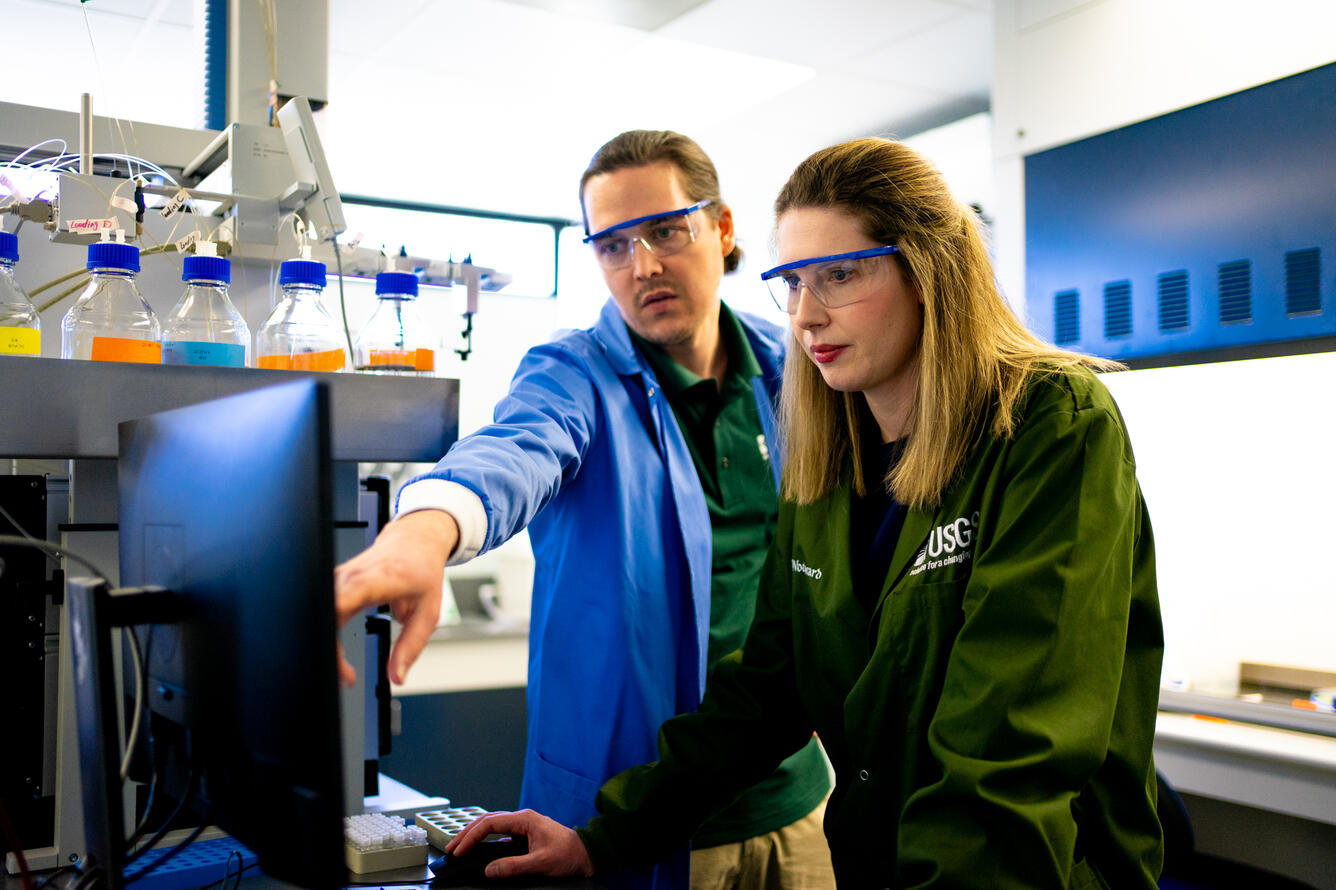
EESC has a long history of trailblazing research in the field of wildlife toxicology, including seminal studies on the effects of the pesticide dichlorodiphenyltrichloroethane, commonly known as DDT, that helped form the basis for Rachel Carson’s book Silent Spring.
Today, manufacturers and registrants of rodenticides in the U.S. rely on EESC to provide essential data to the U.S. Environmental Protection Agency and U.S. Fish and Wildlife Service during the registration review process. This ensures that decisions are based on the best available scientific information to mitigate risks to wildlife and address the threats posed by rodents to human health and agriculture.
EESC’s expertise in assessing and mitigating contaminants like PFAS and rodenticides helps support public and wildlife health initiatives critical to community well-being.

The USGS Bee Lab at EESC
The USGS Bee Lab, a national capability that is part of EESC at the Patuxent Research Refuge, houses one of the few teams in the world with the scientific expertise to accurately identify the more than 4,000 bee species native to the United States—a foundational capability for pollinator monitoring and conservation, and research on interactions between plants and native pollinators.
The USGS Bee Lab supports national pollinator monitoring programs, including field surveys, citizen science efforts, and long-term databases hosted on global biodiversity platforms. These programs provide critical data used by federal, state, tribal, and non-governmental partners to assess pollinator health and respond to population declines.
The U.S. Department of Agriculture and state agencies depend on the USGS Bee Lab to support in their efforts to sustain native pollinators, which are essential for crop production, biodiversity, and ecosystem resilience. Many native bees are more effective than nonnative honeybees at pollinating specific crops like blueberries and cranberries.

Amphibian Research and Monitoring
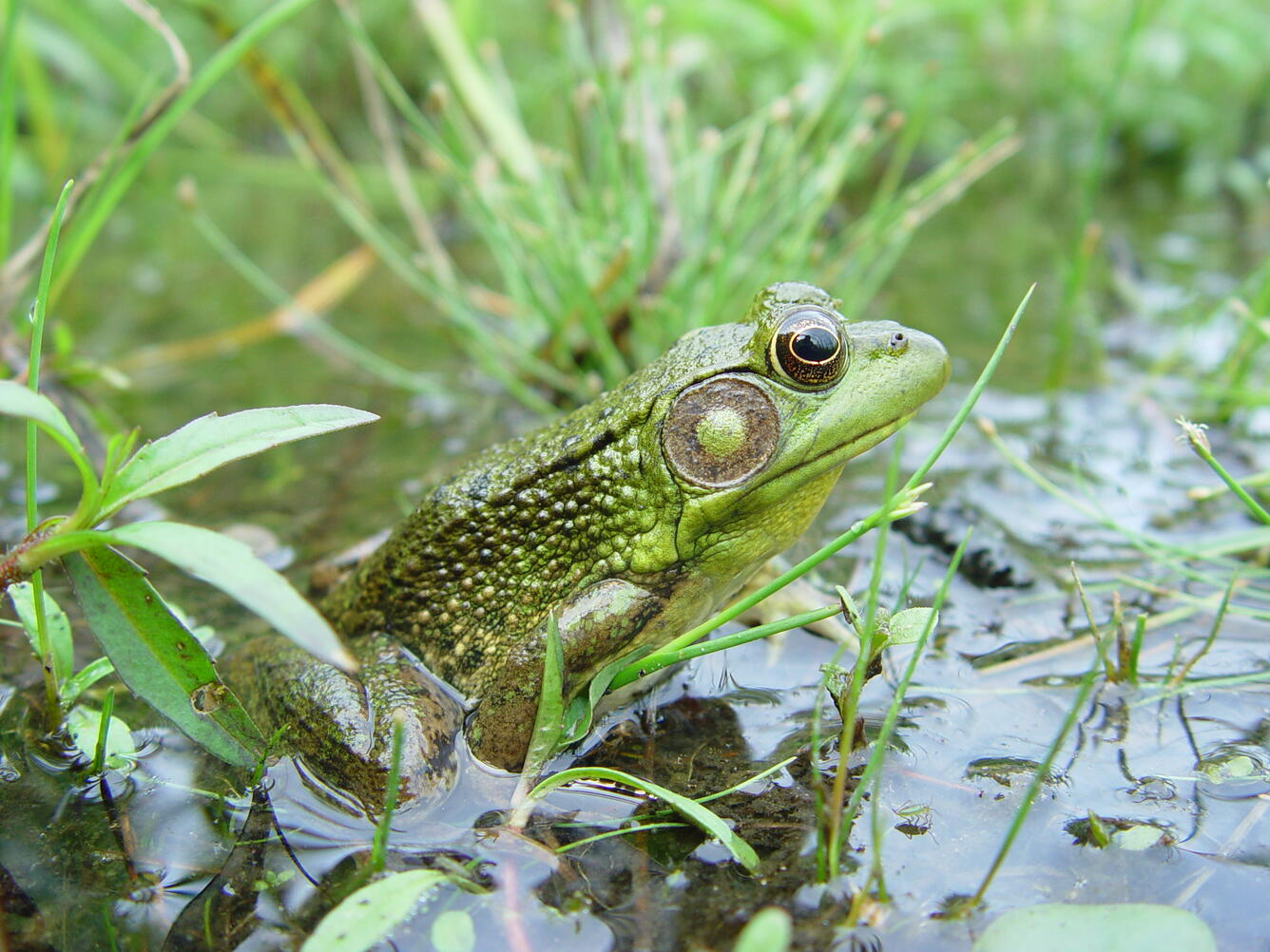
USGS-led research suggests that even though amphibians are severely declining worldwide, there is no smoking gun–and thus no simple solution–to halting or reversing these declines. EESC is home to the Northeast Amphibian Research and Monitoring Initiative (NEARMI), one of seven amphibian research and monitoring region initiatives USGS leads across the United States. NEARMI works on public lands in 13 states from Maine to Virginia, including many national parks and national wildlife refuges.
NEARMI works to provide timely science not only about common, widespread species, but also to assist with conservation of species at risk and those being evaluated for listing under the Endangered Species Act. Many NEARMI projects are long-term collaborations and involve decision science, a set of tools and techniques for evaluating multiple goals and unknowns to aid resource management decisions.
The USGS Eastern Ecological Science Center (EESC) has advanced scientific expertise to support natural resource conservation in balance with other societal needs for nearly 100 years. Today, EESC integrates diverse scientific disciplines to support strategic partnerships with federal, state, regional compacts, academia, and private companies aligned with the Department of the Interior’s stewardship responsibilities. As part of the USGS Ecosystems Mission Area, EESC provides non-regulatory, objective science that directly benefits the health, safety, and prosperity of the American public by tackling critical issues in natural resource management.
Learn More About EESC
Read Impact Stories
Connect with Us
Explore Our Science
The USGS Eastern Ecological Science Center (EESC) is rooted in a proud tradition of service to the nation—advancing science that informs the conservation and management of fish, wildlife, and habitats across the eastern United States and beyond. Our mission is clear: deliver reliable, partner-driven science that supports natural resource decisions today, while ensuring these resources remain available for generations to come.
The land and water we live on and around shapes our lives.
We share responsibility for the healthy fish, wildlife, and landscapes that are assets to current and future generations.
About EESC
EESC provides world-class science to inform natural resource decisions that preserve and enhance our quality of life. EESC works directly with managers of our shared natural resources to provide unbiased scientific tools, research, and innovations needed to make informed decisions in today’s complex and rapidly changing world. EESC’s broad expertise spans from mountain streams to deep oceans and the lands in between, supporting stewardship of a wide range of species and habitats. Unique facilities in Maryland, Massachusetts, and West Virginia help EESC deliver the reliable, actionable science that partners need to effectively conserve our treasured natural resources.
EESC operations span three campuses with a staff of approximately 140 scientists, technicians, and professionals. Each of EESC’s campuses are on federal lands with a legacy that spans nearly a century:
- The Patuxent Research Refuge in Maryland was established by President Franklin D. Roosevelt through Executive Order in 1936 as the nation’s only national wildlife refuge with a primary mission of supporting wildlife research. EESC at the Patuxent Research Refuge remains a vital hub for long-term ecological science and monitoring.
- The Leetown Science Center in West Virginia, established in 1931, holds the distinction of being the first federal research laboratory dedicated to fish and aquatic ecosystem science. EESC at the Leetown Research Laboratory continues to lead in fish biology, ecology and health, and species conservation.
- The S.O. Conte Anadromous Fish Research Laboratory was founded in 1989 on the banks of the Connecticut River in Massachusetts. EESC at the S.O. Conte Research Laboratory is home to a one-of-a-kind fish passage design and testing facility, supporting efforts to restore native migratory fish to their historical habitats.
Outdoor recreation provides significant annual economic benefits: \$887 billion in consumer spending, 7.6 million American jobs, \$65.3 billion in federal tax revenues, and \$59.2 billion in state and local tax revenues. Science conducted at EESC directly supports management of the natural resources that underpin outdoor recreational activities—fishing, hunting, birding, hiking, and many more—ensuring that these resources remain healthy and accessible to current and future generations.
Migratory Bird Science
Outdoor recreation activities related to birds, including waterfowl hunting and bird watching, contribute over \$100 billion in annual consumer spending to the U.S. economy. The Bird Banding Laboratory (BBL) and the North American Breeding Bird Survey (BBS), two national capabilities that are part of EESC at the Patuxent Research Refuge, provide essential generational data that enable hunting opportunities and bird conservation efforts across the continent. Information from the BBL and BBS are crucial to manage bird populations to support these activities, and in turn, the local economies—particularly in rural areas—that depend on them.
- The BBL (established 1920) provides data collection, management, and support for migratory bird science that provides the foundation for bird conservation, annual waterfowl hunting regulations, and bird-related recreational economies across the nation.
- The BBS (established 1966) provides critical quantitative data on bird populations, distribution, ranges, and changes in population trends over time.
The adaptive harvest management framework developed by EESC and partners at the U.S. Fish and Wildlife Service leverages BBL and BBS data to enable states across the nation to maximize waterfowl hunting opportunities today and in the future, even in the face of uncertainty. Now in its third decade of use, the success of the adaptive harvest management model has inspired other countries to use a similar process to improve their management efficiency.
Alarm bells sounded around the country in 2019 when a groundbreaking study from the Cornell Lab of Ornithology, USGS, and other collaborators documented long-term losses in almost all groups of birds in Canada and the US. Approximately 3 billion birds, or 28% of all migratory birds in every category, have been lost since 1970. EESC provided approximately 80% of the data and analysis for the study.
Fisheries Science
EESC provides foundational, nonregulatory science to the Atlantic States Marine Fisheries Commission (ASMFC), Connecticut River Migratory Fish Restoration Cooperative, and other partners that coordinate management actions among state and federal agencies to support the effective management of the nation’s shared fishery resources. EESC’s research enables science based management of recreational and commercial fisheries, which collectively support millions of American jobs, coastal economies, tribal sovereignty, and access to locally sourced, nutritious seafood.
Barriers such as dams and culverts block fish migrations, reducing spawning access for species like salmon, shad, river herring, American eel, and sturgeon. Fisheries dependent on these species are worth hundreds of millions of dollars annually, and hydropower dams are regulated to balance fish survival with renewable energy production.
EESC's demonstrated expertise on fish passage technologies ensures that managers can respond to challenges that fish populations face during migration, positively impacting public access to fish and associated economies. In addition, hydropower operators depend on EESC science to integrate hydrodynamic modeling, biological monitoring, and engineering expertise into efficient, site-specific solutions that satisfy ecological and operational goals.
EESC conducts critical research on trout, which are intrinsic to healthy waterways and a prized species for anglers. Designated as the state fish in 10 states and as a species in greatest need of conservation in 19 states, brook trout populations are an indicator of a water quality and support recreational fishing opportunities that provide millions of dollars in benefits to regional and local economies. Recent research highlights include the following:
- Developing data visualization tools to help understand interrelationships among landscape variables and where fish are found, now and in the future, to explore data on studies of individually-tagged fish in streams, and to discover how daily stream flow changes throughout the year;
- Using field- and lab-based studies to determine whether brook trout are seeking out cold spots in warm streams, adapting to warming conditions, or some combination of the two to help resource managers better understand how brook trout populations may persist as stream temperatures continue to rise; and
- Collaborating with Trout Unlimited to investigate how fluctuation of water flows related to power generation (hydro-peaking) affects the movement and spawning of brown trout in the Deerfield River in Massachusetts.
Invasive Species Science
Current estimates suggest that invasive species cost the U.S. economy approximately \$21 billion annually since 2010 due to their negative effects across diverse sectors, including agriculture, forestry, fisheries, and tourism. These costs arise from direct damage to crops, increased management efforts, and the threat of invasive species outcompeting native species, leading to significant biodiversity loss. Additionally, invasive species can alter ecosystems, disrupt nutrient cycling, and affect public health by carrying diseases that threaten both humans and livestock.
USGS research plays an irreplaceable role in combating invasive species, providing vital research and data that informs federal and state agencies' efforts to protect fish, wildlife and associated economies.
EESC capabilities and expertise are crucial for ensuring efficient and effective national, regional, and state response efforts.
- EESC scientists help identify how to reduce risk of importing new, damaging invasive species that threaten agriculture, fisheries, and forestry industries.
- Selective passage systems developed through EESC research allow native fish to pass while blocking invasive species like sea lamprey and northern snakehead. This dual-purpose design reduces invasive species control costs and protects native fisheries.
- EESC leads USGS's efforts with Chesapeake Bay partners to understand and manage invasive blue catfish in the Bay. Blue catfish populations threaten native species such as striped bass and blue crabs and puts the Bay fishing economy and local traditions at risk. EESC provides essential science to support coordinated, effective control efforts to mitigate the negative ecological and economic impacts of invasive blue catfish.
Chesapeake Bay Science
Through the Clean Water Act, Congress directs USGS to deliver critical science and monitoring to help protect and restore the Chesapeake Bay's iconic lands, waters, fish and wildlife, which are vital to the region's economy and quality of life. USGS Chesapeake Bay Studies play a pivotal scientific leadership role in informing Chesapeake Bay restoration decisions by providing essential, data driven insights that support state and local partners and nonprofits in their conservation efforts.
EESC supports USGS Chesapeake Bay Studies throughout the Bay and its watershed to:
- Provide timely science findings for environmental management of stream health, fisheries and their habitats, and water quality;
- Assess the risks to coastal habitats and migratory waterbirds;
- Enhance landscape data and forecasting to inform watershed management; and
- Develop communication products and decision support tools.
EESC science enables informed decision making for the management of this national treasure.
Wildlife Disease Science
EESC provides leadership for national efforts on wildlife diseases that threaten agriculture, native wildlife, and public health. Highlights of EESC's efforts include the following:
- Working with USGS collaborators to advance research on chronic wasting disease in deer, studying transmission dynamics and environmental persistence to inform management,
- Contributing to understanding and mitigating Lyme disease through ecological studies of ticks and hosts to improve prevention strategies,
- Helping state and federal agencies identify management options to address the risk of white-nose syndrome to bat populations, and
- Assessing the risk of novel pathogens to support proactive management actions before diseases affect U.S. wildlife.
Avian influenza outbreaks pose risks to wildlife, public health, and the poultry industry. USGS research informs early warning systems and management strategies to mitigate disease outbreaks, helping safeguard over 2 million jobs, \$130 billion in wages, \$660 billion in economic activity and \$54 billion in government revenue from devastating economic losses.
EESC scientists study multiple aspects of avian influenza viruses in wild birds as well as their implications for commercial agriculture with a special emphasis on poultry. Recent research has focused on the following topics:
- Modeling transmission risks of highly pathogenic avian influenza (HPAI), to domestic poultry and wild birds;
- Sampling waterfowl, raptors, waterbirds, and non-traditional hosts to understand impacts of HPAI and inform conservation risk; and
- Pairing disease sampling with telemetry to determine how infection can impact movement and influence the capacity of different species to spread HPAI.
Contaminants Science
USGS studies of per- and polyfluoroalkyl substances (PFAS) encompass both living and nonliving components of ecological systems. This science provides federal, state and local partners and the public with the understanding, tools, and data they need to study PFAS in the environment and support a range of decisions that identify, mitigate, or prevent hazards related to PFAS.
EESC has a dedicated state-of-the-art laboratory for the analysis of PFAS. This laboratory uses cutting edge techniques to analyze water, soil, and tissue samples from fish and wildlife. Recent studies include the following:
- Quantifying PFAS in blue catfish to inform human consumption advisories;
- Analyzing PFAS in diamondback terrapins, raptors and other species to understand PFAS impacts;
- Developing innovative methods to detect and quantify PFAS in complex environmental samples;
- Studying the distribution and fate of PFAS in aquatic and terrestrial ecosystems; and
- Assessing the potential ecological and human health risks associated with PFAS exposure.
EESC has a long history of trailblazing research in the field of wildlife toxicology, including seminal studies on the effects of the pesticide dichlorodiphenyltrichloroethane, commonly known as DDT, that helped form the basis for Rachel Carson’s book Silent Spring.
Today, manufacturers and registrants of rodenticides in the U.S. rely on EESC to provide essential data to the U.S. Environmental Protection Agency and U.S. Fish and Wildlife Service during the registration review process. This ensures that decisions are based on the best available scientific information to mitigate risks to wildlife and address the threats posed by rodents to human health and agriculture.
EESC’s expertise in assessing and mitigating contaminants like PFAS and rodenticides helps support public and wildlife health initiatives critical to community well-being.
The USGS Bee Lab at EESC
The USGS Bee Lab, a national capability that is part of EESC at the Patuxent Research Refuge, houses one of the few teams in the world with the scientific expertise to accurately identify the more than 4,000 bee species native to the United States—a foundational capability for pollinator monitoring and conservation, and research on interactions between plants and native pollinators.
The USGS Bee Lab supports national pollinator monitoring programs, including field surveys, citizen science efforts, and long-term databases hosted on global biodiversity platforms. These programs provide critical data used by federal, state, tribal, and non-governmental partners to assess pollinator health and respond to population declines.
The U.S. Department of Agriculture and state agencies depend on the USGS Bee Lab to support in their efforts to sustain native pollinators, which are essential for crop production, biodiversity, and ecosystem resilience. Many native bees are more effective than nonnative honeybees at pollinating specific crops like blueberries and cranberries.
Amphibian Research and Monitoring
USGS-led research suggests that even though amphibians are severely declining worldwide, there is no smoking gun–and thus no simple solution–to halting or reversing these declines. EESC is home to the Northeast Amphibian Research and Monitoring Initiative (NEARMI), one of seven amphibian research and monitoring region initiatives USGS leads across the United States. NEARMI works on public lands in 13 states from Maine to Virginia, including many national parks and national wildlife refuges.
NEARMI works to provide timely science not only about common, widespread species, but also to assist with conservation of species at risk and those being evaluated for listing under the Endangered Species Act. Many NEARMI projects are long-term collaborations and involve decision science, a set of tools and techniques for evaluating multiple goals and unknowns to aid resource management decisions.
The USGS Eastern Ecological Science Center (EESC) has advanced scientific expertise to support natural resource conservation in balance with other societal needs for nearly 100 years. Today, EESC integrates diverse scientific disciplines to support strategic partnerships with federal, state, regional compacts, academia, and private companies aligned with the Department of the Interior’s stewardship responsibilities. As part of the USGS Ecosystems Mission Area, EESC provides non-regulatory, objective science that directly benefits the health, safety, and prosperity of the American public by tackling critical issues in natural resource management.