U.S. flag

An official website of the United States government

Fort Collins Science Center

Welcome to the Fort Collins Science Center (FORT) located in Fort Collins, Colorado, just east of the Rocky Mountains. At FORT we develop and disseminate research-based information and tools needed to understand the nation’s biological resources in support of effective decision making.

News

FORT Updates: From Plains to Peaks - Vol. 3 | Issue 2

FORT Updates: From Plains to Peaks - Vol. 3 | Issue 2

FORT Science in Action, Part 21: Pollinator research in support of agricultural economies and food security

FORT Science in Action, Part 21: Pollinator research in support of agricultural economies and food security

USGS and BLM publish a science synthesis on risks of spreading invasive annual grasses in MT, ND & SD through vegetation treatments

USGS and BLM publish a science synthesis on risks of spreading invasive annual grasses in MT, ND & SD through vegetation treatments

Publications

The effects of carnivory and herbivory on the energy balance of Arctic grizzly bears The effects of carnivory and herbivory on the energy balance of Arctic grizzly bears

Omnivores often face tradeoffs between selecting for spatially dispersed energy-dense vertebrate prey versus densely distributed herbivorous resources that have limited energetic value per unit intake. Arctic grizzly bears (Ursus arctos) are large omnivores within a resource-limited ecosystem that are known to exhibit smaller body masses and occur at lower densities than grizzly bears in...
Authors
Anthony Pagano, Karyn Rode, Kerry Nicholson, William Leacock, Craig Stricker, Charles Robbins

Amphibian diversity of the western Colorado canyonlands including potential threats from nonnative bullfrogs and disease Amphibian diversity of the western Colorado canyonlands including potential threats from nonnative bullfrogs and disease

Throughout the canyons of the Colorado and Uncompahgre Plateaus, water is a limited resource for wildlife, with patchy distribution and seasonal availability. Tributary creeks within these canyons drain into mainstem rivers, providing habitat and breeding sites for native amphibians. Yet, little is known about the diversity and distribution of amphibians that live in these harsh, dynamic...
Authors
Denita M Weeks, David Pilliod, Madeline (Nikki) Grant-Hoffman, Anjelica F Quintana Spencer, Daniel Neubaum, Paul Hampton, Michaela Grossklaus, Matthew B Laramie, Erin L. Muths

Different data for different goals: Exploring trade-offs and synergies in the use of spatial data inputs to optimize conservation action in sagebrush ecosystems Different data for different goals: Exploring trade-offs and synergies in the use of spatial data inputs to optimize conservation action in sagebrush ecosystems

Ecosystems worldwide continue to experience rapid rates of habitat and species loss. Management actions to conserve and restore functional habitats are needed to reduce these declines, but funding and resources for such actions are limited. Spatial conservation prioritization (SCP) can facilitate strategic decision-making for targeted conservation planning and delivery, but complexities...
Authors
Jessica Shyvers, Bryan Tarbox, Adrian P. Monroe, Nicholas Van Lanen, Benjamin Robb, Erin Buchholtz, Courtney Duchardt, David Edmunds, Michael O’Donnell, Nathan Van Schmidt, Julie A. Heinrichs, Cameron Aldridge

Science

Science for effective pollinator conservation and improved food security

Pollinators, including bees, flies, butterflies, bats, birds, and other animals, are critically important to U.S. ecosystems and agriculture. Recent reports of declines of pollinator species have led to widespread actions to conserve pollinator habitat and recover imperiled species, but resource managers need accurate data and science to support management actions. USGS pollinator research helps...
Science for effective pollinator conservation and improved food security

Science for effective pollinator conservation and improved food security

Pollinators, including bees, flies, butterflies, bats, birds, and other animals, are critically important to U.S. ecosystems and agriculture. Recent reports of declines of pollinator species have led to widespread actions to conserve pollinator habitat and recover imperiled species, but resource managers need accurate data and science to support management actions. USGS pollinator research helps...
Learn More

Shrubland, Alpine and Grassland Ecology (SAGE) Wildlife Research Group

The SAGE Wildlife Research Group consists of a large team of research scientists with an interest in conservation and management of wildlife and their ecosystems. Broadly, research involves understanding animal-habitat relationships, with an emphasis on conservation ecology and population demography, and a focus on shrubland, alpine, and grassland ecosystems. We are addressing the effects of...
Shrubland, Alpine and Grassland Ecology (SAGE) Wildlife Research Group

Shrubland, Alpine and Grassland Ecology (SAGE) Wildlife Research Group

The SAGE Wildlife Research Group consists of a large team of research scientists with an interest in conservation and management of wildlife and their ecosystems. Broadly, research involves understanding animal-habitat relationships, with an emphasis on conservation ecology and population demography, and a focus on shrubland, alpine, and grassland ecosystems. We are addressing the effects of...
Learn More

USGS Science Syntheses for Public Lands Management

Scientific information is fundamental to understanding how proposed actions on public lands may impact the environment. Development of new science is occurring at rates that can make it challenging for biologists, resource managers, decision makers, private landowners, and other stakeholders to ensure they are using up-to-date, high-quality science information to inform their decisions. Further...
USGS Science Syntheses for Public Lands Management

USGS Science Syntheses for Public Lands Management

Scientific information is fundamental to understanding how proposed actions on public lands may impact the environment. Development of new science is occurring at rates that can make it challenging for biologists, resource managers, decision makers, private landowners, and other stakeholders to ensure they are using up-to-date, high-quality science information to inform their decisions. Further...
Learn More

Multimedia

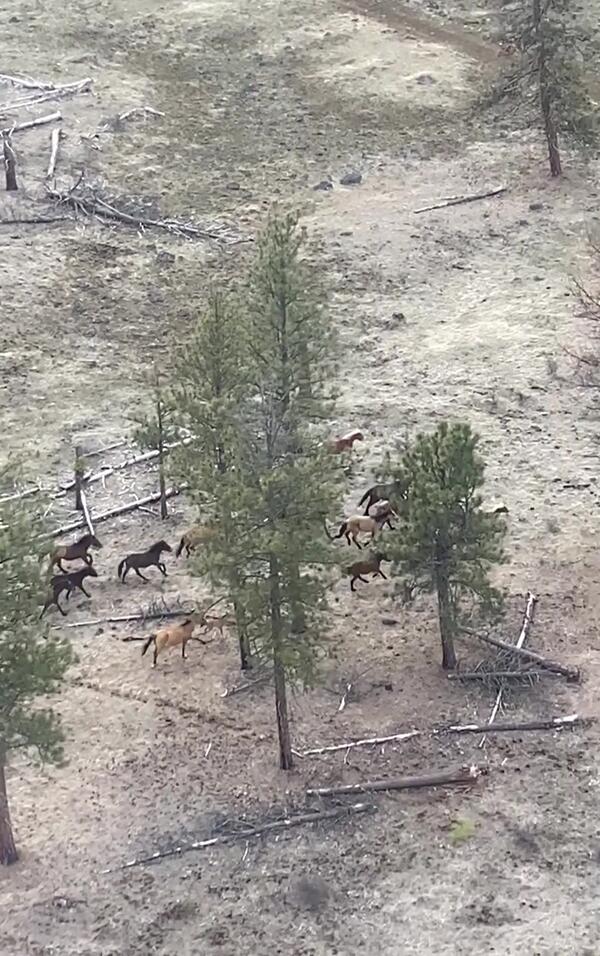
a group of horses running through tall trees and brown grasses a group of horses running through tall trees and brown grasses
Wild horses on the Warm Springs Reservation
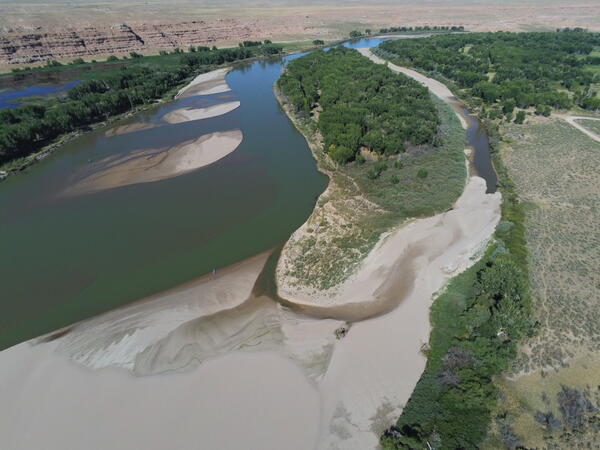
a blue-green river with many sand bars and beaches surrounded by trees and rock formations a blue-green river with many sand bars and beaches surrounded by trees and rock formations
Aerial footage of the Green River in Ouray National Wildlife Refuge
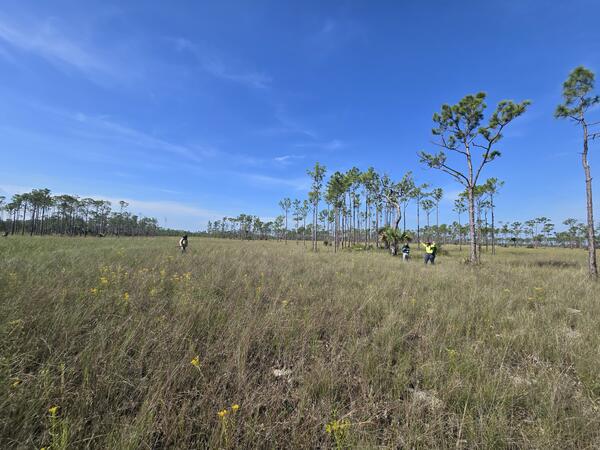
three people stand in a large prairie, with trees sparsely distributed throughout and blue sky above
Researchers search for pythons in Everglades prairie habitat
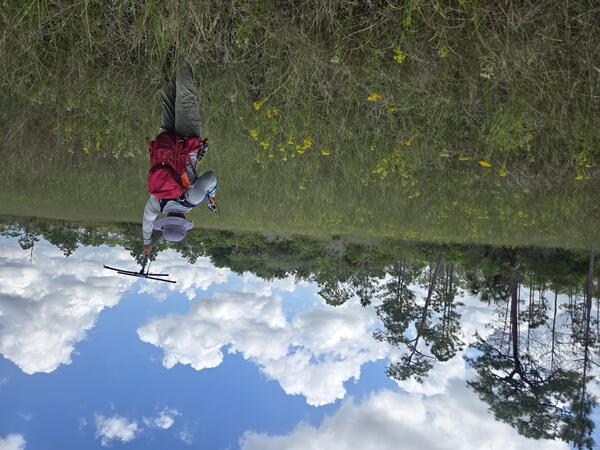
a person with red backpack and purple hat holds up a tracking device in a field with yellow flowers, trees in background
Tracking Burmese pythons in the Florida Everglades
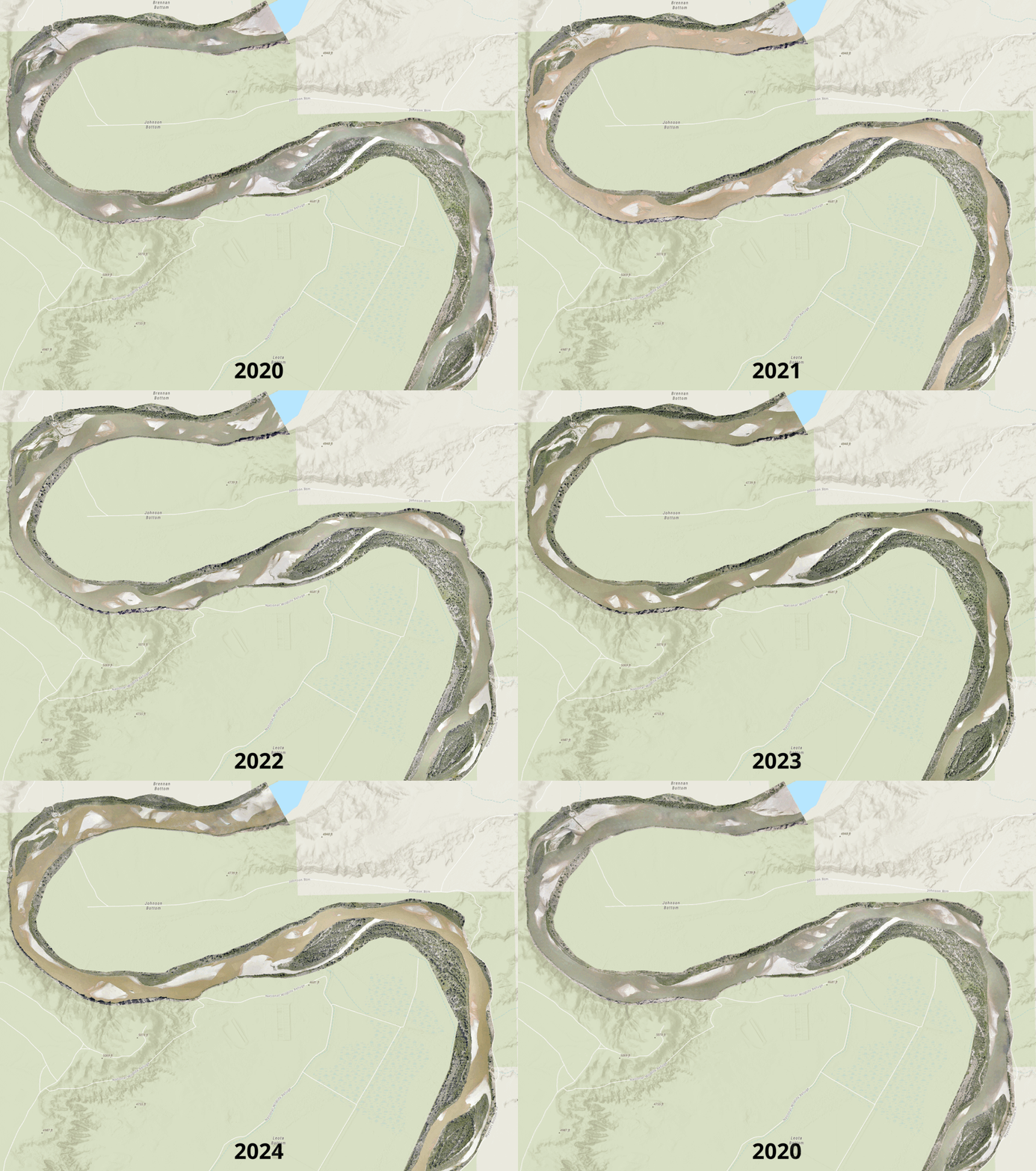
photo montage of yearly riverbed changes across 2020-2024
Channel and vegetation change along a 6-mile reach of the Middle Green River
screen recording of the INHABIT application, with a mouse clicking through different options and map changing in response
The Invasive Species Habitat Tool (INHABIT)
a large lizard stands outside of a cage in a forest. A green box outlines the lizard and a label on the box reads 'tegu .84'
Photo used to train AI-based image detection algorithms for tegu surveillance
two people look through binoculars at a group of bison standing out in a field, partly cloudy sky above
Observing bison behavior in Theodore Roosevelt National Park
Was this page helpful?