



FORT Science in Action 2026, Part 11: Science for improved pollinator monitoring and habitat management
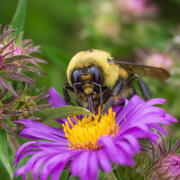
Pollinators like the endangered rusty patched bumble bee provide critical ecosystem services and ensure food security through their essential role in crop production. FORT researchers are contributing to science on native bee monitoring and diet to assist wildlife and habitat managers in maintaining healthy pollinator populations.
Completing datasets for a patchy species
USGS researchers collaborated with universities, the Xerces Society, and the U.S. National Native Bee Monitoring Network to design a framework for more rigorous wild bee occupancy monitoring programs and standardized data collection across a variety of surveys. The team then applied their framework to monitoring efforts for the rusty patched bumble bee, an endangered species listed in 2017 following severe range restriction and fragmentation. Over time, these monitoring efforts could provide insights on the causes of rusty patched bumble bee decline. More broadly, the framework will be useful to natural resource managers and scientists interested in designing new monitoring protocols for other native bees.
Pollen at a premium

Another study led by a FORT scientist analyzed pollen DNA from rusty patched bumble bees in the Appalachian region to learn more about regional and seasonal diet patterns. Overall, sampled bees foraged on a diversity of plants, with forage diversity increasing in late summer. In addition, researchers discovered that genetic methods detected more forage species than direct observation of bee foraging behavior. By documenting the plants these bees use throughout the growing season, this study can help managers plan planting efforts to best support rusty patched bumble bee populations. Moreover, the study demonstrates how useful pollen DNA analysis can be for diet studies of bees that forage in difficult to observe places, like tree canopies.
More FORT Science in Action
This September, FORT is highlighting how our science projects support sound decision-making. Each day, we will highlight a new project and its applications. To see more, follow the tabs below.
Related
Science for effective pollinator conservation and improved food security
Related