



Science for effective pollinator conservation and improved food security
Pollinators, including bees, flies, butterflies, bats, birds, and other animals, are critically important to U.S. ecosystems and agriculture. Recent reports of declines of pollinator species have led to widespread actions to conserve pollinator habitat and recover imperiled species, but resource managers need accurate data and science to support management actions.
USGS pollinator research helps maintain $18 billion in pollinator services, which are essential for U.S. agriculture and food security. In support of this research program, FORT researchers investigate how pollinator populations change over time, how they respond to threats like pathogens and pesticides, and what conservation actions help them. Information from these studies can assist resource managers in effective and efficient restoration of pollinator habitat and populations.
Bees and other pollinating insects are critical to maintaining both natural and agricultural environments because most plants require pollination from insects to produce full seed crops. There are clear indications of declines of many pollinator species, which has prompted widespread concern and action to conserve pollinators. Key examples of pollinator declines include imperiled bumble bee species, such as the rusty patched bumble bee that is currently listed as endangered under the Endangered Species Act.
Research is needed to pinpoint why some, but not other, pollinator species have declined, to assess what the greatest threats are to pollinators, and to determine what conservation actions are most helpful for pollinators. Pollinator conservation is an exciting field because we find rare species even in small habitat restorations, suggesting that even small, local actions can significantly contribute to the success of pollinators.
Monitoring for the endangered rusty patched bumbled bee
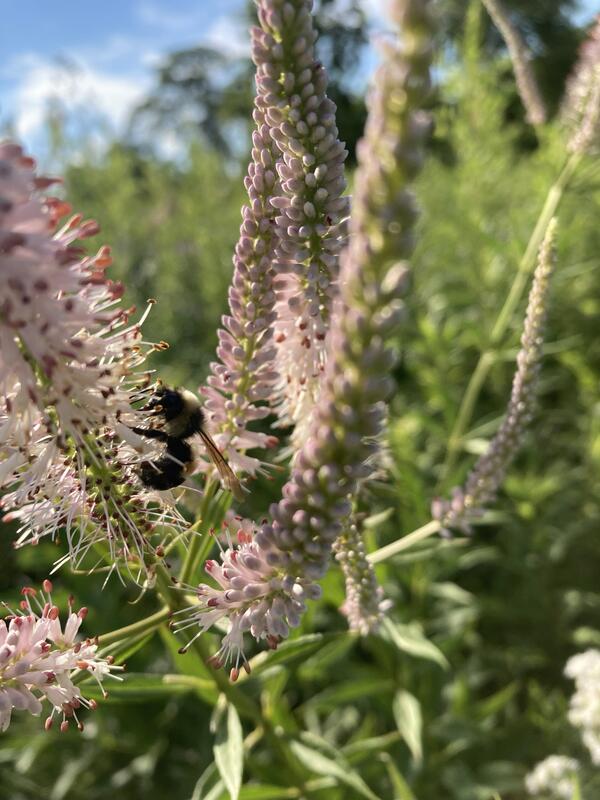
The rusty patched bumble bee (Bombus affinis) was listed as endangered in 2018, following a precipitous decline and local extinctions over most of its formerly large range.
Currently, it is restricted to two areas: (1) the upper Midwest in a region stretching from Minneapolis to Chicago that includes parts of Minnesota, Iowa, Wisconsin, and Illinois, and (2) an area of the Appalachians spanning the Virginia / West Virginia border.
Long term USGS monitoring and targeted research on endangered species can show where management and restoration efforts have been successful and can be used to support species recovery decisions while reducing regulatory burden on wildlife and land managers.
One of the primary goals of this research is to monitor populations of rusty patched bumble bee to determine whether its populations are in recovery (for example, because of many ongoing efforts in habitat restoration) or still declining in different habitats.
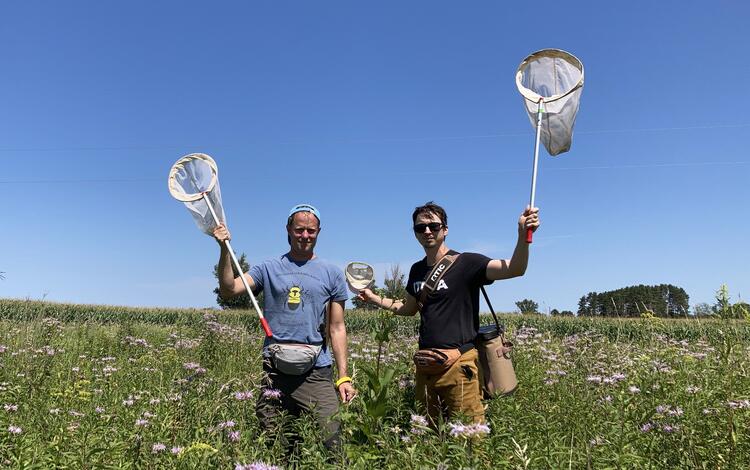
Researchers work in collaboration with the U.S. Fish and Wildlife Service’s greatest group of bee enthusiasts in the Midwest and Appalachia to track the populations of rusty patched bumble bee.
Conserving pollinators throughout their lifecycle
Habitat restoration has focused primarily on restoring the types of plants that bumble bees visit in grasslands, prairies, and meadows. There is good indication that this approach to conservation is useful, but there are also meadow habitat patches that seem like they should be great for bumble bees, but really don’t have that many species.
Researchers think that part of this might be a lack of spring resources in meadow habitats that bumble bees need. Queen Bumble bees in North America spend the winter hiding in protected spots – holes in the ground, layers of leaves, logs in the forest – emerging from hibernation in the spring to start new nests (or winter if you live in sunny California!). Those queens forage on some of the earliest blooming plants at that time, plants that, in the Midwest, are more often found in forests than in meadows.
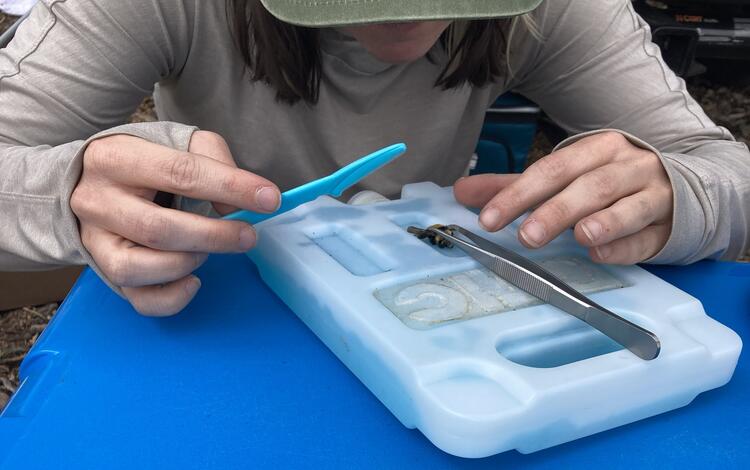
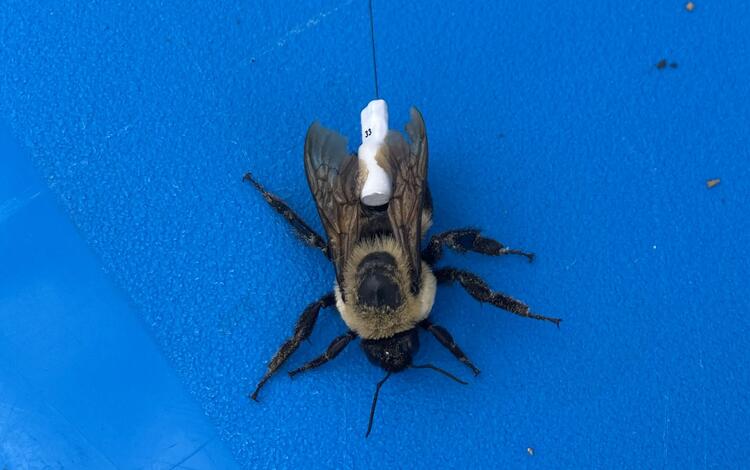
Using a combination of surveys, rearing experiments, and tracking of bees, researchers are testing how those resources that we don’t think of much for bumble bees (that is, early spring flowers, nesting sites, overwintering sites) affect bumble bees and how these might be better incorporated into conservation plans.
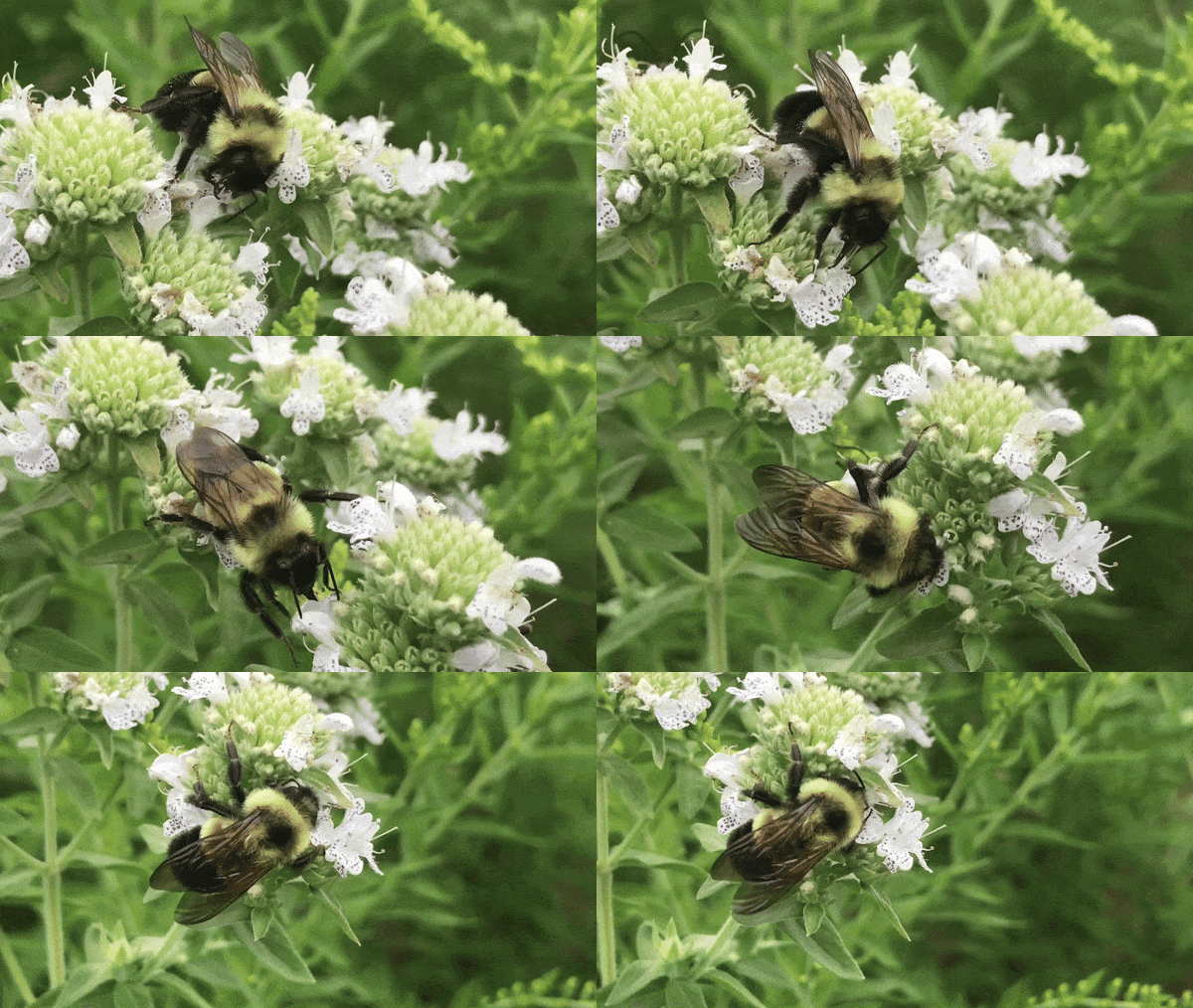
Threats to bumble bee populations
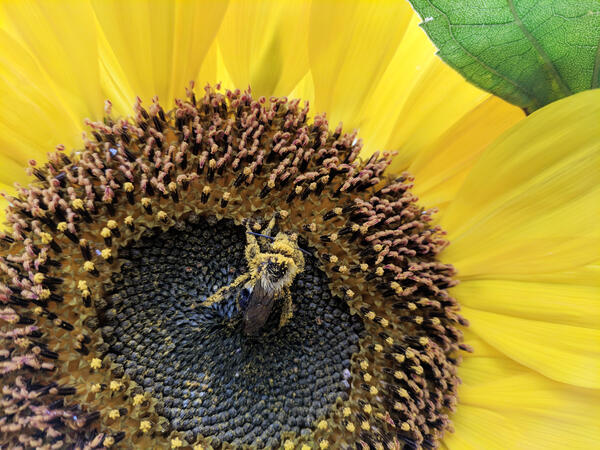
Bumble bees face a variety of threats that currently limit their populations or have caused declines. The major hypothesis about the decline of rusty patched bumble bees involves the spread of a novel strain of the bumble bee pathogen, Nosema bombi. Rusty patched bumble bee appears to be very susceptible to this pathogen, though it is carried by most other bumble bees as well. Researchers want to know, are there ways in which we can bolster the immunity of bumble bees against these pathogens? Do patterns of pathogen load correspond with places where the bumble bee has persisted versus gone locally extinct?
Pesticides are another major stressor for bumble bees. Many insecticides, at high doses, kill bumble bees, and at lower doses affect their health. There is emerging evidence that herbicides and fungicides also affect bumble bee health. USGS researchers and their collaborators are interested in better understanding locations where bumble bees are exposed to doses of pesticides that could limit their health, and how the effect of pesticides interacts with other stresses, like lack of nutrition and genetic inbreeding.
Measuring the success of pollinator habitat restoration
From individual homeowners to county parks to entire federal agencies, care is being taken to restore meadows for pollinators. One of the most common questions that researchers hear from these groups is “Have I improved pollinator communities on my property?” To date, there is widespread evidence that pollinator habitat restoration can increase the abundance and richness of pollinators. However, it is not so clear whether restoration efforts are conserving those pollinators that really need help.
As an analogy, if someone restored a prairie patch and ended up with New Jersey tea, Culver’s root, Mead’s milkweed, and prairie dropseed (all species that are associated with prairies, some of which are imperiled or hard to get in restorations) one would consider the restoration a big success. If instead, they had dandelion, creeping thistle, big bluestem, and goldenrod (plants that are all common and easy to grow – and two of which are non-native and invasive) they may consider the restoration to be pretty lousy.
USGS researchers are developing quality indices for regional bee communities based on the ’conservatism’ of bee species toward high-quality habitat. This will allow a clearer answer to whether a pollinator community has ‘improved’ based on conservation, restoration, or other actions.
Pollinators, including bees, flies, butterflies, bats, birds, and other animals, are critically important to U.S. ecosystems and agriculture. Recent reports of declines of pollinator species have led to widespread actions to conserve pollinator habitat and recover imperiled species, but resource managers need accurate data and science to support management actions.
USGS pollinator research helps maintain $18 billion in pollinator services, which are essential for U.S. agriculture and food security. In support of this research program, FORT researchers investigate how pollinator populations change over time, how they respond to threats like pathogens and pesticides, and what conservation actions help them. Information from these studies can assist resource managers in effective and efficient restoration of pollinator habitat and populations.
Bees and other pollinating insects are critical to maintaining both natural and agricultural environments because most plants require pollination from insects to produce full seed crops. There are clear indications of declines of many pollinator species, which has prompted widespread concern and action to conserve pollinators. Key examples of pollinator declines include imperiled bumble bee species, such as the rusty patched bumble bee that is currently listed as endangered under the Endangered Species Act.
Research is needed to pinpoint why some, but not other, pollinator species have declined, to assess what the greatest threats are to pollinators, and to determine what conservation actions are most helpful for pollinators. Pollinator conservation is an exciting field because we find rare species even in small habitat restorations, suggesting that even small, local actions can significantly contribute to the success of pollinators.
Monitoring for the endangered rusty patched bumbled bee
The rusty patched bumble bee (Bombus affinis) was listed as endangered in 2018, following a precipitous decline and local extinctions over most of its formerly large range.
Currently, it is restricted to two areas: (1) the upper Midwest in a region stretching from Minneapolis to Chicago that includes parts of Minnesota, Iowa, Wisconsin, and Illinois, and (2) an area of the Appalachians spanning the Virginia / West Virginia border.
Long term USGS monitoring and targeted research on endangered species can show where management and restoration efforts have been successful and can be used to support species recovery decisions while reducing regulatory burden on wildlife and land managers.
One of the primary goals of this research is to monitor populations of rusty patched bumble bee to determine whether its populations are in recovery (for example, because of many ongoing efforts in habitat restoration) or still declining in different habitats.
Researchers work in collaboration with the U.S. Fish and Wildlife Service’s greatest group of bee enthusiasts in the Midwest and Appalachia to track the populations of rusty patched bumble bee.
Conserving pollinators throughout their lifecycle
Habitat restoration has focused primarily on restoring the types of plants that bumble bees visit in grasslands, prairies, and meadows. There is good indication that this approach to conservation is useful, but there are also meadow habitat patches that seem like they should be great for bumble bees, but really don’t have that many species.
Researchers think that part of this might be a lack of spring resources in meadow habitats that bumble bees need. Queen Bumble bees in North America spend the winter hiding in protected spots – holes in the ground, layers of leaves, logs in the forest – emerging from hibernation in the spring to start new nests (or winter if you live in sunny California!). Those queens forage on some of the earliest blooming plants at that time, plants that, in the Midwest, are more often found in forests than in meadows.
Using a combination of surveys, rearing experiments, and tracking of bees, researchers are testing how those resources that we don’t think of much for bumble bees (that is, early spring flowers, nesting sites, overwintering sites) affect bumble bees and how these might be better incorporated into conservation plans.
Threats to bumble bee populations
Bumble bees face a variety of threats that currently limit their populations or have caused declines. The major hypothesis about the decline of rusty patched bumble bees involves the spread of a novel strain of the bumble bee pathogen, Nosema bombi. Rusty patched bumble bee appears to be very susceptible to this pathogen, though it is carried by most other bumble bees as well. Researchers want to know, are there ways in which we can bolster the immunity of bumble bees against these pathogens? Do patterns of pathogen load correspond with places where the bumble bee has persisted versus gone locally extinct?
Pesticides are another major stressor for bumble bees. Many insecticides, at high doses, kill bumble bees, and at lower doses affect their health. There is emerging evidence that herbicides and fungicides also affect bumble bee health. USGS researchers and their collaborators are interested in better understanding locations where bumble bees are exposed to doses of pesticides that could limit their health, and how the effect of pesticides interacts with other stresses, like lack of nutrition and genetic inbreeding.
Measuring the success of pollinator habitat restoration
From individual homeowners to county parks to entire federal agencies, care is being taken to restore meadows for pollinators. One of the most common questions that researchers hear from these groups is “Have I improved pollinator communities on my property?” To date, there is widespread evidence that pollinator habitat restoration can increase the abundance and richness of pollinators. However, it is not so clear whether restoration efforts are conserving those pollinators that really need help.
As an analogy, if someone restored a prairie patch and ended up with New Jersey tea, Culver’s root, Mead’s milkweed, and prairie dropseed (all species that are associated with prairies, some of which are imperiled or hard to get in restorations) one would consider the restoration a big success. If instead, they had dandelion, creeping thistle, big bluestem, and goldenrod (plants that are all common and easy to grow – and two of which are non-native and invasive) they may consider the restoration to be pretty lousy.
USGS researchers are developing quality indices for regional bee communities based on the ’conservatism’ of bee species toward high-quality habitat. This will allow a clearer answer to whether a pollinator community has ‘improved’ based on conservation, restoration, or other actions.