



Biological Threats and Invasive Species
Biological Threats and Invasive Species
FORT scientists provide research and technical assistance relating to management concerns for invasive species, including understanding how these species are introduced, identifying areas vulnerable to invasion, forecasting invasions, and developing control methods.
Invasive species research in support of the Department of the Interior
Invasive species research in support of the Department of the Interior
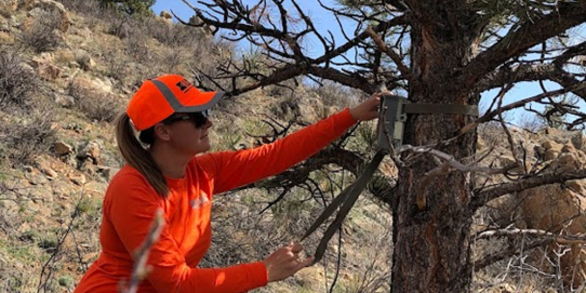
FORT invasive species researchers provide sound, reliable science to support the Department of the Interior in its goals of ensuring public safety, protecting America’s lands and waters, and aiding economic growth.
Filter Total Items: 51

Ecology of Wildlife Disease
Some of the biggest challenges facing wildlife today are changes to their environment from both natural and anthropogenic causes. Natural resource managers, planners, policy makers, industry and private landowners must make informed decisions and policies regarding management, conservation, and restoration of species, habitats, and ecosystem function in response to these changes.

Biological Invasions of Riparian Ecosystems
Beginning in the early twentieth century, non-native trees and shrubs, including tamarisk (also commonly known as saltcedar) and Russian-olive, were introduced to the United States for use as ornamental plants and in erosion-control plantings. These plants spread extensively, becoming the third and fourth most frequently occurring woody riparian plants in the American West.

Ecology of Plague
In North America, the flea transmitted plague bacterium (Yersinia pestis) has colonized and altered native animal communities and ecosystems for more than a century. Many species have suffered adverse consequences from plague, perhaps none more than the endangered black-footed ferret. Plague has established within the ranges of all North American prairie dog species, which collectively serve as...

Non-invasive Surveillance of Bat Hibernacula to Investigate Potential Behavioral Causes of Mortality Associated with White Nose Syndrome
White-Nose Syndrome (WNS) is a devastating disease that threatens the survival of hibernating bats in North America. Since first documented in the winter of 2005/2006, WNS has spread from a very small area of New York across at least two thousand kilometers and half or more of states and provinces in the U.S. and Canada.

Ecological Investigations of White-Nose Syndrome in Bats
White-Nose Syndrome (WNS) is a devastating disease that threatens the survival of hibernating bats in North America. Since first documented in the winter of 2005/2006, WNS has spread from a very small area of New York across at least two thousand kilometers in half or more of states and provinces in the U.S. and Canada. Over five million bats are estimated to have died during the past decade from...

Effects of Soil and Colony Age on Flea Densities
Abundance of fleas is thought to drive rates of plague transmission in the wild. In the complex process of plague maintenance and transmission, fleas as vectors are a potentially weak link in the system that can be exploited. To date, exploiting this link has provided the only stand-alone tools that are operationally effective for managing plague in the black-footed ferret/prairie dog community (i...

External Microbiota of Bats as Potential Bio-control Against Wildlife Diseases
White-nose syndrome (WNS) and/or Pseudogymnoascus destructans (P.d.), the causal agent, has spread westward across 26 states and 5 provinces within the eastern United States and Canada, respectively, over a short period of time. Since its discovery there has been a search to stop the spread of this disease that has killed millions of hibernating bats in its wake. Recent collaborative work by FORT...
White-Nose Syndrome Threatens the Survival of Hibernating Bats in North America
During the winter of 2006–2007, an affliction of unknown origin dubbed “white-nose syndrome” (WNS) began devastating colonies of hibernating bats in a small area around Albany, New York. Colonies of hibernating bats were reduced 80–97 percent at the affected caves and mines that were surveyed. Since then, white-nose syndrome or its causative agent have consistently spread more than 2,000...

WNS Data Management Coordination
White-nose syndrome (WNS) is a disease responsible for unprecedented mortality in hibernating bats in the northeastern U.S. This previously unrecognized disease has spread very rapidly since its discovery in January 2007 and poses a considerable threat to hibernating bats throughout North America.

Transmission of plague by small mammals at Badlands National Park
Plague was first detected in the southwest corner of Badlands National Park (BADL), and spread northeastward, reaching the northeast corner in 2011. Multiple prairie dog colonies in BADL and Conata Basin have had population collapses from plague since its arrival in the park. Plague is now common throughout BADL (NPS and USFS, unpublished data), and threatens efforts to preserve and manage the...

Environmental DNA (eDNA) Sampling Improves Occurrence and Detection Estimates of Invasive Burmese Pythons and Other Constrictor Snakes in Florida
Environmental DNA (eDNA) is organismal DNA that can be found in the environment. Environmental DNA originates from cellular material shed by organisms (via skin, excrement, etc.) into aquatic or terrestrial environments that can be sampled and monitored using new molecular methods. Such methodology is important for the early detection of invasive species as well as the detection of rare and...

Resource for Advanced Modeling (RAM)
Branch scientists have developed the Resource for Advanced Modeling (RAM), a modeling facility for collaborative research both within the U.S. Geological Survey (USGS) and with the wider research community. The facility provides a collaborative working environment for up to 20 scientists from within the USGS and the wider research community. There are networked, wireless computing facilities with...