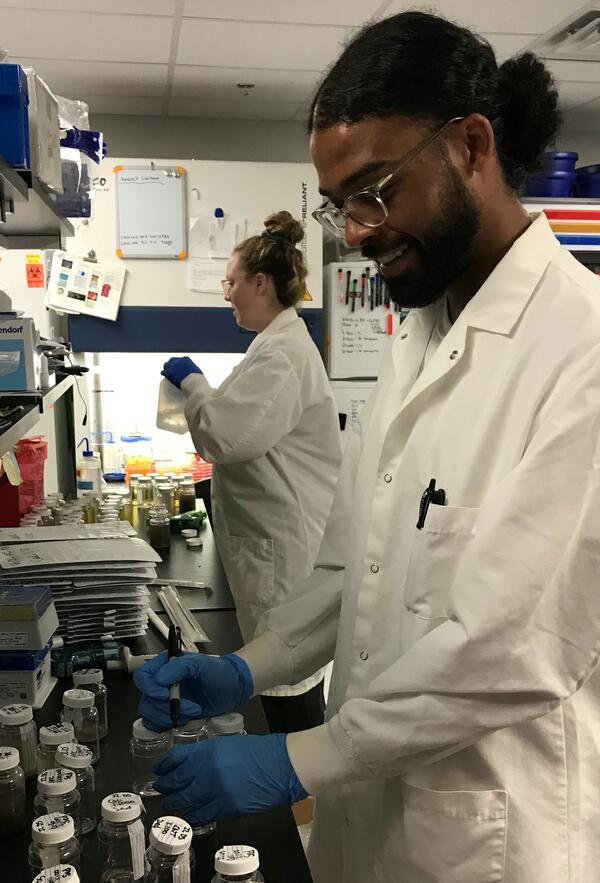
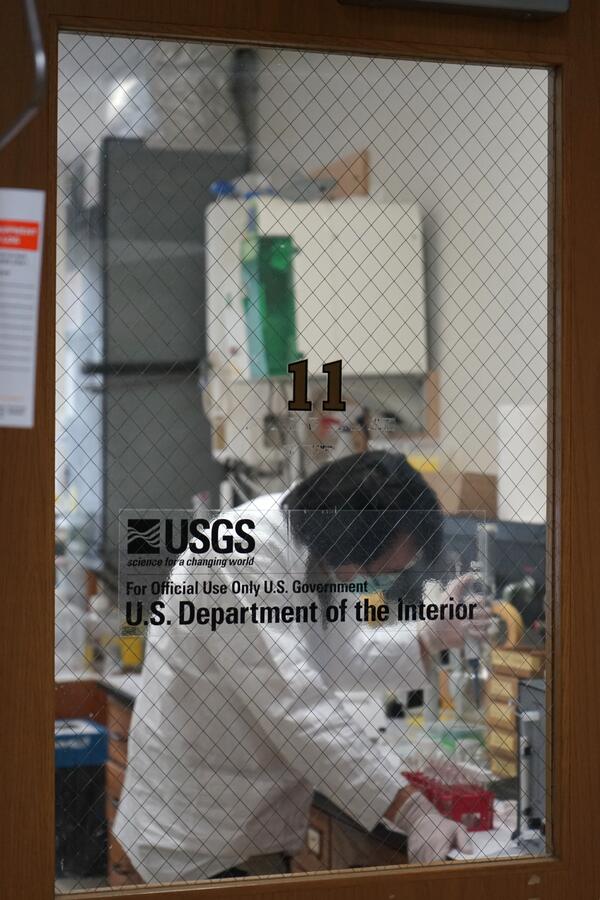
What’s in the water? USGS has the answer!
What’s in the water at the beach where I’m swimming? What’s in the water I’m drinking? What’s in the water where I’m fishing?
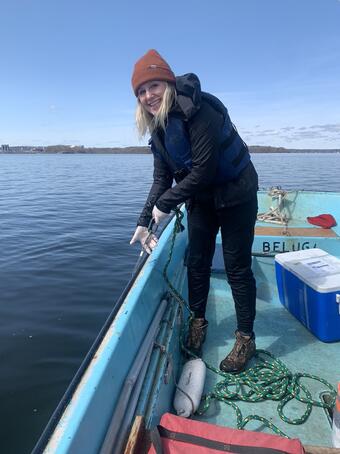
“What’s in the water?”
is a question we ask to keep ourselves safe, and here at the USGS, the question is core to our mission. At the Upper Midwest Water Science Center, we
work with municipalities, towns, cities, states, and Native American Tribes to help them understand what’s in their water, and how it relates to human and ecosystem health. Beyond monitoring streams and rivers by deploying sensors and collecting samples (the USGS bread and butter!), our Center develops and maintains cutting edge laboratory capabilities to measure chemical and biological threats in our water.
Our center has three specialized labs that together can measure hundreds of microbial and contaminant characteristics in waters across the country. These labs measure endpoints that are critical to understanding emerging water science issues, such as cyanobacteria and toxins they produce, the distribution and chemical composition of microplastics, magnitude and sources of mercury exposure, presence of pathogenic microbes such as avian influenza and antibiotic-resistant bacteria, and concentrations of trace elements like lithium, copper, and lead.
Also, spoiler alert, we don’t only measure water! Our labs have answered questions about what’s in air, sediment, dragonflies, spiders, phytoplankton, zooplankton, penguins, birds, fish, bee guts, and many more!
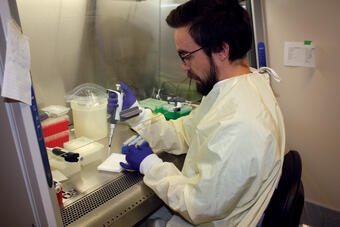
How do we maintain these lab capabilities? Our center can offer these services to our cooperators thanks to investments by the Ecosystems Mission Area (EMA) of the USGS. EMA funds large equipment purchases and time for our scientists to develop new methods. We’re able to leverage these investments through agreements and fee-for-service work with our cooperators, who benefit from state-of-the art equipment and science that keeps up with emerging science issues. This cost sharing approach is critical to maintaining these capabilities so our cooperators can understand what’s in their water.
For more information, see our lab websites (below) & capabilities to learn more!
- Mercury, Metals, and Microplastics Research Lab (M3) located in Madison, Wisconsin
- Michigan Bacteriology Research Lab (MI-BaRL) located in Lansing, Michigan
- Laboratory for Infectious Disease & the Environment (LIDE) located in Marshfield, Wisconsin