



PROSPER Puget Sound - Modeling Streamflow Permanence
The Issue:
Knowing when streams have water and when they run dry—called streamflow permanence—is necessary for managing water resources, protecting ecosystems, and responding to regulations and policies.
In the Pacific Northwest, a major research priority is understanding how streamflow permanence might change as snowpacks shrink and summers become hotter and drier.
How USGS will help:
USGS is developing a model for the Puget Sound region to provide estimates of streamflow permanence in response to future scenarios that include drought. This model leverages the existing PRObability of Streamflow PERmanence (PROSPER) model developed by USGS for the Pacific Northwest region. The Puget Sound model is a first cut attempt to quantify the extent and location of stream drying under future meteorological scenarios.
Problem
Shrinking snowpacks and less summer rain, along with other factors, are expected to change when streams flow or dry up in the Pacific Northwest.
Scientists don’t yet know exactly where these changes will happen—especially at the fine scale of individual stream reaches across large regions. This gap makes it hard to understand how land and water management decisions could help plan for these changes.
Objectives
This project will assess if and how streamflow permanence in streams changes under future climate scenarios, which may be expected to be more drought-like, and across a gradient of developed and undeveloped landscapes for streams in the Puget Sound region.
Relevance and Benefits
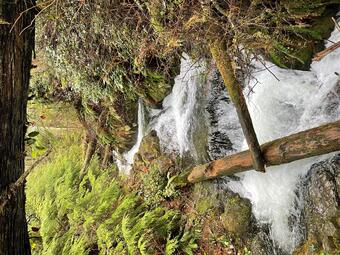
This project will provide, for the first time, estimates of streamflow permanence under future meteorological conditions for streams throughout the Puget Sound region. In addition, model outputs will allow evaluation of the impact of development and impervious surface landcover, which is expected to be an important influence on streamflow permanence.
Because the model covers nearly all streams in the region and provides detailed, location-specific results, users won’t have to rely on representative watersheds. Instead, they can look directly at modeled estimates for their own area.
This level of detail makes it possible to:
- Identify areas vulnerable or resilient to drought
- Assess how development influences stream drying
- Estimate habitat for fish species
- Evaluate impacts on riparian wetlands
The model’s large geographic coverage means results can be analyzed at multiple scales—from individual stream reaches to entire watersheds to the regional level. This flexibility supports planning efforts that need a multi-tiered approach to address the combined impacts of development and long-term meteorological changes.
Approach
The project will leverage an existing streamflow permanence model for the HUC17 Pacific Northwest region, the PRObability of Streamflow PERmanence (PROSPER, Jaeger et al., 2019). A new sub-regional Puget Sound PROSPER model will incorporate new covariates including:
- Meteorological variables for both current and late-century conditions
- Geology
- Land cover
- Streamflow derived from physical hydrological models
The model will be trained on existing and new simple flow/no flow observations. It will provide estimates of the probability of year-round flow for 10-meter stream sub-reaches under current and future conditions, with a focus on drought scenarios.
Explore related USGS research.

Streamflow Permanence in the Pacific Northwest

Probability of Streamflow Permanence (PROSPER)
The Issue:
Knowing when streams have water and when they run dry—called streamflow permanence—is necessary for managing water resources, protecting ecosystems, and responding to regulations and policies.
In the Pacific Northwest, a major research priority is understanding how streamflow permanence might change as snowpacks shrink and summers become hotter and drier.
How USGS will help:
USGS is developing a model for the Puget Sound region to provide estimates of streamflow permanence in response to future scenarios that include drought. This model leverages the existing PRObability of Streamflow PERmanence (PROSPER) model developed by USGS for the Pacific Northwest region. The Puget Sound model is a first cut attempt to quantify the extent and location of stream drying under future meteorological scenarios.
Problem
Shrinking snowpacks and less summer rain, along with other factors, are expected to change when streams flow or dry up in the Pacific Northwest.
Scientists don’t yet know exactly where these changes will happen—especially at the fine scale of individual stream reaches across large regions. This gap makes it hard to understand how land and water management decisions could help plan for these changes.
Objectives
This project will assess if and how streamflow permanence in streams changes under future climate scenarios, which may be expected to be more drought-like, and across a gradient of developed and undeveloped landscapes for streams in the Puget Sound region.
Relevance and Benefits
This project will provide, for the first time, estimates of streamflow permanence under future meteorological conditions for streams throughout the Puget Sound region. In addition, model outputs will allow evaluation of the impact of development and impervious surface landcover, which is expected to be an important influence on streamflow permanence.
Because the model covers nearly all streams in the region and provides detailed, location-specific results, users won’t have to rely on representative watersheds. Instead, they can look directly at modeled estimates for their own area.
This level of detail makes it possible to:
- Identify areas vulnerable or resilient to drought
- Assess how development influences stream drying
- Estimate habitat for fish species
- Evaluate impacts on riparian wetlands
The model’s large geographic coverage means results can be analyzed at multiple scales—from individual stream reaches to entire watersheds to the regional level. This flexibility supports planning efforts that need a multi-tiered approach to address the combined impacts of development and long-term meteorological changes.
Approach
The project will leverage an existing streamflow permanence model for the HUC17 Pacific Northwest region, the PRObability of Streamflow PERmanence (PROSPER, Jaeger et al., 2019). A new sub-regional Puget Sound PROSPER model will incorporate new covariates including:
- Meteorological variables for both current and late-century conditions
- Geology
- Land cover
- Streamflow derived from physical hydrological models
The model will be trained on existing and new simple flow/no flow observations. It will provide estimates of the probability of year-round flow for 10-meter stream sub-reaches under current and future conditions, with a focus on drought scenarios.
Explore related USGS research.
Streamflow Permanence in the Pacific Northwest