



Seagrass marshes in Chincoteague Channel. Saltwater and barrier marshes are important ecosystems that protect inland habitat and communities from ocean storms.
Images
Images
Filter Total Items: 9448

Marshes at Chincoteague Channel
Seagrass marshes in Chincoteague Channel. Saltwater and barrier marshes are important ecosystems that protect inland habitat and communities from ocean storms.

Marsh Management at Blackwater National Wildlife Refuge
Marsh Management at Blackwater National Wildlife RefugeMarsh management projects on-going at Blackwater National Wildlife Refuge. Wetlands are planted and flooded during the Spring and Summer, then drained during the Fall and Winter. This provides sediment stabilization and habitat for migrating waterfowl.
Marsh Management at Blackwater National Wildlife Refuge
Marsh Management at Blackwater National Wildlife RefugeMarsh management projects on-going at Blackwater National Wildlife Refuge. Wetlands are planted and flooded during the Spring and Summer, then drained during the Fall and Winter. This provides sediment stabilization and habitat for migrating waterfowl.

Chincoteague Channel Marshes
Seagrass marshes in Chincoteague Channel. Saltwater and barrier marshes are important ecosystems that protect inland habitat and communities from ocean storms.
Seagrass marshes in Chincoteague Channel. Saltwater and barrier marshes are important ecosystems that protect inland habitat and communities from ocean storms.

Mosquito Creek Marshes
Seagrass marshes in Mosquito Creek. Saltwater and barrier marshes are important ecosystems that protect inland habitat and communities from ocean storms.
Seagrass marshes in Mosquito Creek. Saltwater and barrier marshes are important ecosystems that protect inland habitat and communities from ocean storms.

Salt Marshes along Little Mosquito Creek
Salt marshes along Little Mosquito Creek of Chincoteague Island. The salt marshes that make up Chincoteague Island are important habitat for migrating waterfowl. In addition, they serve an important role in protecting inland ecosystems and communities from oceanic storms.
Salt marshes along Little Mosquito Creek of Chincoteague Island. The salt marshes that make up Chincoteague Island are important habitat for migrating waterfowl. In addition, they serve an important role in protecting inland ecosystems and communities from oceanic storms.

Surf on Assateague Island
Surf on Assateague Island from the Atlantic Ocean.
Surf on Assateague Island from the Atlantic Ocean.
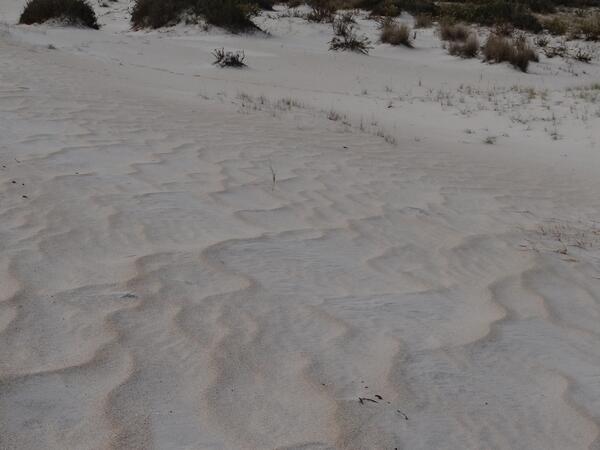
Overwash on Assateague Island
Overwash on Assateague Island. Overwash occurs when waves overtop the main sand dune and redistribute the sand along new patterns. Overwash has contributed to the gradual movement of Assateague Island to the south.
Overwash on Assateague Island. Overwash occurs when waves overtop the main sand dune and redistribute the sand along new patterns. Overwash has contributed to the gradual movement of Assateague Island to the south.

Wild Ponies on Assateague Island
Wild ponies on Assateague Island. Wild ponies have lived on Assateague since the 1600s, although how they were introduced to Assateague is still debated. There are now around 300 or so wild ponies in Maryland and Virginia.
Wild ponies on Assateague Island. Wild ponies have lived on Assateague since the 1600s, although how they were introduced to Assateague is still debated. There are now around 300 or so wild ponies in Maryland and Virginia.

Assateague Inland Scrub
Inland scrub plants on Assateague Island. Inland scrub plays an important role in stabilizing the sand dunes on a barrier island.
Inland scrub plants on Assateague Island. Inland scrub plays an important role in stabilizing the sand dunes on a barrier island.
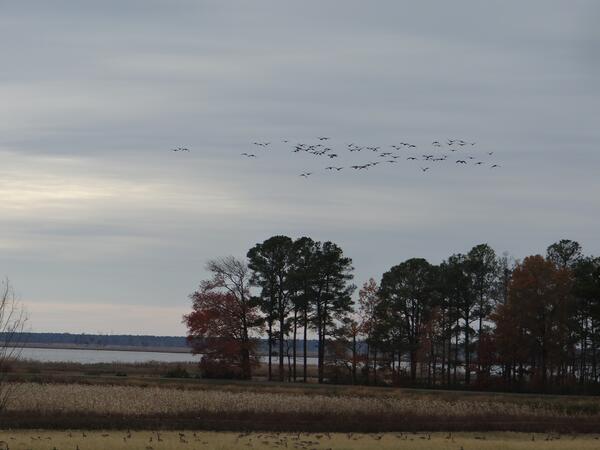
Arriving Migratory Waterfowl
Migratory waterfowl arriving at Blackwater National Wildlife Refuge in Maryland.
Migratory waterfowl arriving at Blackwater National Wildlife Refuge in Maryland.

Marshes of Blackwater National Wildlife Refuge
Tidal marshes in Blackwater National Wildlife Refuge. The refuge contains one-third of Maryland's tidal wetlands, which makes it an ecologically important area within the state.
Tidal marshes in Blackwater National Wildlife Refuge. The refuge contains one-third of Maryland's tidal wetlands, which makes it an ecologically important area within the state.

Marshes of Blackwater National Wildlife Refuge
Tidal marshes in Blackwater National Wildlife Refuge. The refuge contains one-third of Maryland's tidal wetlands, which makes it an ecologically important area within the state.
Tidal marshes in Blackwater National Wildlife Refuge. The refuge contains one-third of Maryland's tidal wetlands, which makes it an ecologically important area within the state.

Marshes of Queen Sound Channel
Seagrass marshes in Queen Sound Channel. Saltwater and barrier marshes are important ecosystems that protect inland habitat and communities from ocean storms.
Seagrass marshes in Queen Sound Channel. Saltwater and barrier marshes are important ecosystems that protect inland habitat and communities from ocean storms.

Duck Blind in New Virginia Cove
A duck blind in New Virginia Cove, part of Chincoteague Island. The salt marshes that make up Chincoteague Island are important habitat for migrating waterfowl.
A duck blind in New Virginia Cove, part of Chincoteague Island. The salt marshes that make up Chincoteague Island are important habitat for migrating waterfowl.

A Wild Pony of Assateague
A wild pony on Assateague Island. Wild ponies have lived on Assateague since the 1600s, although how they were introduced to Assateague is still debated. There are now around 300 or so wild ponies in Maryland and Virginia.
A wild pony on Assateague Island. Wild ponies have lived on Assateague since the 1600s, although how they were introduced to Assateague is still debated. There are now around 300 or so wild ponies in Maryland and Virginia.

Assateague Inland Scrub
Inland scrub plants on Assateague Island. Inland scrub plays an important role in stabilizing the sand dunes on a barrier island.
Inland scrub plants on Assateague Island. Inland scrub plays an important role in stabilizing the sand dunes on a barrier island.

Assateague Inland Scrub
Inland scrub plants on Assateague Island. Inland scrub plays an important role in stabilizing the sand dunes on a barrier island.
Inland scrub plants on Assateague Island. Inland scrub plays an important role in stabilizing the sand dunes on a barrier island.

Salt Marshes at Chincoteague Island
Salt marshes at Chincoteague Island. The salt marshes that make up Chincoteague Island are important habitat for migrating waterfowl. In addition, they serve an important role in protecting inland ecosystems and communities from oceanic storms.
Salt marshes at Chincoteague Island. The salt marshes that make up Chincoteague Island are important habitat for migrating waterfowl. In addition, they serve an important role in protecting inland ecosystems and communities from oceanic storms.

Salt Marshes at Chincoteague Island
Salt marshes at Chincoteague Island. The salt marshes that make up Chincoteague Island are important habitat for migrating waterfowl. In addition, they serve an important role in protecting inland ecosystems and communities from oceanic storms.
Salt marshes at Chincoteague Island. The salt marshes that make up Chincoteague Island are important habitat for migrating waterfowl. In addition, they serve an important role in protecting inland ecosystems and communities from oceanic storms.

Migratory Waterfowl at Coulson Pond
Migratory waterfowl congregate at Coulson Pond in Blackwater National Wildlife Refuge. Blackwater serves as an important habitat for these waterfowl, and was established in 1933 as a waterfowl sanctuary for birds migrating along the Atlantic Flyway.
Migratory waterfowl congregate at Coulson Pond in Blackwater National Wildlife Refuge. Blackwater serves as an important habitat for these waterfowl, and was established in 1933 as a waterfowl sanctuary for birds migrating along the Atlantic Flyway.

Marsh Management at Blackwater National Wildlife Refuge
Marsh Management at Blackwater National Wildlife RefugeMarsh management projects on-going at Blackwater National Wildlife Refuge. Wetlands are planted and flooded during the Spring and Summer, then drained during the Fall and Winter. This provides sediment stabilization and habitat for migrating waterfowl.
Marsh Management at Blackwater National Wildlife Refuge
Marsh Management at Blackwater National Wildlife RefugeMarsh management projects on-going at Blackwater National Wildlife Refuge. Wetlands are planted and flooded during the Spring and Summer, then drained during the Fall and Winter. This provides sediment stabilization and habitat for migrating waterfowl.