



FORT Updates: From Plains to Peaks - Vol. 2 | Issue 9
Hot off the Press
Recent publications, events, and other news from the Fort Collins Science Center.
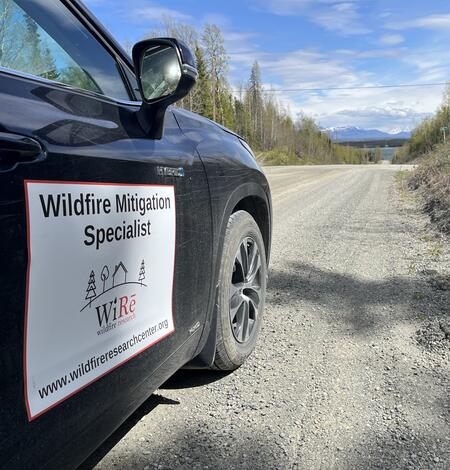
FORT Economist James Meldrum and the Wildfire Research Team win the 2024 CO-LABS Governor’s Awards for High Impact Research: Pathfinding Partnerships Award
The Pathfinding Partnerships Award from CO-LABS recognizes impactful, collaborative research projects organized by four or more research entities, including federal labs, in Colorado. This year, the Wildfire Research (WiRē) team received this award for their support of evidence-based community wildfire education to help communities live with wildfire.
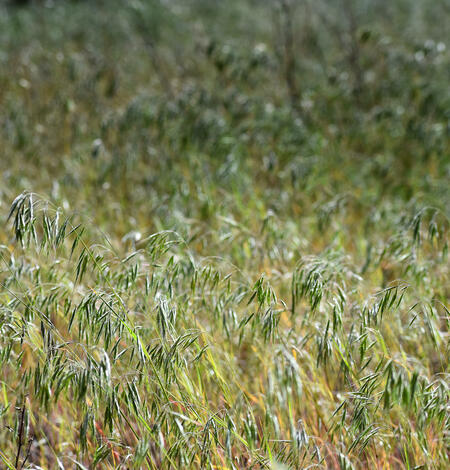
Predicting when the grass is greener: new phenological forecasts for invasive annual grasses
Two major hurdles in the effective control of invasive grasses are: (1) Anticipating the timing of key stages that are susceptible to management actions, and (2) accurately mapping where treatments are most needed over vast landscapes in real time. To address these hurdles, researchers created range-wide phenology forecasts for two problematic invasive annual grasses: cheatgrass and red brome.
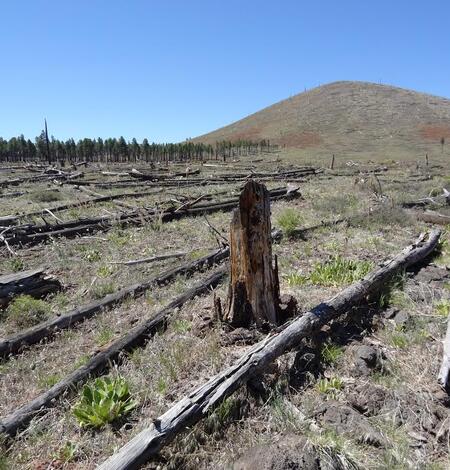
Contemporary fires are less frequent but more severe in dry conifer forests of the southwestern United States
After over a century of human-driven fire suppression in the American Southwest, forest fires in recent decades are growing in extent and severity. Historically, dry conifer forests burned on a regular basis, raising the question of whether current wildfire regimes are a return to the norm. To study this, researchers used tree rings to explore 300 years of forest fire history across the Southwest.
For Bat Week 2024, USGS spotlighted all of the innovative strategies our scientists use to study bats!
Read the article below to learn more about this science, including many of the creative methods and tools developed by FORT researchers in the North American Bat Monitoring Program

Special Issue of Rangeland Ecology and Management features USGS science in support of the Sagebrush Conservation Design
The 2024 Special Issue of the Rangeland Ecology and Management journal features 20 peer-reviewed articles that delve into the science of how, where and why practitioners are deploying the Sagebrush Conservation Design (SCD) to conserve the sagebrush biome. Here, we highlight USGS contributions to the Special Issue, which provides an actionable path forward to fight common threats across the biome.
New research estimates the effectiveness of sagebrush restoration treatments across the sagebrush biome
Restoration of the imperiled sagebrush biome will require tools that assist resource managers in determining which restoration practices are most effective, and when and where restoration efforts will lead to the most ecosystem recovery. New research from USGS and Colorado State University provides biome-wide insights and spatially explicit tools that can inform restoration practices.
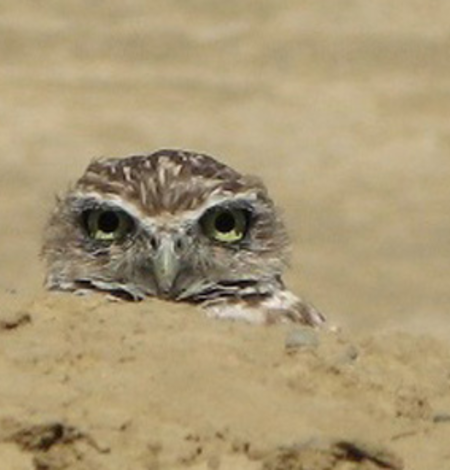
A new science synthesis for public land management of the effects of noise from oil and gas development on raptors and songbirds
The USGS is working with federal land management agencies to develop a series of structured science syntheses (SSS) to support National Environmental Policy Act (NEPA) analyses. This new synthesis is the third publication in the SSS series and provides science to support NEPA analyses for agency decisions regarding oil and gas leasing and permitting.
Subscribe to our newsletter to get all the FORT Science Updates!
Science Spotlights
New or ongoing research projects at the Fort Collins Science Center.
-

A citizen science program for brown treesnake removal and native species recovery at a National Historical Park in Guam
The National Park Service (NPS), U.S. Geological Survey (USGS), U.S. Fish and Wildlife Service (USFWS), and community Citizen Scientists are working together to remove brown treesnakes at War in the Pacific National Historical Park - Asan Beach Unit to aid restoration of native avian and reptile species.
Shrubland, Alpine and Grassland Ecology (SAGE) Wildlife Research Group
The SAGE Wildlife Research Group consists of a large team of research scientists with an interest in conservation and management of wildlife and their ecosystems. Broadly, research involves understanding animal-habitat relationships, with an emphasis on conservation ecology and population demography, and a focus on shrubland, alpine, and grassland ecosystems. We are addressing the effects of...
North American Bat Monitoring Program (NABat)
Bats are essential contributing members of healthy, functioning ecosystems. They perform numerous ecosystem services like insect pest control and plant pollination, and provide enormous economic benefits through ecotourism, medical research, and novel biotechnologies. North American bats face unprecedented threats including habitat loss and fragmentation, white-nose syndrome, and wind energy...
Learn More
Find our science and connect with our researchers.
Publications
FORT scientists have produced more than 2000 peer reviewed publications that are registered in the USGS Publications Warehouse, along with many others prior to their work at the USGS or in conjunction with other government agencies.

Data
Our interdisciplinary, integrated science teams develop various data sets in support of the USGS mission areas. This information then aids natural resource managers in decision making and support of the complex issues they face in today's world. The data and tools listed here are official USGS data releases.

Connect
The majority of our staff call Fort Collins, Colorado their home, but work all over the United States. FORT research and support staff work from one of four duty stations: in Colorado, at the Fort Collins Science Center or Denver Federal Center; in New Mexico, at the New Mexico Landscapes Field Station; or in Florida, at the USGS Everglades Research Offices.