



Understanding disease systems requires an understanding of the basic ecology of host species. USGS is involved in global efforts to explore the movements of bird species that are hosts of avian influenza as well as the potential impacts of changing landscapes on avian influenza.


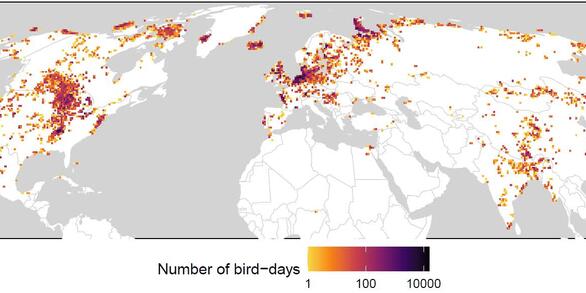
Wild waterfowl are known vectors for both low pathogenic avian influenza (LPAI) as well as highly pathogenic avian influenza (HPAI), circulating these viruses across the landscape. As such, understanding how these species alter movements at local scales and across migratory pathways in response to factors such as extreme weather events (i.e., drought, polar vortex, etc.) and changes in the landscape (i.e., urbanization, altered wetland availability) is necessary to predict how they may circulate pathogens under current and future conditions.
USGS research will compare historic and current telemetry datasets with data representing habitat and weather conditions to evaluate how different waterfowl species have responded. These findings will then be used to inform estimates of disease transmission risk to both domestic poultry and other wild bird species that may be adversely impacted or further broaden risk to human health and agricultural production.
<< Back to Avian Influenza Research at EESC
Understanding disease systems requires an understanding of the basic ecology of host species. USGS is involved in global efforts to explore the movements of bird species that are hosts of avian influenza as well as the potential impacts of changing landscapes on avian influenza.
Wild waterfowl are known vectors for both low pathogenic avian influenza (LPAI) as well as highly pathogenic avian influenza (HPAI), circulating these viruses across the landscape. As such, understanding how these species alter movements at local scales and across migratory pathways in response to factors such as extreme weather events (i.e., drought, polar vortex, etc.) and changes in the landscape (i.e., urbanization, altered wetland availability) is necessary to predict how they may circulate pathogens under current and future conditions.
USGS research will compare historic and current telemetry datasets with data representing habitat and weather conditions to evaluate how different waterfowl species have responded. These findings will then be used to inform estimates of disease transmission risk to both domestic poultry and other wild bird species that may be adversely impacted or further broaden risk to human health and agricultural production.
<< Back to Avian Influenza Research at EESC