



EESC Makes an Impact: Empowering State-led Wildlife Management
Management of state natural resources is a collaborative effort between state governments, federal agencies, tribal governments, and local stakeholders. USGS Eastern Ecological Science Center (EESC) supports state-led wildlife management with research that clarifies complex issues, enhances scientific quality and communication, broadens solution options, and enables cost-sharing and mutual benefits.
Science that enhances understanding of fish and wildlife health
EESC scientists work to identify novel and emerging pathogens, diseases, and contaminants of concern; and assess fish and wildlife responses to these stressors.
Health and disease research conducted by EESC directly supports state wildlife agencies and resource managers in protecting economically and culturally important species.
EESC research projects are essential to state agencies and the public because they inform conservation strategies, guide pollution mitigation, protect human health, and inform state management decisions to sustain fish and wildlife resources that support local economies and biodiversity.
Aquatic species health and disease research
In Massachusetts, EESC’s assessment of PFAS contamination in fish revealed how site-specific pollution sources and exposure pathways influence biological effects, offering critical insights for targeted remediation.
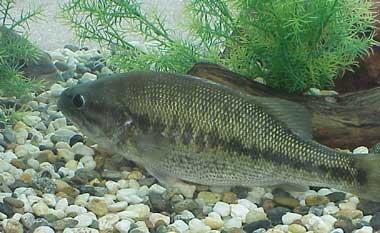
Researchers analyzed PFAS concentrations in fish from three Massachusetts waterbodies, focusing on fish plasma, liver, and muscle. Results revealed site and species-specific differences in PFAS levels over time, with largemouth bass accumulating more PFAS than other fish species, likely because they eat other fish and are higher in the food web. Tissue analyses for fish sampled in the study showed PFAS exposure was linked to inflammation, oxidative stress, endocrine disruption, and immune responses.
Results of this research support state natural resource management efforts including prioritizing monitoring efforts and informing fish consumption advisories that protect public health while maintaining access to recreational subsistence fishing. A key benefit of this research is that it distinguished between point and non-point PFAS sources, offering insights into where contamination originates. This can inform state regulatory actions, cleanup strategies, and land-use planning to reduce future contamination. The findings offer a scientific foundation for state-level environmental policies and can be used to engage stakeholders—such as local communities, industries, and conservation groups—in collaborative PFAS mitigation efforts.

Terrestrial wildlife health and disease research
The range of chronic wasting disease (CWD) in wild and farmed cervids (hoofed animals like deer, elk, and moose) has expanded into northeastern and western U.S. states. State, federal, and tribal partners are working to better understand the time-to-arrival of CWD, how to delay arrival, how to design efficient surveillance programs, and how to respond to a detection once it does arrive.
USGS quantitative ecologists, decision analysts, and social scientists, including EESC team members, are developing and helping partners use decision-making tools to plan and implement proactive and reactive management measures that slow the introduction and spread of CWD.
EESC scientists facilitated workshops for state agencies to inform CWD and deer management decision making in Massachusetts, Ohio, Washington, and Vermont.
At the request of Vermont Fish and Wildlife Department, EESC scientists are participating with the CWD Taskforce in discussing final steps in Vermont’s Chronic Wasting Disease Prevention and Response Plan which aims to slow the introduction of CWD and minimize its impacts on cervids in the Northeast.
USGS scientists, including EESC team members are working with Klamath Tribes Natural Resources Department as they develop their CWD plan. This collaborative effort includes the application of structured decision making and the development of mathematical models to analyze potential CWD management strategies. This process may provide opportunities for broader coordination by natural resource management agencies to work together to ensure the long-term health and sustainability of deer and elk populations within the Reserved Treaty Rights Area and throughout the state of Oregon.

Science that helps address emerging threats and changing conditions
EESC research enhances understanding and potential options for confronting invasive species and environmental variability. EESC develops decision support tools and conducts scientific investigations and monitoring that help natural resource managers adapt to changing conditions.
Invasive species research
In Massachusetts, USGS scientists studied the use of light to control sea lamprey, targeted for restoration in its native range and for control in systems where it is invasive, including Great Lakes states.
To assess whether light influenced the movement behavior of juvenile sea lamprey during their downstream migration, researchers used both laboratory flume experiments and field studies, to test the effects of different light intensities and orientations on lamprey behavior. In the lab, low-intensity light appeared to attract lamprey, while high-intensity light reduced downstream movement, indicating possible avoidance behavior. Field studies showed that juvenile lamprey responded to light cues, but the effect varied with water velocity and environmental conditions. These findings suggest that visible light has potential as a non-physical guidance tool for managing lamprey migration.
The implications of this research for lamprey management are promising, including using light as an alternative to physical barriers or traps, using light cues to direct lamprey toward collection points or away from sensitive habitats to minimize impacts on non-target species, and integrating light-based guidance into fish passage systems or barriers to enhance their effectiveness without major structural changes.


Ecosystem and environmental variability research
EESC leads the EcoSHEDS initiative, a suite of tools, models, and databases developed by a multidisciplinary USGS team to support research and decision-making related to freshwater ecosystems. While EcoSHEDS has national applications, many of its tools are regionally focused—particularly in the Northeast, Mid-Atlantic, Midwest, and Alaska.
The EcoSHEDS AKTEMP platform, including its AKTEMPVIZ visualization tool, offers substantial benefits for state natural resource management in Alaska, particularly in the context of climate adaptation, fisheries, and aquatic ecosystem health. Access to data and a visualization tool for exploring spatial and temporal temperature trends supports state efforts like monitoring thermal refugia for species of concern, assessing stream temperature thresholds for permitting or restoration, supporting development of total maximum daily load for temperature-impaired waters, and evaluating effectiveness of strategies to adapt to changing conditions.
EcoSHEDS also includes Flow Photo Explorer which provides model predictions of streamflow at 39 stations in the Northeast, Mid-Atlantic, and Midwest regions. This tool supports natural resource management by offering innovative, low-cost, and scalable methods for monitoring hydrologic conditions—especially in remote or data-scarce areas. The ability to monitor hydrologic conditions helps states with streamflow monitoring in ungauged basins, conducting flood risk assessment in small watersheds, assessing habitat suitability for aquatic species, predicting water quality and algal blooms, and infrastructure planning projects such as culvert sizing and dam removal.

Science that helps to preserve, conserve, and restore fish and wildlife populations
EESC scientists perform research and modeling on a wide range of aquatic and terrestrial species and their associated ecosystems and manage datasets on species identification, occurrence, distribution, and population trends to inform management decisions for fish, wildlife, and their habitats.
EESC scientists are monitoring red knots and developing predictive models that inform decisions about sustainable harvest of horseshoe crabs in Delaware Bay. The Delaware Bay supports the largest spawning population of horseshoe crabs in the world and the second largest population of migrating shorebirds in North America.
Red knots and horseshoe crabs are interconnected and present a complex resource management challenge. Horseshoe crab eggs are an important food source for red knots which stop at Delaware Bay during northward migration. However, horseshoe crabs also play a key role in the economy and public health. There is an extensive commercial fishery on horseshoe crabs for use as bait in eel and whelk fisheries along the Atlantic coast. Additionally, collection of horseshoe crabs is indispensable to the biomedical industry which relies upon their blood for essential testing of vaccines, medical devices, and intravenous drugs. Although some horseshoe crabs are returned to the wild after blood extraction, not all survive the process.
By conducting research to develop and implement predictive modeling, and collaborating with the interjurisdictional Atlantic States Marine Fisheries Commission, EESC is providing key support for adaptive management decisions and actions that protect horseshoe crabs, shorebirds, and the people who depend on both.

EESC scientists investigated how boat speed influences the likelihood of lethal injuries to Florida manatees. Using community-reported data on boat-manatee collisions and addressing data uncertainties—particularly the qualitative nature of speed reports—they estimated probability of fatal outcomes based on reported boat speeds. Findings indicated that higher boat speeds are associated with an increased probability of lethal injury, although uncertainty remained due to limited data at lower speeds and non-lethal outcomes.
The study's results enhance Florida's ability to develop alternative management strategies, such as speed zone regulations, and highlight the value of improving data collection methods for broader applications in marine wildlife conservation.

The U.S. Geological Survey Eastern Ecological Science Center strives to provide world-class science to inform natural resource decisions that preserve and enhance our quality of life. We work directly with managers of our shared natural resources to provide the unbiased scientific tools, research and innovations needed to make informed decisions in today’s complex and rapidly changing conditions. We engage partners to co-develop solutions that balance economic and conservation goals, resulting in cost savings, risk reduction, and long-term resource sustainability.
Management of state natural resources is a collaborative effort between state governments, federal agencies, tribal governments, and local stakeholders. USGS Eastern Ecological Science Center (EESC) supports state-led wildlife management with research that clarifies complex issues, enhances scientific quality and communication, broadens solution options, and enables cost-sharing and mutual benefits.
Science that enhances understanding of fish and wildlife health
EESC scientists work to identify novel and emerging pathogens, diseases, and contaminants of concern; and assess fish and wildlife responses to these stressors.
Health and disease research conducted by EESC directly supports state wildlife agencies and resource managers in protecting economically and culturally important species.
EESC research projects are essential to state agencies and the public because they inform conservation strategies, guide pollution mitigation, protect human health, and inform state management decisions to sustain fish and wildlife resources that support local economies and biodiversity.
Aquatic species health and disease research
In Massachusetts, EESC’s assessment of PFAS contamination in fish revealed how site-specific pollution sources and exposure pathways influence biological effects, offering critical insights for targeted remediation.
Researchers analyzed PFAS concentrations in fish from three Massachusetts waterbodies, focusing on fish plasma, liver, and muscle. Results revealed site and species-specific differences in PFAS levels over time, with largemouth bass accumulating more PFAS than other fish species, likely because they eat other fish and are higher in the food web. Tissue analyses for fish sampled in the study showed PFAS exposure was linked to inflammation, oxidative stress, endocrine disruption, and immune responses.
Results of this research support state natural resource management efforts including prioritizing monitoring efforts and informing fish consumption advisories that protect public health while maintaining access to recreational subsistence fishing. A key benefit of this research is that it distinguished between point and non-point PFAS sources, offering insights into where contamination originates. This can inform state regulatory actions, cleanup strategies, and land-use planning to reduce future contamination. The findings offer a scientific foundation for state-level environmental policies and can be used to engage stakeholders—such as local communities, industries, and conservation groups—in collaborative PFAS mitigation efforts.
Terrestrial wildlife health and disease research
The range of chronic wasting disease (CWD) in wild and farmed cervids (hoofed animals like deer, elk, and moose) has expanded into northeastern and western U.S. states. State, federal, and tribal partners are working to better understand the time-to-arrival of CWD, how to delay arrival, how to design efficient surveillance programs, and how to respond to a detection once it does arrive.
USGS quantitative ecologists, decision analysts, and social scientists, including EESC team members, are developing and helping partners use decision-making tools to plan and implement proactive and reactive management measures that slow the introduction and spread of CWD.
EESC scientists facilitated workshops for state agencies to inform CWD and deer management decision making in Massachusetts, Ohio, Washington, and Vermont.
At the request of Vermont Fish and Wildlife Department, EESC scientists are participating with the CWD Taskforce in discussing final steps in Vermont’s Chronic Wasting Disease Prevention and Response Plan which aims to slow the introduction of CWD and minimize its impacts on cervids in the Northeast.
USGS scientists, including EESC team members are working with Klamath Tribes Natural Resources Department as they develop their CWD plan. This collaborative effort includes the application of structured decision making and the development of mathematical models to analyze potential CWD management strategies. This process may provide opportunities for broader coordination by natural resource management agencies to work together to ensure the long-term health and sustainability of deer and elk populations within the Reserved Treaty Rights Area and throughout the state of Oregon.
Science that helps address emerging threats and changing conditions
EESC research enhances understanding and potential options for confronting invasive species and environmental variability. EESC develops decision support tools and conducts scientific investigations and monitoring that help natural resource managers adapt to changing conditions.
Invasive species research
In Massachusetts, USGS scientists studied the use of light to control sea lamprey, targeted for restoration in its native range and for control in systems where it is invasive, including Great Lakes states.
To assess whether light influenced the movement behavior of juvenile sea lamprey during their downstream migration, researchers used both laboratory flume experiments and field studies, to test the effects of different light intensities and orientations on lamprey behavior. In the lab, low-intensity light appeared to attract lamprey, while high-intensity light reduced downstream movement, indicating possible avoidance behavior. Field studies showed that juvenile lamprey responded to light cues, but the effect varied with water velocity and environmental conditions. These findings suggest that visible light has potential as a non-physical guidance tool for managing lamprey migration.
The implications of this research for lamprey management are promising, including using light as an alternative to physical barriers or traps, using light cues to direct lamprey toward collection points or away from sensitive habitats to minimize impacts on non-target species, and integrating light-based guidance into fish passage systems or barriers to enhance their effectiveness without major structural changes.
Ecosystem and environmental variability research
EESC leads the EcoSHEDS initiative, a suite of tools, models, and databases developed by a multidisciplinary USGS team to support research and decision-making related to freshwater ecosystems. While EcoSHEDS has national applications, many of its tools are regionally focused—particularly in the Northeast, Mid-Atlantic, Midwest, and Alaska.
The EcoSHEDS AKTEMP platform, including its AKTEMPVIZ visualization tool, offers substantial benefits for state natural resource management in Alaska, particularly in the context of climate adaptation, fisheries, and aquatic ecosystem health. Access to data and a visualization tool for exploring spatial and temporal temperature trends supports state efforts like monitoring thermal refugia for species of concern, assessing stream temperature thresholds for permitting or restoration, supporting development of total maximum daily load for temperature-impaired waters, and evaluating effectiveness of strategies to adapt to changing conditions.
EcoSHEDS also includes Flow Photo Explorer which provides model predictions of streamflow at 39 stations in the Northeast, Mid-Atlantic, and Midwest regions. This tool supports natural resource management by offering innovative, low-cost, and scalable methods for monitoring hydrologic conditions—especially in remote or data-scarce areas. The ability to monitor hydrologic conditions helps states with streamflow monitoring in ungauged basins, conducting flood risk assessment in small watersheds, assessing habitat suitability for aquatic species, predicting water quality and algal blooms, and infrastructure planning projects such as culvert sizing and dam removal.
Science that helps to preserve, conserve, and restore fish and wildlife populations
EESC scientists perform research and modeling on a wide range of aquatic and terrestrial species and their associated ecosystems and manage datasets on species identification, occurrence, distribution, and population trends to inform management decisions for fish, wildlife, and their habitats.
EESC scientists are monitoring red knots and developing predictive models that inform decisions about sustainable harvest of horseshoe crabs in Delaware Bay. The Delaware Bay supports the largest spawning population of horseshoe crabs in the world and the second largest population of migrating shorebirds in North America.
Red knots and horseshoe crabs are interconnected and present a complex resource management challenge. Horseshoe crab eggs are an important food source for red knots which stop at Delaware Bay during northward migration. However, horseshoe crabs also play a key role in the economy and public health. There is an extensive commercial fishery on horseshoe crabs for use as bait in eel and whelk fisheries along the Atlantic coast. Additionally, collection of horseshoe crabs is indispensable to the biomedical industry which relies upon their blood for essential testing of vaccines, medical devices, and intravenous drugs. Although some horseshoe crabs are returned to the wild after blood extraction, not all survive the process.
By conducting research to develop and implement predictive modeling, and collaborating with the interjurisdictional Atlantic States Marine Fisheries Commission, EESC is providing key support for adaptive management decisions and actions that protect horseshoe crabs, shorebirds, and the people who depend on both.
EESC scientists investigated how boat speed influences the likelihood of lethal injuries to Florida manatees. Using community-reported data on boat-manatee collisions and addressing data uncertainties—particularly the qualitative nature of speed reports—they estimated probability of fatal outcomes based on reported boat speeds. Findings indicated that higher boat speeds are associated with an increased probability of lethal injury, although uncertainty remained due to limited data at lower speeds and non-lethal outcomes.
The study's results enhance Florida's ability to develop alternative management strategies, such as speed zone regulations, and highlight the value of improving data collection methods for broader applications in marine wildlife conservation.
The U.S. Geological Survey Eastern Ecological Science Center strives to provide world-class science to inform natural resource decisions that preserve and enhance our quality of life. We work directly with managers of our shared natural resources to provide the unbiased scientific tools, research and innovations needed to make informed decisions in today’s complex and rapidly changing conditions. We engage partners to co-develop solutions that balance economic and conservation goals, resulting in cost savings, risk reduction, and long-term resource sustainability.