



EESC Makes an Impact: Enhancing Recreational & Commercial Fishing
The USGS Eastern Ecological Science Center (EESC) provides world-class science to inform natural resource decisions on aquatic ecosystems, species populations and management, disease, and invasive species. Our scientific products represent critical contributions that enhance the ecological and economic sustainability of recreational and commercial fishing. In the United States, anglers contribute approximately $148 billion to the economy and support over 945,000 jobs.
USGS scientists monitor and assess the health of aquatic ecosystems; study contaminants that adversely affect water quality and fish health; research influences on fish habitat and population dynamics of numerous species; and design, develop and validate new fish passage and invasive species control technologies that improve the management of recreational and commercial fishing resources.
Fish Health
Blotchy Bass Syndrome:
A recent study has revealed a close association between a pair of novel adomaviruses and blotchy, inky, hyperpigmented melanistic lesions (HPMLs) on both smallmouth and largemouth bass. These troubling skin lesions have been reported across various ecoregions in the U.S. since 2008 for smallmouth bass and since the 1980s for largemouth bass.
Why does this matter? Black bass hold significant socioeconomic and recreational value, supporting thriving fisheries and aquaculture industries vital to our economy. Understanding the health of these fish not only aids in maintaining healthy ecosystems but also ensures the sustainability of fishing industries that many Americans rely on.
While the health implications of these infections remain unclear, studying the connections between fish health and viral infections can inform crucial biosecurity measures, particularly as they relate to the movement of fish across different jurisdictions.

Disease in Smallmouth Bass:
Smallmouth bass are a sentinel species, reflecting ecosystem health. Their declines signal broader environmental issues in the Chesapeake Bay, a critical U.S. watershed and the largest estuary in North America. Recent research by West Virginia University and the USGS look at the complexities and why Chesapeake Bay smallmouth bass are declining. No single cause has been identified; instead, immunosuppression from a complex mix of environmental stressors is suspected. The immune assays provide a sensitive endpoint to detect sublethal stress before visible disease or mortality, enabling early intervention. Linking immune suppression to contaminants (e.g., PFAS, mercury) and land use guides targeted management, such as reducing pesticide runoff or enhancing genetic diversity.
Smallmouth bass are prized in recreational fisheries, supporting tourism and local economies in the Chesapeake Bay region. Declines reduce catch rates, impacting angler revenue. Healthy fisheries ensure sustainable recreation and food security, while clean watersheds benefit human health and agriculture.
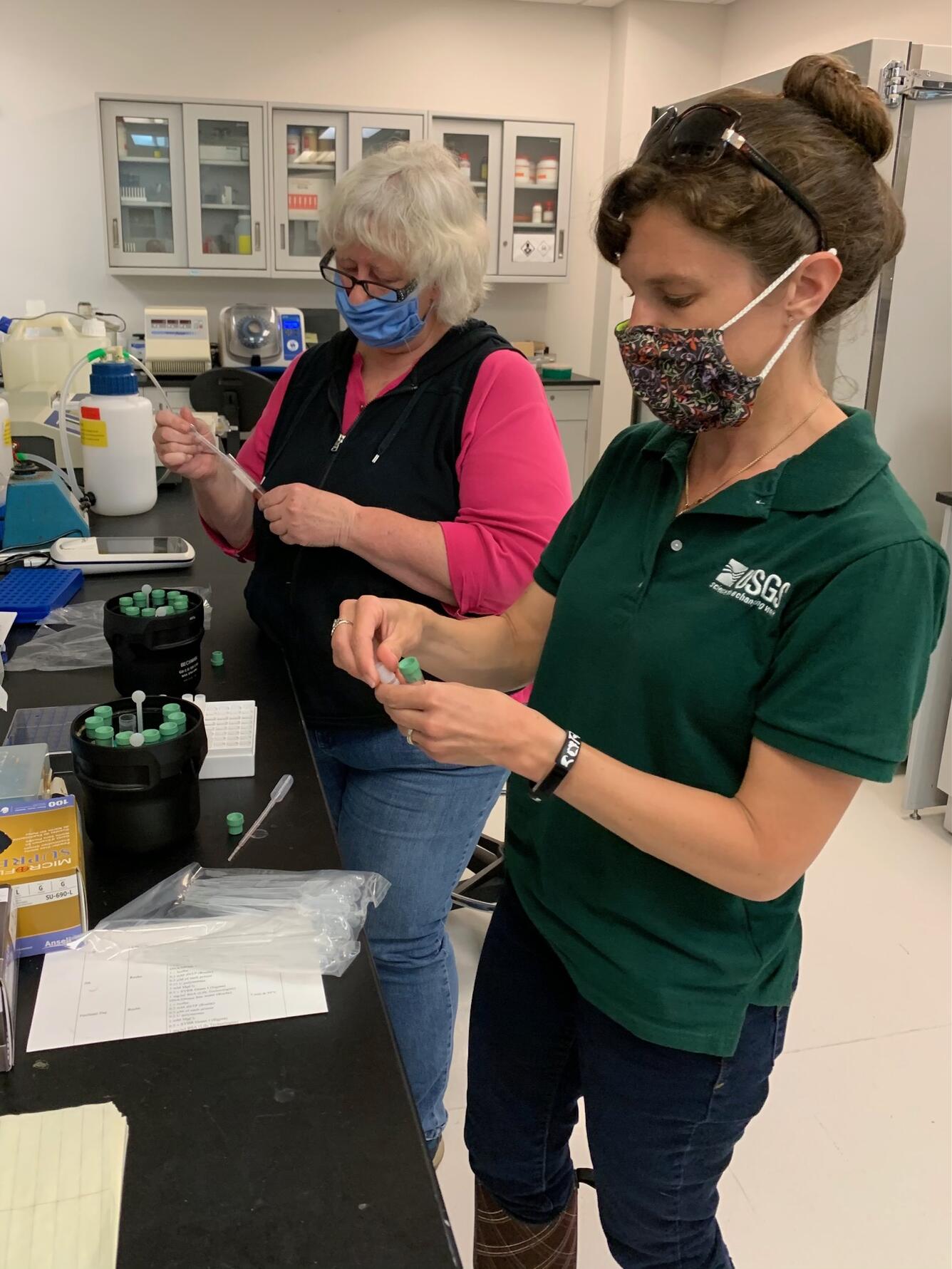

Measuring Stress for Conservation:
Freshwater ecosystems are among the most varied and important natural environments. However, they are also threatened by human activity and environmental changes, leading to declines in populations of priority fish species. This decline is particularly evident in populations of diadromous fish, species that migrate between the sea and freshwater to reproduce, making them especially vulnerable to environmental changes.
Freshwater fish face numerous challenges, including habitat loss, pollution, unseasonal temperatures, invasive species, and barriers such as unimproved dams that interrupt migration. These are stressors that can negatively impact many diadromous and freshwater fish, not only threatening populations but also impacting both commercial and recreational fishing industries.
To reduce impacts to fish sampled in fish health studies, we are taking advantage of low impact collection methods and developing analytical techniques to measure both chronic (long-term stress) and acute (short-term stress) in small samples of fish scales. Once we understand stress patterns in scales of captive fish, we can apply this knowledge to studying wild fish populations, providing insights into their health and the impact of multiple stressors they face in their natural habitats. Our goal is to develop practical, low-impact, low-cost procedures for assessing fish stress which will assist stakeholders in the implementation of effective conservation strategies to restore and protect fish populations.

Forage Fish Populations
American Shad, Blueback Herring, and Alewife— which are collectively known as alosines—were once vital to the fisheries along the U.S. Atlantic Coast. However, barriers to migration, habitat degradation, and overfishing have led to significant population declines. Despite substantial investments into management activities, outcomes have varied, with some initiatives yielding success while others have struggled, indicating that additional factors may obstruct recovery.
USGS is leading efforts to enhance understanding of alosine populations through genetic stock identification and the establishment of a tissue repository. This initiative aims to differentiate between populations encountered away from their natal areas. By improving stock composition knowledge, we can assess the impacts of fisheries bycatch and better support recovery efforts.
In collaboration with Atlantic coast partners, including Atlantic States Marine Fisheries Commission, we are collecting tissue samples to augment genetic baselines. Our goal is to develop genomic resources that will inform strategies for sustaining healthy alosine populations to benefit fishery management and the economic well-being of communities that rely on these critical species.

Fish Habitat
Invasive Blue Catfish:
Aquatic invasive species cost the U.S. billions of dollars each year, and the blue catfish is one of the most concerning threats to the Chesapeake Bay's rich ecosystems. This invasive fish poses significant risks to local fisheries, coastal communities, and ongoing restoration efforts. The impact of blue catfish on the blue crab fisheries alone has been estimated at \$50 million per year.
To address this challenge, the USGS Eastern Ecological Science Center is collaborating with the Maryland Department of Natural Resources to monitor and assess blue catfish populations. Our project aims to create a robust management framework, equipping wildlife managers with the vital data needed for effective removal strategies.
Protecting Chesapeake Bay ecosystems is crucial not only for biodiversity but also for the economic health of communities that rely on fishing.

Brook Trout to protect our waterways:
EESC conducts critical research on brook trout which are essential for maintaining healthy waterways and are a prized species for anglers. Designated as the state fish in 10 states and as a species in greatest need of conservation in 19 states, brook trout populations support many other stream species and recreational fishing opportunities that provide millions of dollars in benefits to regional and local economies.
- EESC researchers develop data visualization tools to help understand interrelationships among landscape variables and where fish are found, now and in the future, to explore data on studies of individually-tagged fish in streams, and to discover how daily stream flow changes throughout the year.
- EESC uses field- and lab-based studies to determine whether brook trout are seeking out cold spots in warm streams, adapting to warming conditions, or some combination of the two to help resource managers better understand how brook trout populations may persist as stream temperatures continue to rise.

Fish Passage
Fish Passage Design & Analysis:
Based on records maintained by the U.S. Army Corps of Engineers, there are approximately 92,000 dams in the U.S. The Department of Transportation estimates there are an additional 6 million stream crossings in the U.S. Many of these stream barriers disrupt fish migration and reproduction, and consequently, impact ecosystem health. The research conducted by the Eastern Ecological Science Center (EESC) on fish passage benefits both recreational and commercial fishing, as our technologies mitigate the challenges posed by hydroelectric facilities, dams, culverts and other stream barriers.
Fish passage technologies, and critical research into the associated fields of behavior, physiology and biomechanics, provide essential tools to natural resource managers, industry, and the public. They include innovative technologies such as an optimized fish ladder, data validating the effectiveness of downstream juvenile fish bypasses, invasive lamprey sorting mechanisms, and advanced telemetry systems for the tracking the movement of wild fish. Upon implementation, tools developed by USGS scientists help mitigate the ecological impact of stream barriers on migratory species such as salmon, river herring, and American eels.
EESC seeks to address these pressing needs through the delivery of applied science. Our research is inherently interdisciplinary. By emphasizing the integration of biological and engineering expertise, our scientists are able to tailor solutions to the most complex challenges such as habitat restoration, invasive species, river management, recovery of endangered species, and the sustainability of hydropower and other energy resources. By aligning our science with these needs, EESC is able to advance fish passage science that balances energy production and ecological restoration and thus enhance commercial fisheries and sport angling for the American people.


Ideal fishway entrances:
We are working to develop an improved fishway entrance design specifically aimed at helping two at-risk species: blueback herring and alewife (collectively, “river herring”).
River herring populations have faced severe declines due to a mix of environmental stressors, bycatch, habitat loss, dams, and other stream barriers. Fishways are often used to provide for fish movement past otherwise impassable barriers. Improving entrance designs increases fishway efficiency, which, in turn, enhances habitat connectivity. Transferring this technology from the lab to the “real world” provides resource managers and dam owners with the ability to monitor and optimize fish migration past economically important infrastructure like hydroelectric stations. At the watershed and regional scales, these tools and data are essential for fisheries management and restoration.
We aim to determine the most effective entrance design features—depths, widths, and geometry—to enhance attraction and passage efficiency through a Denil ladder, the most common fish passage structure found on the East Coast. A successful new entrance design will not only improve future fishway constructions but also allow us to retrofit existing structures, significantly boosting the fishway capacity in the Northeast and aiding restoration efforts for these species.

The U.S. Geological Survey Eastern Ecological Science Center (EESC) strives to provide world-class science to inform natural resource decisions that preserve and enhance our quality of life. We work directly with managers of our shared natural resources to provide the unbiased scientific tools, research and innovations needed to make informed decisions in today’s complex and rapidly changing conditions. We engage partners to co-develop solutions that balance economic and conservation goals, resulting in cost savings, risk reduction, and long-term resource sustainability.
The USGS Eastern Ecological Science Center (EESC) provides world-class science to inform natural resource decisions on aquatic ecosystems, species populations and management, disease, and invasive species. Our scientific products represent critical contributions that enhance the ecological and economic sustainability of recreational and commercial fishing. In the United States, anglers contribute approximately $148 billion to the economy and support over 945,000 jobs.
USGS scientists monitor and assess the health of aquatic ecosystems; study contaminants that adversely affect water quality and fish health; research influences on fish habitat and population dynamics of numerous species; and design, develop and validate new fish passage and invasive species control technologies that improve the management of recreational and commercial fishing resources.
Fish Health
Blotchy Bass Syndrome:
A recent study has revealed a close association between a pair of novel adomaviruses and blotchy, inky, hyperpigmented melanistic lesions (HPMLs) on both smallmouth and largemouth bass. These troubling skin lesions have been reported across various ecoregions in the U.S. since 2008 for smallmouth bass and since the 1980s for largemouth bass.
Why does this matter? Black bass hold significant socioeconomic and recreational value, supporting thriving fisheries and aquaculture industries vital to our economy. Understanding the health of these fish not only aids in maintaining healthy ecosystems but also ensures the sustainability of fishing industries that many Americans rely on.
While the health implications of these infections remain unclear, studying the connections between fish health and viral infections can inform crucial biosecurity measures, particularly as they relate to the movement of fish across different jurisdictions.
Disease in Smallmouth Bass:
Smallmouth bass are a sentinel species, reflecting ecosystem health. Their declines signal broader environmental issues in the Chesapeake Bay, a critical U.S. watershed and the largest estuary in North America. Recent research by West Virginia University and the USGS look at the complexities and why Chesapeake Bay smallmouth bass are declining. No single cause has been identified; instead, immunosuppression from a complex mix of environmental stressors is suspected. The immune assays provide a sensitive endpoint to detect sublethal stress before visible disease or mortality, enabling early intervention. Linking immune suppression to contaminants (e.g., PFAS, mercury) and land use guides targeted management, such as reducing pesticide runoff or enhancing genetic diversity.
Smallmouth bass are prized in recreational fisheries, supporting tourism and local economies in the Chesapeake Bay region. Declines reduce catch rates, impacting angler revenue. Healthy fisheries ensure sustainable recreation and food security, while clean watersheds benefit human health and agriculture.
Measuring Stress for Conservation:
Freshwater ecosystems are among the most varied and important natural environments. However, they are also threatened by human activity and environmental changes, leading to declines in populations of priority fish species. This decline is particularly evident in populations of diadromous fish, species that migrate between the sea and freshwater to reproduce, making them especially vulnerable to environmental changes.
Freshwater fish face numerous challenges, including habitat loss, pollution, unseasonal temperatures, invasive species, and barriers such as unimproved dams that interrupt migration. These are stressors that can negatively impact many diadromous and freshwater fish, not only threatening populations but also impacting both commercial and recreational fishing industries.
To reduce impacts to fish sampled in fish health studies, we are taking advantage of low impact collection methods and developing analytical techniques to measure both chronic (long-term stress) and acute (short-term stress) in small samples of fish scales. Once we understand stress patterns in scales of captive fish, we can apply this knowledge to studying wild fish populations, providing insights into their health and the impact of multiple stressors they face in their natural habitats. Our goal is to develop practical, low-impact, low-cost procedures for assessing fish stress which will assist stakeholders in the implementation of effective conservation strategies to restore and protect fish populations.
Forage Fish Populations
American Shad, Blueback Herring, and Alewife— which are collectively known as alosines—were once vital to the fisheries along the U.S. Atlantic Coast. However, barriers to migration, habitat degradation, and overfishing have led to significant population declines. Despite substantial investments into management activities, outcomes have varied, with some initiatives yielding success while others have struggled, indicating that additional factors may obstruct recovery.
USGS is leading efforts to enhance understanding of alosine populations through genetic stock identification and the establishment of a tissue repository. This initiative aims to differentiate between populations encountered away from their natal areas. By improving stock composition knowledge, we can assess the impacts of fisheries bycatch and better support recovery efforts.
In collaboration with Atlantic coast partners, including Atlantic States Marine Fisheries Commission, we are collecting tissue samples to augment genetic baselines. Our goal is to develop genomic resources that will inform strategies for sustaining healthy alosine populations to benefit fishery management and the economic well-being of communities that rely on these critical species.
Fish Habitat
Invasive Blue Catfish:
Aquatic invasive species cost the U.S. billions of dollars each year, and the blue catfish is one of the most concerning threats to the Chesapeake Bay's rich ecosystems. This invasive fish poses significant risks to local fisheries, coastal communities, and ongoing restoration efforts. The impact of blue catfish on the blue crab fisheries alone has been estimated at \$50 million per year.
To address this challenge, the USGS Eastern Ecological Science Center is collaborating with the Maryland Department of Natural Resources to monitor and assess blue catfish populations. Our project aims to create a robust management framework, equipping wildlife managers with the vital data needed for effective removal strategies.
Protecting Chesapeake Bay ecosystems is crucial not only for biodiversity but also for the economic health of communities that rely on fishing.
Brook Trout to protect our waterways:
EESC conducts critical research on brook trout which are essential for maintaining healthy waterways and are a prized species for anglers. Designated as the state fish in 10 states and as a species in greatest need of conservation in 19 states, brook trout populations support many other stream species and recreational fishing opportunities that provide millions of dollars in benefits to regional and local economies.
- EESC researchers develop data visualization tools to help understand interrelationships among landscape variables and where fish are found, now and in the future, to explore data on studies of individually-tagged fish in streams, and to discover how daily stream flow changes throughout the year.
- EESC uses field- and lab-based studies to determine whether brook trout are seeking out cold spots in warm streams, adapting to warming conditions, or some combination of the two to help resource managers better understand how brook trout populations may persist as stream temperatures continue to rise.
Fish Passage
Fish Passage Design & Analysis:
Based on records maintained by the U.S. Army Corps of Engineers, there are approximately 92,000 dams in the U.S. The Department of Transportation estimates there are an additional 6 million stream crossings in the U.S. Many of these stream barriers disrupt fish migration and reproduction, and consequently, impact ecosystem health. The research conducted by the Eastern Ecological Science Center (EESC) on fish passage benefits both recreational and commercial fishing, as our technologies mitigate the challenges posed by hydroelectric facilities, dams, culverts and other stream barriers.
Fish passage technologies, and critical research into the associated fields of behavior, physiology and biomechanics, provide essential tools to natural resource managers, industry, and the public. They include innovative technologies such as an optimized fish ladder, data validating the effectiveness of downstream juvenile fish bypasses, invasive lamprey sorting mechanisms, and advanced telemetry systems for the tracking the movement of wild fish. Upon implementation, tools developed by USGS scientists help mitigate the ecological impact of stream barriers on migratory species such as salmon, river herring, and American eels.
EESC seeks to address these pressing needs through the delivery of applied science. Our research is inherently interdisciplinary. By emphasizing the integration of biological and engineering expertise, our scientists are able to tailor solutions to the most complex challenges such as habitat restoration, invasive species, river management, recovery of endangered species, and the sustainability of hydropower and other energy resources. By aligning our science with these needs, EESC is able to advance fish passage science that balances energy production and ecological restoration and thus enhance commercial fisheries and sport angling for the American people.
Ideal fishway entrances:
We are working to develop an improved fishway entrance design specifically aimed at helping two at-risk species: blueback herring and alewife (collectively, “river herring”).
River herring populations have faced severe declines due to a mix of environmental stressors, bycatch, habitat loss, dams, and other stream barriers. Fishways are often used to provide for fish movement past otherwise impassable barriers. Improving entrance designs increases fishway efficiency, which, in turn, enhances habitat connectivity. Transferring this technology from the lab to the “real world” provides resource managers and dam owners with the ability to monitor and optimize fish migration past economically important infrastructure like hydroelectric stations. At the watershed and regional scales, these tools and data are essential for fisheries management and restoration.
We aim to determine the most effective entrance design features—depths, widths, and geometry—to enhance attraction and passage efficiency through a Denil ladder, the most common fish passage structure found on the East Coast. A successful new entrance design will not only improve future fishway constructions but also allow us to retrofit existing structures, significantly boosting the fishway capacity in the Northeast and aiding restoration efforts for these species.
The U.S. Geological Survey Eastern Ecological Science Center (EESC) strives to provide world-class science to inform natural resource decisions that preserve and enhance our quality of life. We work directly with managers of our shared natural resources to provide the unbiased scientific tools, research and innovations needed to make informed decisions in today’s complex and rapidly changing conditions. We engage partners to co-develop solutions that balance economic and conservation goals, resulting in cost savings, risk reduction, and long-term resource sustainability.