



EESC Makes an Impact: Reducing Management Costs and Increasing Efficiency
Decision analysis is widely used in business applications to improve cost saving and increase efficiency under uncertainty. Scientists at the U.S. Geological Survey Eastern Ecological Science Center (EESC) include world-renowned experts who use data, mathematics, statistics, and computer science to help frame and solve decision problems to support U.S. national security, public health, wildlife conservation, and economic development priorities.
Science Supporting Better Decision Making for People and Wildlife
Wildlife diseases can threaten America’s hunting traditions, food security, wildlife, and even human health and safety. EESC research helps managers optimize decisions to reduce the risk of spread of diseases like Chronic Wasting Disease and SARS-CoV2.


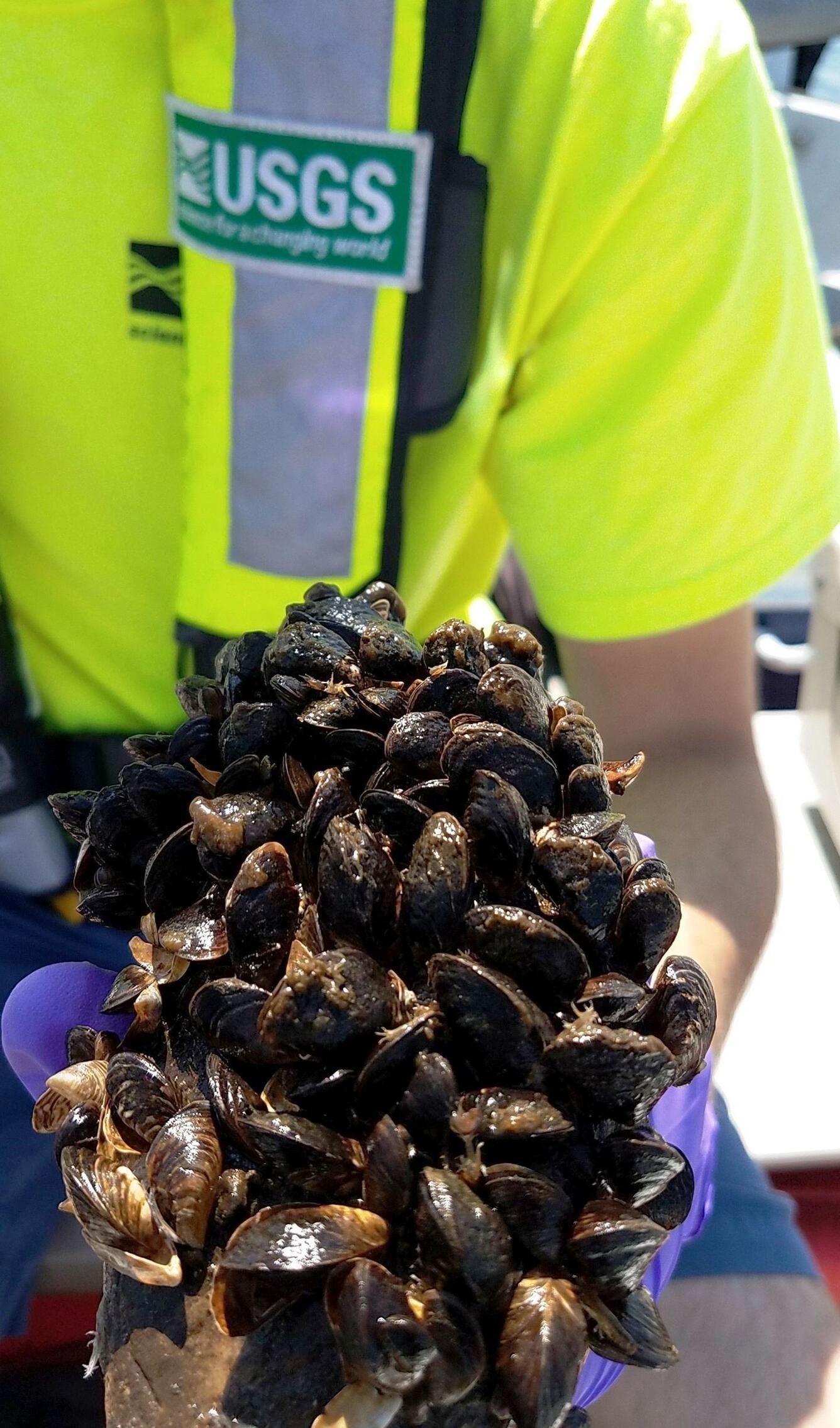
Invasive species have cost the U.S. over \$21 billion annually since 2010. Preventing new invasions is the most effective strategy to avoid negative impacts on humans, infrastructure, working lands and wildlife. EESC scientists help identify decisions to reduce risk of importing new, damaging invasive species that threaten agriculture, fisheries, and forestry industries.
Habitat restoration efforts aimed at recovering threatened and endangered species can reduce hazards to local communities as well. EESC has provided decision support tools to assist with the restoration of barrier islands which can protect coastal habitats for protected species such as birds and sea turtles but also protect coastal communities from storms.

Reducing Uncertainty in Management Decisions
Improved abundance estimates from surveys of animals and plants aid effective management of invasive, harvested, and protected species. Raw counts of animals without a statistical model can lead to a significant underestimation of the true population or hinder understanding of how quickly a population is growing or declining, leading to sub-optimal management decisions.

Models developed by EESC scientists and collaborators:
- Provided the first estimates of abundance of invasive black and white Argentine tegus in Florida,
- Help monitor gamebird populations for long-term harvest potential,
- Empower local stakeholders to lead management efforts for declining species, and
- Supported the decision to downlist Florida manatees from endangered to threatened status.

Disease surveillance is an essential component to managing costly outbreaks of diseases that affect humans, domestic animals and wildlife, such as highly pathogenetic avian influenza. However, not detecting the presence of a disease during a survey does not necessarily mean that the disease is absent: it may have been missed during the sampling event. EESC’s probabilistic models and software can determine the probability of presence of a disease even if no disease was detected in the sample and also account for false positive detections of diseases.
EESC research has helped state and federal agencies identify management options to address the risk of White-nose Syndrome to bat populations (and their role in insect control) and assess the risk of novel pathogens to support proactive management actions before diseases affect U.S. wildlife.


Bird strikes with aircraft endanger U.S. military readiness and pose a threat to commercial flights. Bird monitoring data and associated analyses collected as part of the North American Breeding Bird Survey are crucial resource for the U.S. Air Force’s Bird Aircraft Strike Hazard Team, whose goal is to preserve war fighting capabilities through the reduction of wildlife hazards to aircraft operations.


Smarter Management for Today and Tomorrow
Evaluating and quantifying the cost of alternative management actions before committing resources to a specific approach informs wise use of taxpayer dollars. EESC uses mathematical modeling to predict the impacts of management actions on populations, such as how best to control the spread of invasive species or wildlife diseases. These models can also be used to evaluate the impact of specific management activities to assess their effectiveness.

Hunting is an economic engine for the U.S., with 14.4 million hunters spending a total of \$45.2 billion in 2022. EESC scientists in collaboration with partners from the U.S. Fish and Wildlife Service have developed techniques to improve efficiency in the management of waterfowl in North America. The rigorous process uses data from the USGS Bird Banding Laboratory to help natural resource managers implement decisions that maximize hunting opportunities today and in the future, even in the face of uncertainty. Now in its third decade of use, the success of the adaptive harvest management model has inspired other countries to use a similar process to improve their management efficiency.


The U.S. Geological Survey Eastern Ecological Science Center strives to provide world-class science to inform natural resource decisions that preserve and enhance our quality of life. We work directly with managers of our shared natural resources to provide the unbiased scientific tools, research and innovations needed to make informed decisions in today’s complex and rapidly changing conditions. We engage partners to co-develop solutions that balance economic and conservation goals, resulting in cost savings, risk reduction, and long-term resource sustainability.
Decision analysis is widely used in business applications to improve cost saving and increase efficiency under uncertainty. Scientists at the U.S. Geological Survey Eastern Ecological Science Center (EESC) include world-renowned experts who use data, mathematics, statistics, and computer science to help frame and solve decision problems to support U.S. national security, public health, wildlife conservation, and economic development priorities.
Science Supporting Better Decision Making for People and Wildlife
Wildlife diseases can threaten America’s hunting traditions, food security, wildlife, and even human health and safety. EESC research helps managers optimize decisions to reduce the risk of spread of diseases like Chronic Wasting Disease and SARS-CoV2.
Invasive species have cost the U.S. over \$21 billion annually since 2010. Preventing new invasions is the most effective strategy to avoid negative impacts on humans, infrastructure, working lands and wildlife. EESC scientists help identify decisions to reduce risk of importing new, damaging invasive species that threaten agriculture, fisheries, and forestry industries.
Habitat restoration efforts aimed at recovering threatened and endangered species can reduce hazards to local communities as well. EESC has provided decision support tools to assist with the restoration of barrier islands which can protect coastal habitats for protected species such as birds and sea turtles but also protect coastal communities from storms.
Reducing Uncertainty in Management Decisions
Improved abundance estimates from surveys of animals and plants aid effective management of invasive, harvested, and protected species. Raw counts of animals without a statistical model can lead to a significant underestimation of the true population or hinder understanding of how quickly a population is growing or declining, leading to sub-optimal management decisions.
Models developed by EESC scientists and collaborators:
- Provided the first estimates of abundance of invasive black and white Argentine tegus in Florida,
- Help monitor gamebird populations for long-term harvest potential,
- Empower local stakeholders to lead management efforts for declining species, and
- Supported the decision to downlist Florida manatees from endangered to threatened status.
Disease surveillance is an essential component to managing costly outbreaks of diseases that affect humans, domestic animals and wildlife, such as highly pathogenetic avian influenza. However, not detecting the presence of a disease during a survey does not necessarily mean that the disease is absent: it may have been missed during the sampling event. EESC’s probabilistic models and software can determine the probability of presence of a disease even if no disease was detected in the sample and also account for false positive detections of diseases.
EESC research has helped state and federal agencies identify management options to address the risk of White-nose Syndrome to bat populations (and their role in insect control) and assess the risk of novel pathogens to support proactive management actions before diseases affect U.S. wildlife.
Bird strikes with aircraft endanger U.S. military readiness and pose a threat to commercial flights. Bird monitoring data and associated analyses collected as part of the North American Breeding Bird Survey are crucial resource for the U.S. Air Force’s Bird Aircraft Strike Hazard Team, whose goal is to preserve war fighting capabilities through the reduction of wildlife hazards to aircraft operations.
Smarter Management for Today and Tomorrow
Evaluating and quantifying the cost of alternative management actions before committing resources to a specific approach informs wise use of taxpayer dollars. EESC uses mathematical modeling to predict the impacts of management actions on populations, such as how best to control the spread of invasive species or wildlife diseases. These models can also be used to evaluate the impact of specific management activities to assess their effectiveness.
Hunting is an economic engine for the U.S., with 14.4 million hunters spending a total of \$45.2 billion in 2022. EESC scientists in collaboration with partners from the U.S. Fish and Wildlife Service have developed techniques to improve efficiency in the management of waterfowl in North America. The rigorous process uses data from the USGS Bird Banding Laboratory to help natural resource managers implement decisions that maximize hunting opportunities today and in the future, even in the face of uncertainty. Now in its third decade of use, the success of the adaptive harvest management model has inspired other countries to use a similar process to improve their management efficiency.
The U.S. Geological Survey Eastern Ecological Science Center strives to provide world-class science to inform natural resource decisions that preserve and enhance our quality of life. We work directly with managers of our shared natural resources to provide the unbiased scientific tools, research and innovations needed to make informed decisions in today’s complex and rapidly changing conditions. We engage partners to co-develop solutions that balance economic and conservation goals, resulting in cost savings, risk reduction, and long-term resource sustainability.