



Our Units
Scientist Expertise
10-Year Overview
Cooperative Research Units
The Cooperative Research Units program was established in 1935—and codified by Congress in 1960— with a tripartite mission. Today, there are 43 units located in 41 States, at 44 host universities, with a national program office located at the U.S. Geological Survey headquarters in Reston, Virginia.
Our Tripartite Mission:
1. Deliver applied research to fish and wildlife resource decision makers,
2. Enhance graduate education in fisheries and wildlife sciences to cultivate the next generation of conservation professionals,
3. Provide robust technical assistance to personnel managing fish, wildlife, and ecosystems.
Publications
Ungulate migrations of the Western United States, volume 6 Ungulate migrations of the Western United States, volume 6
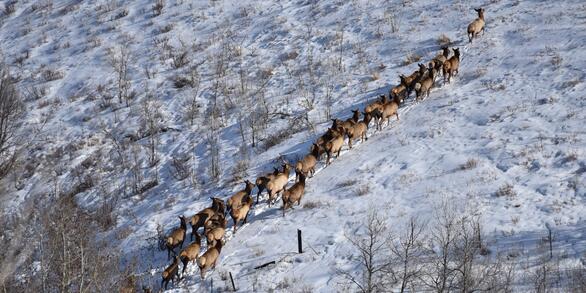
This report, volume 6 in the “Ungulate Migrations of the Western United States” report series, showcases the migrations of 23 ungulate herds in the Western United States. The report series is produced by the Corridor Mapping Team (CMT). Led by the U.S. Geological Survey, the CMT is a collaboration among 11 State agencies, as well as regional and Federal partners, and an expanding number...
Adaptive capacity of freshwater organisms in North America: Current understanding and future applications Adaptive capacity of freshwater organisms in North America: Current understanding and future applications
Freshwater species are increasingly threatened by climate change, yet our ability to assess their vulnerability remains incomplete. Typically, climate change vulnerability assessments (CCVAs) evaluate three components: exposure, sensitivity, and adaptive capacity. Adaptive capacity, defined as the ability of a species to adjust to changing conditions, provides critical insight into how...
Is new actually better? A structural comparison of collaborative governance structures for the management of Atlantic salmon (Salmo salar) in Maine Is new actually better? A structural comparison of collaborative governance structures for the management of Atlantic salmon (Salmo salar) in Maine
Collaborative governance structures (CGS) have been increasingly adopted to address joint-jurisdictional management challenges. While the establishment of CGSs has been widely studied, their practical development has remained a conspicuous gap. CGSs are variable systems with several developmental stages (activation, collectivity, and institutionalization) which eventually lead to...
Science
Science for management of America’s iconic wild horses and burros
Wild horses and burros are iconic wildlife of the western USA as well as a complicated management issue on tribal, state, and federal lands. Due to their history as domesticated animals, these wild equids – also called “free-roaming” or “feral” equids – can reproduce quickly, and have few natural predators, allowing their populations to grow rapidly if not managed. When populations are too large...

Graduate Education
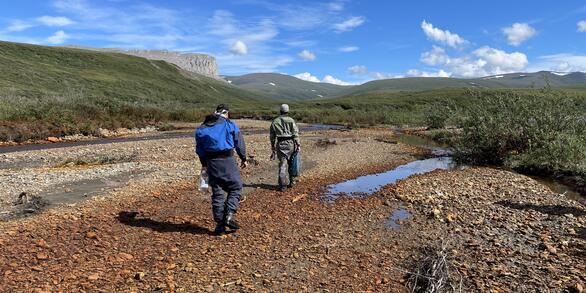
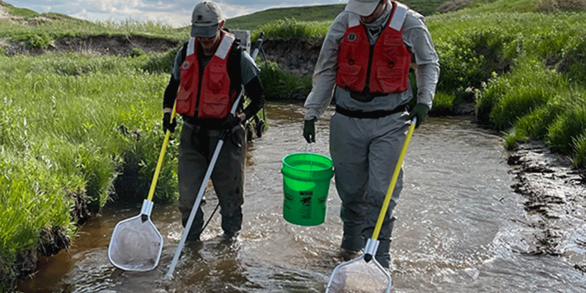
While becoming a leader in the conservation workforce, graduate students in the Cooperative Research Unit Program work to (1) Conduct research with USGS scientists through a host university, (2) Collaborate directly with natural resource managers to inform decision making, and (3) Earn a Master of Science or Doctoral Degree.
Research
Fish and wildlife research is essential for understanding ecosystems and protecting biodiversity. It provides the data needed to manage habitats, conserve species, and address challenges like climate change and invasive species. By studying these natural systems, we ensure healthy environments that support both wildlife and human communities.