
U.S. flag

An official website of the United States government

Cyanotoxins and Harmful Algal blooms

Filter Total Items: 30

USGS Scientist Receives Award for Assistance with National Wetlands Assessment

U.S. Geological Survey (USGS) scientist Dr. Keith A. Loftin received the U.S. Environmental Protection Agency (EPA) Office of Water's Achievement in Science and Technology Award for his contributions to the National Wetlands Condition Assessment.
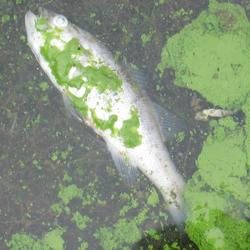
USGS Scientist Receives Award for Assistance with National Wetlands Assessment

USGS Scientist Receives Award for Assistance with National Wetlands Assessment

U.S. Geological Survey (USGS) scientist Dr. Keith A. Loftin received the U.S. Environmental Protection Agency (EPA) Office of Water's Achievement in Science and Technology Award for his contributions to the National Wetlands Condition Assessment.
Learn More

New Study on Cyanotoxins in Lakes and Reservoirs Provides Insights into Assessing Health Risks

Newly published study provides new evidence of the widespread occurrence of cyanotoxins in lakes and reservoirs of the United States and offers new insights into measures used for assessing potential recreational health risks.
New Study on Cyanotoxins in Lakes and Reservoirs Provides Insights into Assessing Health Risks

New Study on Cyanotoxins in Lakes and Reservoirs Provides Insights into Assessing Health Risks

Newly published study provides new evidence of the widespread occurrence of cyanotoxins in lakes and reservoirs of the United States and offers new insights into measures used for assessing potential recreational health risks.
Learn More

Importance of Lake Sediments in Removal of Cyanobacteria, Viruses, and Dissolved Organic Carbon

U.S. Geological Survey (USGS) scientists determined that the colmation layer (top 25 centimeters of lake sediments) was highly effective in removing cyanobacteria, viruses, and dissolved organic carbon during water passage through the lake bottom to aquifer sediments.
Importance of Lake Sediments in Removal of Cyanobacteria, Viruses, and Dissolved Organic Carbon

Importance of Lake Sediments in Removal of Cyanobacteria, Viruses, and Dissolved Organic Carbon

U.S. Geological Survey (USGS) scientists determined that the colmation layer (top 25 centimeters of lake sediments) was highly effective in removing cyanobacteria, viruses, and dissolved organic carbon during water passage through the lake bottom to aquifer sediments.
Learn More

U.S. Geological Survey Scientists Complete First Systematic Regional Survey of Algal Toxins in Streams of the Southeastern United States

U.S. Geological Survey (USGS) scientists detected microcystin—an algal toxin—in 39 percent of 75 streams assessed in the southeastern United States. These results will inform and become part of a larger, systematic national survey of algal toxins in small streams of the United States.
U.S. Geological Survey Scientists Complete First Systematic Regional Survey of Algal Toxins in Streams of the Southeastern United States

U.S. Geological Survey Scientists Complete First Systematic Regional Survey of Algal Toxins in Streams of the Southeastern United States

U.S. Geological Survey (USGS) scientists detected microcystin—an algal toxin—in 39 percent of 75 streams assessed in the southeastern United States. These results will inform and become part of a larger, systematic national survey of algal toxins in small streams of the United States.
Learn More

Remote Sensing Provides a National View of Cyanobacteria Blooms

Four Federal agencies, including the U.S. Geological Survey (USGS), are collaborating to transform satellite data into information managers can use to protect ecological and human health from freshwater contaminated by harmful algal blooms.
Remote Sensing Provides a National View of Cyanobacteria Blooms

Remote Sensing Provides a National View of Cyanobacteria Blooms

Four Federal agencies, including the U.S. Geological Survey (USGS), are collaborating to transform satellite data into information managers can use to protect ecological and human health from freshwater contaminated by harmful algal blooms.
Learn More

Algal Blooms Consistently Produce Complex Mixtures of Cyanotoxins and Co-Occur with Taste-and-Odor Causing Compounds in 23 Midwestern Lakes

U.S. Geological Survey (USGS) scientists studying the effects of harmful algal blooms on lake water quality found that blooms of blue-green algae (cyanobacteria) in Midwestern lakes produced mixtures of cyanotoxins and taste-and-odor causing compounds, which co-occurred in lake water samples. Cyanotoxins can cause allergic and/or respiratory issues, attack the liver and kidneys, or affect the...
Algal Blooms Consistently Produce Complex Mixtures of Cyanotoxins and Co-Occur with Taste-and-Odor Causing Compounds in 23 Midwestern Lakes

Algal Blooms Consistently Produce Complex Mixtures of Cyanotoxins and Co-Occur with Taste-and-Odor Causing Compounds in 23 Midwestern Lakes

U.S. Geological Survey (USGS) scientists studying the effects of harmful algal blooms on lake water quality found that blooms of blue-green algae (cyanobacteria) in Midwestern lakes produced mixtures of cyanotoxins and taste-and-odor causing compounds, which co-occurred in lake water samples. Cyanotoxins can cause allergic and/or respiratory issues, attack the liver and kidneys, or affect the...
Learn More
Was this page helpful?