



The Jersey Current: Spring/Summer 2026 - Vol. 1 | Issue 1
From the Director's Desk
We are pleased to launch the inaugural edition of the New Jersey Water Science Center’s semi-annual newsletter. This publication provides a dedicated space to share updates on our scientific initiatives, partnerships, and monitoring activities that support water-resource management across the state. The New Jersey Water Science Center delivers unbiased, science-based water data that informs decision making at the state and local levels. Through comprehensive monitoring networks, advanced modeling, and targeted studies, our team provides scientific data and information that resource managers rely on to manage water supplies for nine million residents, provide flood and drought monitoring, and support emergency response efforts. By working closely with federal, state, and local partners, we provide reliable data and analysis needed to protect lives and property and strengthen environmental resilience in one of the nation’s most water-dependent regions.
Our work is driven by several key program priorities including: real-time monitoring of streamflow, groundwater, and reservoir levels; flood and coastal monitoring and modeling; assessment of water-quality conditions; evaluation of flood and drought hazards; investigations of PFAS occurrence; and innovative geospatial assessments that enhance public understanding of water resources across a diverse population. These efforts are supported by an extensive network of monitoring sites across New Jersey, including 297 USGS-operated streamgages, 245 groundwater wells, 244 water-quality monitoring sites, and 89 meteorological stations. Collectively, these networks provide the critical data foundation that enables scientists, resource managers, and emergency planners to respond effectively to evolving water conditions and emerging challenges across the state.
We hope you enjoy this first edition of our newsletter and find it informative and useful. We thank you for your continued interest and look forward to sharing more updates in the months ahead and staying connected as we continue our mission to provide the science that supports water-resource management across the Garden State.
With appreciation for your continued support,
Timothy D. Oden
Center Director, New Jersey Water Science Center
Updates from the Field
Delaware River at Montague Ice Affected Discharge Measurement
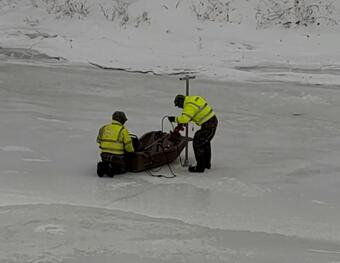
On February 11, 2026, a team of scientists from the New Jersey Water Science Center made a discharge measurement at the USGS 01438500 Delaware River at Montague, New Jersey monitoring site during ice cover conditions. This is the first time since February 1999 that this type of measurement was made at this site. Frigid winter weather conditions made the measurement both necessary and possible.
Read more about this Ice Affected Measurement
Groundwater Levels and Trends
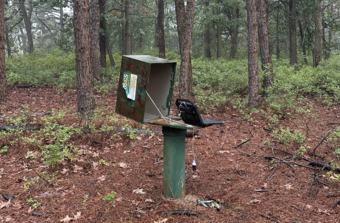
New Jersey Groundwater Levels and Trends provides access to groundwater-level data from continuous groundwater wells across New Jersey. Recent water-level measurements for all wells considered are compared to long-term monthly statistics and are classified and visualized according to water-level conditions relative to those statistics.
Learn more about the Groundwater Levels and Trends
New Jersey Tide Network
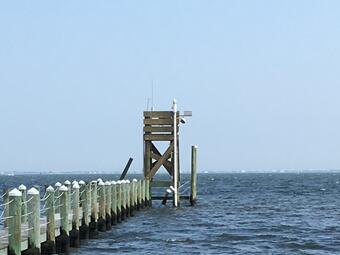
The USGS operates the most extensive network of tide-gaging stations in the region, many of which form the backbone of flood-warning and storm-hazard warning systems. The New Jersey Water Science Center monitors data for estuary and back-bay areas all along the New Jersey coast and links to related projects with more information about coastal flood hazards, water quality, and other topics. This network provides current conditions of tidal elevation, and meteorological data for coastal sites along the New Jersey shoreline, with a subset of sites providing tidal discharge and water-quality data.
Learn more about our Tide Network
Long-term Water Monitoring Networks in New Jersey
Our Science Stories
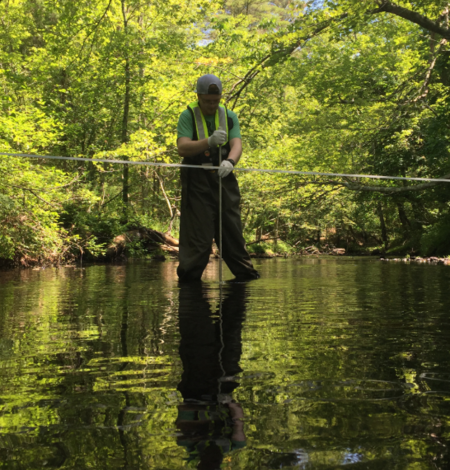
Biological Studies in New Jersey Waters
Biological microbes such as Fecal Indicator Bacteria (FIB)—including Escherichia coli (E. coli)—along with pathogens like Cryptosporidium, and microbial signatures used in Microbial Source Tracking (MST), are receiving heightened attention from the public, environmental agencies, and water-resource managers. These indicators help identify potential contamination sources, assess recreational water...
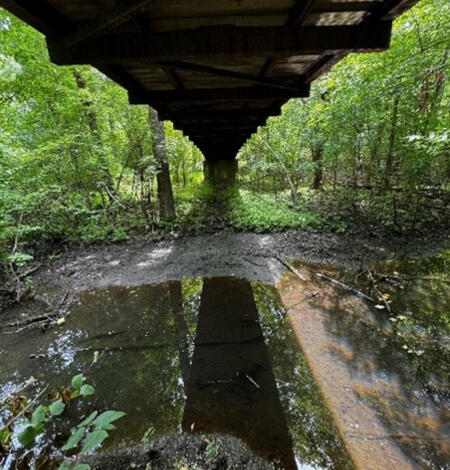
Per and Polyfluoroalkyl Substances (PFAS) in New Jersey Waters
Scientists from the New Jersey Water Science Center are working with drinking-water purveyors to assess the occurrence and distribution of per- and polyfluoroalkyl substances (PFAS) in New Jersey surface waters. These studies will enhance current water-quality assessments in NJ watersheds by characterizing PFAS occurrence in surface water at select locations that have the potential to directly...
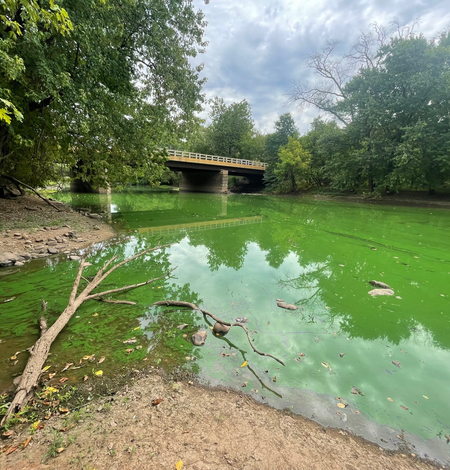
Harmful Algal Blooms Studies in New Jersey Waters
Harmful Algal Blooms (HABs) in lakes, ponds, and rivers adversely affect water resources worldwide. Under the right conditions, cyanobacteria can produce cyanotoxins that can pose health risks to both animals and humans which makes them a major environmental and public health concern. More studies to examine the occurrence and persistence of HABs and their potential transport are needed to better...
Next Generation Water Observing Systems (NGWOS) in New Jersey
-

Flow Photo Explorer (FPE) Project in New Jersey
The Flow Photo Explorer (FPE) is a database, machine learning, and data visualization platform using timelapse images to develop new approaches for collecting hydrologic data in streams and other waterbodies where traditional monitoring methods are not feasible or cost-prohibitive. The Musconetcong River was chosen to participate in the early study, and we are expanding the work to other rivers.
-

Estimating Daily Upstream Location of the Freshwater-Saltwater Interface in New Jersey
Frequently, water withdrawals for public supply are made from the freshwater reaches of rivers and streams across New Jersey. Overall, there is a lack of scientific information describing the movement of saltwater upstream into the tributaries discharging into Delaware Bay. This project is collected water-quality data along two selected tributaries in New Jersey to Delaware Bay to develop a...
-
-
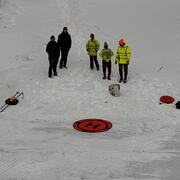
New Jersey UAS Team at Work
New Jersey Unmanned Aerial Systems (UAS) Team along with two observers bringing their drone back to shore after filming the USGS scientists out on the river making a measurement of flow below the ice at USGS 01438500 Delaware River at Montague, New Jersey
-
New Jersey Water Science Center Imagery Network
New Jersey Surface Water HIVIS Webcam Sites
Recent Publications, Data Releases, and Tools from NJWSC Scientists
NJWSC Publications in Pubs Warehouse
Publications
Schreiner, M.L., Romanok, K.M., Gray, J.T., Brown, E.J., Williams, B.M., Kneser, M., Capuzzi, A.J., Boerner, J., Giunta, L., Serillo, P., Trainor, J.J., and Smalling, K.L., 2026, Understanding the occurrence and distribution of per- and polyfluoroalkyl substances (PFAS) in surface waters of the nontidal Passaic River Basin: U.S. Geological Survey Scientific Investigations Report 2026–5018, 64 p., https://doi.org/10.3133/sir20265018.
Gorney, R.M., Heckathorn, H.A., Clonan, K.R., Reilly, P.A., Cahalane, K., and Bjorklund, B.W., 2026, Occurrence of cyanobacteria and associated cyanotoxins in the Raritan Basin Water Supply Complex, New Jersey, August 2020 to August 2021: U.S. Geological Survey Scientific Investigations Report 2026–5128, 30 p., https://doi.org/10.3133/sir20265128.
Closson, J.L., Suro, T.P., and Niemoczynski, L.M., 2026, Methods for estimating daily upstream location of the freshwater-saltwater interface along the Maurice and Cohansey Rivers, New Jersey: U.S. Geological Survey Scientific Investigations Report 2025–5090, 19 p., https://doi.org/10.3133/sir20255090.
Smalling, K., Bradley, P., Romanok, K., Doyle, J.T., Eggers, M.J., Martin, C., Barnhart, E.P., Binette, P., Castro, E.M., Chavez, M., Ewing, S.A., Gordon, S.E., Fields, M.W., Gray, J.L., Groshong, A.M., Hwang, C., Kanagy, L.K., LaFrance, J.W., Loftin, K., Long, C.M., McCleskey, R., Meppelink, S.M., Richards, C.L., Schreiner, M., Shikany, J.I., and Tesfamariam, M., 2026, Per- and polyfluoroalkyl substances (PFAS) and other contaminants of concern in tribal waters of Montana: Environmental Science: Processes & Impacts, v. 28, p. 579-597, https://doi.org/10.1039/d5em00565e.
Macias, D., Kleeman, P.M., Hladik, M.L., Smalling, K., Johnson, P.G., Grear, D.A., Rose, J.P., and Halstead, B.J., 2026, Conducting feasibility assessments of potential conservation reintroductions: A case study with the imperiled foothill yellow-legged frog, Rana boylii: Natural Areas Journal, v. 46, no. 1, p. 31-43, https://doi.org/10.3375/2162-4399-46.1.5.
Clonan, K.R., Wu, M., Heckathorn, H., Desko, H.A., Ernst, E., Reilly, P., Schuster, B., Newby, R., Hurley, A.C., and Rossi, A., 2026, Downstream persistence of cyanobacteria in New Jersey's Raritan River Basin: Heliyon, v. 12, no. 1, https://doi.org/10.1016/j.heliyon.2025.e44230.
Hatt, B., Athapaththu, C., Behrens, J., Boer, S., Burns, M.J., Burrows, R., de Jong, R., Elsner, C., Grey, V., Imberger, M., Williams, B., and Coleman, R., 2025, Practical pathways for protecting headwater streams in urbanizing areas: Freshwater Science, v. 44, no. 4, p. 546-567, https://doi.org/10.1086/737826.
Williams, B.M., Sullivan, S.L., Suro, T.P., Collenburg, J.V., McHugh, A.R., and Shourds, J.L., 2025, Statistical Streamflow Comparison of Current and Historical 30-Year Periods for Selected Streams in New Jersey: U.S. Geological Survey Scientific Investigations Report 2025–5061, 48 p., https://doi.org/10.3133/sir20255061.
Fiore, A.R., Cauller, S.J., and Brown, E.J., 2025, Potentiometric surface maps and groundwater-level hydrographs for confined aquifers of the New Jersey Coastal Plain, 2018: U.S. Geological Survey Scientific Investigations Report 2025–5080, 37 p., 9 pls., https://doi.org/10.3133/sir20255080.
Shourds, J.L., and Scott, M.H., 2025, Estimating daily public supply water use by drinking water service area in New Jersey: U.S. Geological Survey Scientific Investigations Report 2024–5061, 90 p., https://doi.org/10.3133/sir20245061.
Polcino, J., Trainor, J.J., and Collenburg, J.V., 2025, Time of travel of releases from Lake Wallenpaupack to the U.S. Geological Survey’s streamgage monitoring location on the Delaware River at Montague, New Jersey: U.S. Geological Survey Scientific Investigations Report 2025–5026, 20 p., https://doi.org/10.3133/sir20255026.
Wieben, C.M., Kennen, J.G., and Suro, T.P., 2025, Determining low-flow conditions at select streams to Barnegat Bay-Little Egg Harbor as the first step towards the development of ecological-flow targets: U.S. Geological Survey Scientific Investigations Report 2024–5096, 39 p., https://doi.org/10.3133/sir20245096.
DePaul, V.T., 2025, Use of multi-resolution, three-dimensional hydrodynamic and water-quality models to assess response to nutrient load reductions in Barnegat Bay-Little Egg Harbor estuary, New Jersey, USA: Marine Pollution Bulletin, v. 214, 117748, 16 p., https://doi.org/10.1016/j.marpolbul.2025.117748.
Eggers, M., Sigler, W., Kiekover, N., Bradley, P., Smalling, K., Parker, A., Peterson, R., and LaFave, J., 2025, Statewide cumulative human health risk assessment of inorganics-contaminated groundwater wells, Montana, USA: Environmental Pollution, v. 369, 125810, 17 p., https://doi.org/10.1016/j.envpol.2025.125810.
Data Releases
Schreiner, M.L., Romanok, K.M., Bradley, P.M., Smalling, K.L., Meppelink, S.M., McCleskey, R.B., and Roth, D.A., 2026, Concentration results for inorganic constituents in discrete tapwater samples, Montana, 2024: U.S. Geological Survey data release, https://doi.org/10.5066/P1DQ7ZFQ.
Sullivan, S.L., and Williams, B.M., 2025, Statistical streamflow comparison of current (1990-2019) and historical (1950-79) 30-year periods for selected streams in New Jersey: U.S. Geological Survey data release, https://doi.org/10.5066/P1WZKPJX
Romanok, K.M., Bradley, P.M., Smalling, K.L., Doyle, J.T., Eggers, M.J., Gray, J.L., Hladik, M.L., Kanagy, L.K., McCleskey, R.B., Meppelink, S.M., Richards, C.L., and Roth, D.A., 2023, Target-chemical concentrations and microbiological results in surface water and tapwater, Montana, 2022 (ver. 2.0, January 2026): U.S. Geological Survey data release, https://doi.org/10.5066/P9R7MV6I.
Romanok, K.M., Smalling, K.L., Bradley, P.M., Barnhart, E.P., Eggers, M.J., Doyle, J.T., Meppelink, S.M., and Schreiner, M.L., 2026, Concentration results for per- and polyfluoroalkyl substances (PFAS) analyzed in fish tissue, bed sediment, and biofilm samples, Montana, 2023: U.S. Geological Survey data release, https://doi.org/10.5066/P1DAMSMX.
Wieben, C.M., and Collenburg, J.V., 2025, Estimated low-flow statistics at ungaged stream locations in New Jersey, water year 2024: U.S. Geological Survey data release, https://doi.org/10.5066/P13VSIKT.
Kauffman, L.J., and Belitz, K., 2025, Hydrogeologic regions of the conterminous United States: U. S. Geological Survey data release, https://doi.org/10.5066/P1F39LHM.
Kauffman, L.J., Degnan, J.D., Belitz, K., Stackelberg, P.E., and Erickson, M.L., 2021, Data for depth of drinking-water supplies in aquifers of the United States (ver. 2.0, January, 2026): U.S. Geological Survey data release, https://doi.org/10.5066/P94640EM.
Schreiner, M.L., Romanok, K.M., Bradley, P.M., Smalling, K.L., Gray, J.L., and Kanagy, L.K., 2025, Per- and polyfluoroalkyl substances (PFAS) results in tapwater samples, in selected areas within the United States, beginning 2023: U.S. Geological Survey data release, https://doi.org/10.5066/P1P275VV.
Romanok, K.M., Bradley, P.M., Smalling, K.L., Gray, J.L., Hladik, M.L., Kanagy, L.K., Lane, R.F., McCleskey, R.B., Meppelink, S.M., Roth, D.A. and Tush, D.L., 2025, Chemical concentration results for assessment of mixed-organic/inorganic chemical exposures in the southeast United States, beginning 2022..: U.S. Geological Survey data release, https://doi.org/10.5066/P14SAGPK.
Spitz, F.J., Heckathorn, H.A., Rosen, J.J., Bowen, K.M., and Trevino, J.M., 2025, Cyanotoxin concentrations in extracts from Solid Phase Adsorption Toxin Tracking (SPATT) samplers and other water-quality data collected from the Salem River, New Jersey, July-October, 2020: U.S. Geological Survey data release, https://doi.org/10.5066/P1UOSRNB.
DePaul, V.T., 2025, Water Quality Analysis Simulation Program (WASP) eutrophication model for the Barnegat Bay-Little Egg Harbor Estuary, New Jersey, USA: U.S. Geological Survey data release, https://doi.org/10.5066/P1QXANWS.
Romanok, K.M., Schreiner, M.L., Hines, R.K., Gaikowski, M.P., Bradley, P.M., and Smalling, K.L., 2023, Quarterly sample results for per- and polyfluoroalkyl substances (PFAS) for locations in Campbell, Wisconsin, 2021-24 (ver. 2.0, March 2025): U.S. Geological Survey data release, https://doi.org/10.5066/P9J6XKVS.
Schreiner, M.L., Romanok, K.M., Bradley, P.M., Smalling, K.L., Gray, J.L., and Kanagy, L.K., 2025, Per- and polyfluoroalkyl substances (PFAS) results in tapwater samples, in select areas within the United States, beginning 2023 (ver. 2.0, June 2025): U.S. Geological Survey data release, https://doi.org/10.5066/P14KNKNK.
Kauffman, L.J., and Belitz, K., 2025, Hydrogeologic provinces of the conterminous United States: U. S. Geological Survey data release, https://doi.org/10.5066/P13Z6EQR.
Trevino, J.M., Gorney, R.M., Clonan, K.R., Heckathorn, H.A., Spitz, F.J., and Feinson, L.S., 2025, Cyanobacteria, other water-quality, and discharge data collected from the Raritan River Basin, New Jersey, August 2020 through August 2021: U.S. Geological Survey data release, https://doi.org/10.5066/P1S5DQ6A.
Fiore, A.R., Cauller, S.J., and Brown, E.J., 2025, Geospatial data representing wells open to, and 2018 potentiometric-surface contours of, the confined aquifers of the New Jersey Coastal Plain: U.S. Geological Survey data release, https://doi.org/10.5066/P9AT8Z9B.
Romanok, K.M., Schreiner, M.L., Bradley, P.M., Smalling, K.L., Meppelink, S.M., Givens, C.E., Gray, J.L., Hladik, M.L., Kanagy, L.K., Lane, R.F., Loftin, K.A., Raines, C.D., and Tush, D.L., 2026, Target chemical concentrations of mixed-organic compounds and microbiological indicators in tapwater, Montana, 2024: U.S. Geological Survey data release, https://doi.org/10.5066/P1EQEYVP.
Closson, J.L., Suro, T.P., and Bunnell, Z.J., 2026, Measurements of specific conductance at selected locations along the Maurice and Cohansey Rivers in New Jersey from 2021-24: U.S. Geological Survey data release, https://doi.org/10.5066/P13AFSIP
Niemoczynski, M.J., Suro, T.P., Mulligan, K.M., and Molongoski, K.M., 2026, HEC-RAS and FLOW 3D HYDRO models used to evaluate alternative weir designs for the Millstone River at Blackwells Mills, New Jersey: U.S. Geological Survey data release, https://doi.org/10.5066/P14T93HI.
Romanok, K.M., Schreiner, M.L., Gray, J.T., Williams, B.M., Brown, E.J., Smalling, K.L., Trainor, J.J., Kneser, M., Boerner, J., Capuzzi, A.J., Atkinson, R.W., Bernal, E.C., Bjorkland, B.W., Bowen, K.M., Bowen, P.W., Bunnell, Z.J., Carullo, S.A, Cohl, J.A., Collenburg, J.V., Elstad, J.B., Medina, J.A., Mooney, C.T., and Sirotniak, L.M., 2026, Per- and polyfluoroalkyl substances (PFAS) concentration results in the Wanaque, Ramapo, Pompton, and Passaic River watersheds, New Jersey 2025: U.S. Geological Survey data release https://doi.org/10.5066/P1RGG9YQ