



Science
10-Year Overview of the CRU Program
A Hawk's View of 2024
Stories from the Field
Our website is currently undergoing a major update. Be sure to visit regularly for the latest enhancements. Last updated September 30, 2025. A unique value of our Program is the capability to address specific, short-term needs of our cooperators while conducting long-term fish and wildlife research. Our researchers rely on graduate students to address applied management questions.
Climate/Extreme Weather
Climate/Extreme Weather
Climate/Extreme Weather
Notes From the Field
Notes From the Field
Notes From the Field
Modeling and Population Monitoring
Modeling and Population Monitoring
Modeling and Population Monitoring
Advanced Technologies
Advanced Technologies
Advanced Technologies
Decision Science (Social Science)
Decision Science (Social Science)
Decision Science (Social Science)
Disease
Disease
Disease
Pollinators
Pollinators
Pollinators
Species of Greatest Conservation Need
Species of Greatest Conservation Need
Species of Greatest Conservation Need
Species Status Assessments
Species Status Assessments
Species Status Assessments
Threatened and Endangered Species
Threatened and Endangered Species
Threatened and Endangered Species
Education
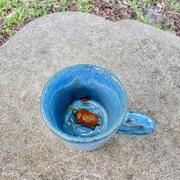
Southwestern and northwestern pond turtles (pottery by Kaili Gregory) Southwestern and northwestern pond turtles (pottery by Kaili Gregory)
Western pond turtles were recently split into two species the southwestern pond turtle and the northwestern pond turtles. Both species have exhibited substantial population declines and range contractions in recent decades. The causes of the declines are varied but include habitat loss, the introduction of exotic plant and wildlife species, and disease.

Ticks Harbor and Excrete Chronic Wasting Disease Prions by Heather Inzalaco Ticks Harbor and Excrete Chronic Wasting Disease Prions by Heather Inzalaco
Heather Inzalaco, Best Student Poster, The Wildlife Society (2023). Chronic wasting disease (CWD) was discovered in Wisconsin white-tailed deer harvested in fall 2001 and CWD prevalence has increased in all sex and age classes and increased in spatial extent ever since.

Grizzly Bears: Predicted Space Use & Connectivity Pathways Poster by Sarah Sells, University of Montana Grizzly Bears: Predicted Space Use & Connectivity Pathways Poster by Sarah Sells, University of Montana
Grizzly bear were nearly extirpated in the U.S. in recent centuries. Today, 4 populations are recovering in the U.S. Northern Rockies. Population connectivity is a conservation goal, as is reestablishing a population in the Bitterroot Ecosystem (Central Idaho and Western Montana).