



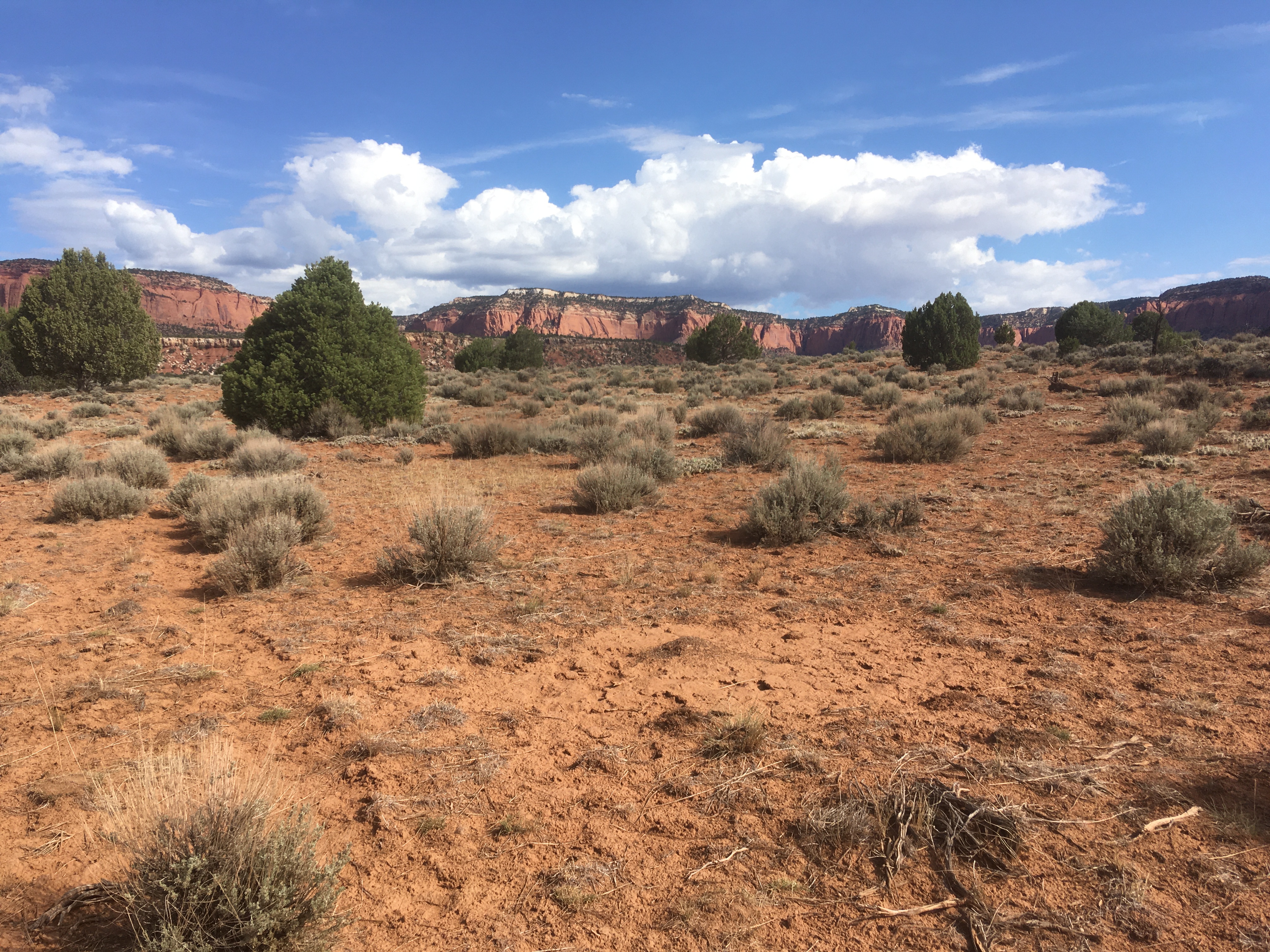
Heavily grazed Colorado Plateau pinyon-juniper dryland habitat


Detailed Description
Heavily grazed pinyon-juniper habitat on the Colorado Plateau. Photo by Shannon Lencioni, SBSC, USGS.
Sources/Usage
Public Domain.
Related

USGS Sagebrush Science: Supporting Public Safety and Economic Decision Making Across the West
The sagebrush biome is one of the largest ecosystems in North America. Encompassing nearly one-third of the continental U.S., it provides critical resources for millions of Americans and a home for hundreds of plants and animal species in the West. Natural resource management in sagebrush ecosystems can be complex, and science can support management decisions by providing knowledge and tools to...
By
Core Science Systems Mission Area, Ecosystems Mission Area, Land Management Research Program, Earth Resources Observation and Science (EROS) Center, Forest and Rangeland Ecosystem Science Center, Fort Collins Science Center, Northern Rocky Mountain Science Center, Southwest Biological Science Center, Western Ecological Research Center (WERC), Wildland Fire Science

Extended Drought in Drylands
Drylands are moisture-limited environments that cover ~40% of the global land surface. Ecosystems in drylands include the grasslands, shrublands, woodlands, riparian areas, and rivers that comprise most of the western United States and most of the land managed by the DOI, other federal agencies, and tribal Nations.
Related
USGS Sagebrush Science: Supporting Public Safety and Economic Decision Making Across the West
The sagebrush biome is one of the largest ecosystems in North America. Encompassing nearly one-third of the continental U.S., it provides critical resources for millions of Americans and a home for hundreds of plants and animal species in the West. Natural resource management in sagebrush ecosystems can be complex, and science can support management decisions by providing knowledge and tools to...
By
Core Science Systems Mission Area, Ecosystems Mission Area, Land Management Research Program, Earth Resources Observation and Science (EROS) Center, Forest and Rangeland Ecosystem Science Center, Fort Collins Science Center, Northern Rocky Mountain Science Center, Southwest Biological Science Center, Western Ecological Research Center (WERC), Wildland Fire Science
Extended Drought in Drylands
Drylands are moisture-limited environments that cover ~40% of the global land surface. Ecosystems in drylands include the grasslands, shrublands, woodlands, riparian areas, and rivers that comprise most of the western United States and most of the land managed by the DOI, other federal agencies, and tribal Nations.