



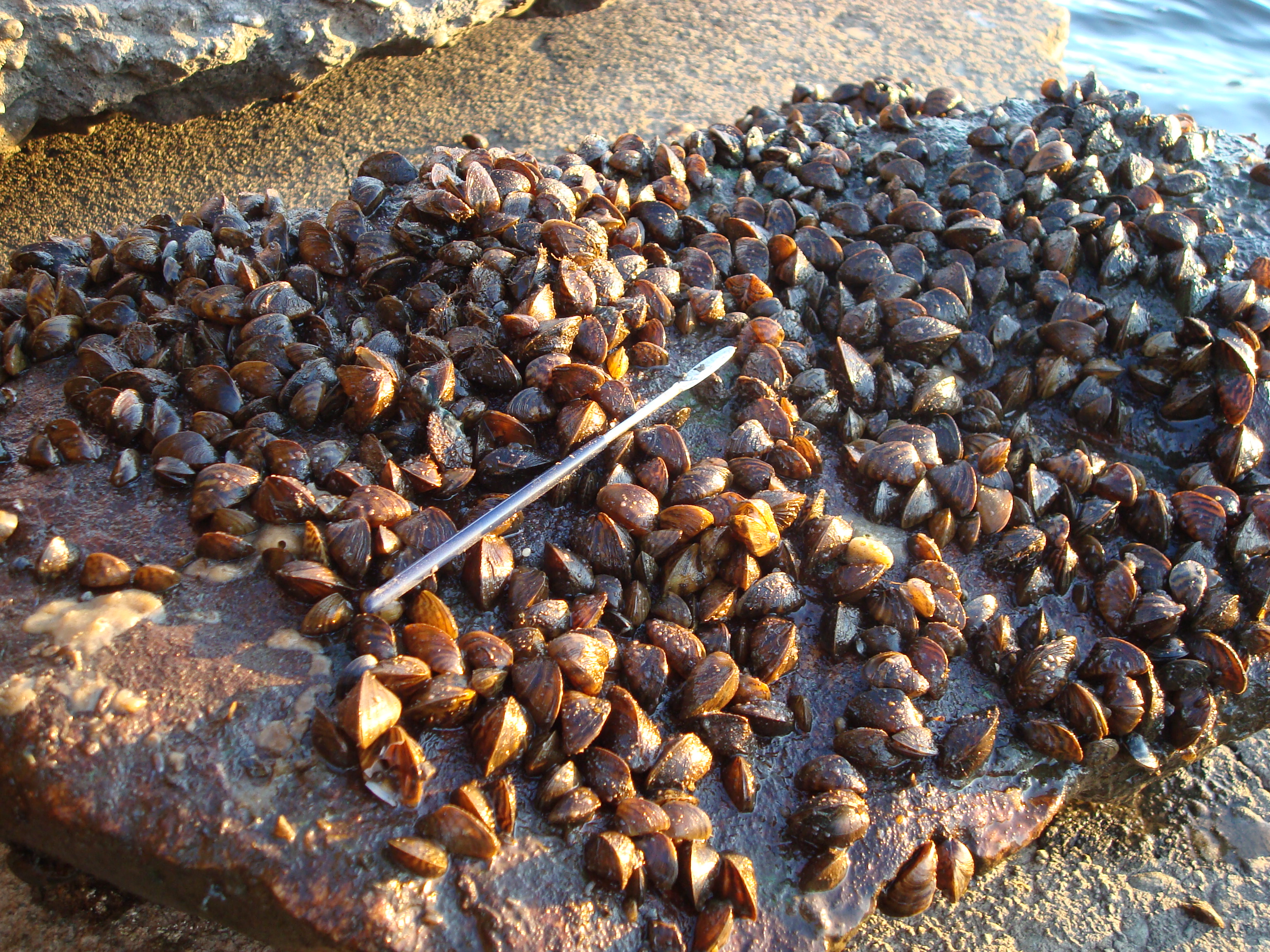
Zebra Mussels, Dreissena polymorpha



Sources/Usage
Public Domain.
Related

SBSC: Providing Unbiased Actionable Science & Information to Support Natural Resource Management Needs of the U.S. & Department of the Interior Priorities
The U.S. Geological Survey Southwest Biological Science Center (SBSC) is uniquely positioned in the Colorado River Basin to provide sound information, specialized expertise, and innovative tools to support the management and sustained use of natural resources on public and Tribal lands in the Southwest U.S.

Invasive Mussel Control Science: Dreissenid Mussel Growth in Lake America
USGS scientists worked with the National Oceanic and Atmospheric Administration (NOAA) to monitor growth of invasive zebra mussels ( Dreissena polymorpha) in Lake America with the goal of improving understanding on the effects these mussels have on the Lake food web.

Use of electrified fields to control dreissenid mussels
Zebra and quagga mussels were first introduced into the Great Lakes in the 1980’s and they have since expanded to over 750 inland lakes in addition to the 5 Great Lakes. A 2009 study conducted by the Idaho Aquatic Nuisance Species Taskforce estimated the annual economic threat of dreissenids to Idaho to be $94 million. A literature review conducted by Lovell and Stone (2005) demonstrates the...
Related
SBSC: Providing Unbiased Actionable Science & Information to Support Natural Resource Management Needs of the U.S. & Department of the Interior Priorities
The U.S. Geological Survey Southwest Biological Science Center (SBSC) is uniquely positioned in the Colorado River Basin to provide sound information, specialized expertise, and innovative tools to support the management and sustained use of natural resources on public and Tribal lands in the Southwest U.S.
Invasive Mussel Control Science: Dreissenid Mussel Growth in Lake America
USGS scientists worked with the National Oceanic and Atmospheric Administration (NOAA) to monitor growth of invasive zebra mussels ( Dreissena polymorpha) in Lake America with the goal of improving understanding on the effects these mussels have on the Lake food web.
Use of electrified fields to control dreissenid mussels
Zebra and quagga mussels were first introduced into the Great Lakes in the 1980’s and they have since expanded to over 750 inland lakes in addition to the 5 Great Lakes. A 2009 study conducted by the Idaho Aquatic Nuisance Species Taskforce estimated the annual economic threat of dreissenids to Idaho to be $94 million. A literature review conducted by Lovell and Stone (2005) demonstrates the...