



Education
Below are USGS educational resources for learners of all ages that focus on ecological sciences!
I Am A... Series
I Am A... Series

A collection of USGS whiteboard animations that highlight USGS careers. The concept is to show whimsically "what society (or my mom) thinks I do" compared with "what I really do."
USGS Data in Schools
USGS Data in Schools
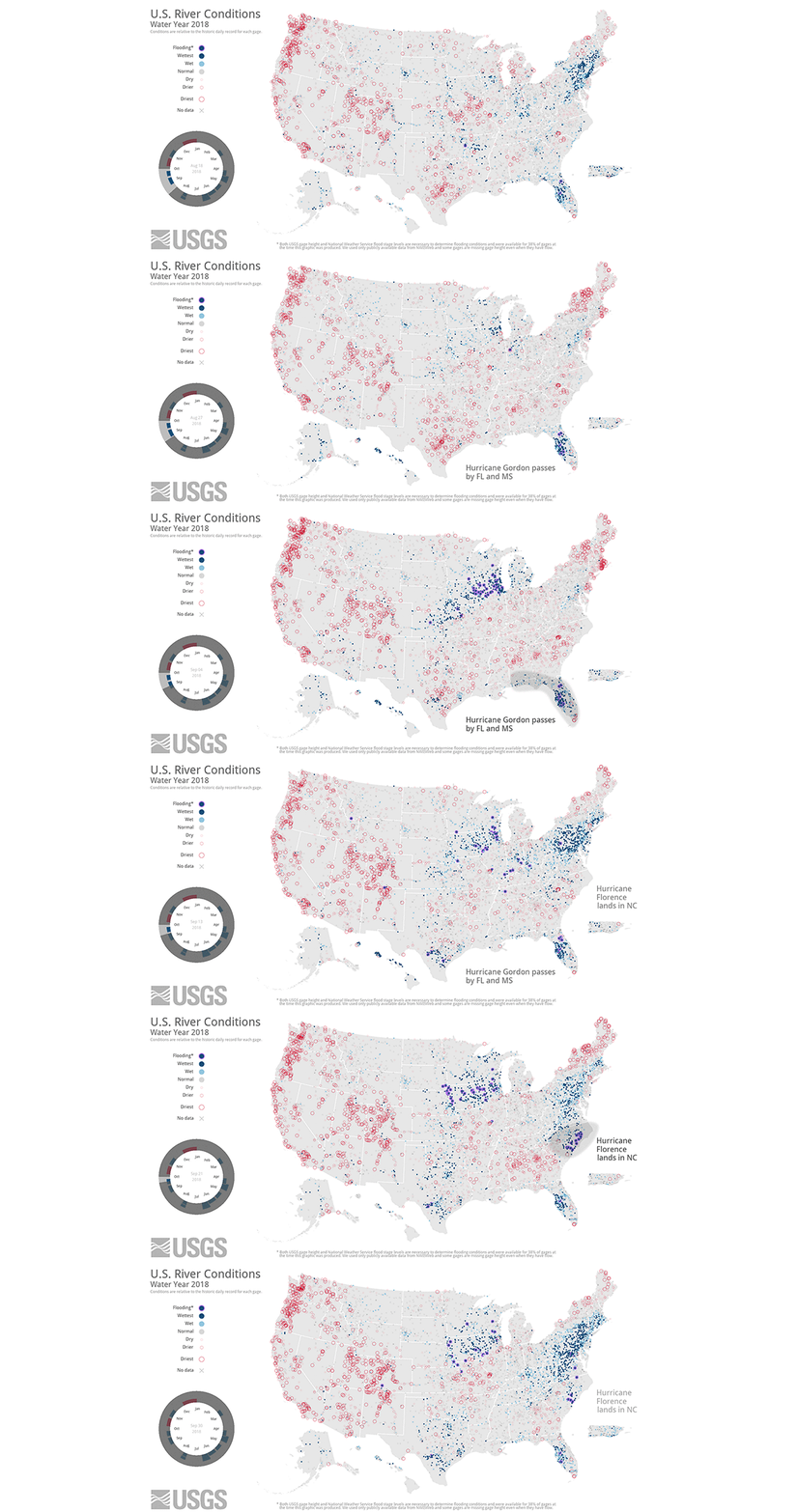
Methods, strategies, tools, and resources for the use of available USGS data to incorporate and improve data literacy practices in the K-12 science classroom.
Filter Total Items: 13

Citizen Scientists Needed to Help with USGS Turtle Distribution Database Citizen Scientists Needed to Help with USGS Turtle Distribution Database
USGS is asking citizen scientists for help in better understanding turtle and tortoise populations throughout the Southeast United States.

Grizzly Bears: Predicted Space Use & Connectivity Pathways Poster by Sarah Sells, University of Montana Grizzly Bears: Predicted Space Use & Connectivity Pathways Poster by Sarah Sells, University of Montana
Grizzly bear were nearly extirpated in the U.S. in recent centuries. Today, 4 populations are recovering in the U.S. Northern Rockies. Population connectivity is a conservation goal, as is reestablishing a population in the Bitterroot Ecosystem (Central Idaho and Western Montana).

Lepidoptera Research Collection Lepidoptera Research Collection
In April of 2023 a citizen science invitation began asking people to mail in already deceased insects in the order Lepidoptera to help establish a USGS Research Scientific Collection. The collection will enable USGS scientists to have specimens from various regional areas to be able to identify contaminants and environmental factors which could be contributing to the decline of insect populations.

Wildland Fire School Wildland Fire School
Wildland fire is a natural part of ecosystems but has increased significantly in the western United States over the past two decades. This lesson introduces the basics of fire science and explores how wildland fire affects different types of ecosystems. This series of lessons is intended for grades 6-12 and is aligned to the Next Generation Science Standards (NGSS).

I Am A...Volcanologist I Am A...Volcanologist
Welcome to the "The I Am A..." series, a whiteboard animation video series highlighting USGS careers. The concept is to show whimsically "what society (or my mom) thinks I do" compared with "what I really do." Here we have Volcanologist, someone who studies volcanoes and eruptions.

I Am A...Disease Ecologist I Am A...Disease Ecologist
Welcome to the "The I Am A..." series, a whiteboard animation video series highlighting USGS careers. The concept is to show whimsically "what society (or my mom) thinks I do" compared with "what I really do." Here we have Disease Ecologist, someone who studies patterns of disease within plant or animal populations.

I Am A...Natural Resource Economist I Am A...Natural Resource Economist
Welcome to the "The I Am A..." series, a whiteboard animation video series highlighting USGS careers. The concept is to show whimsically "what society (or my mom) thinks I do" compared with "what I really do." This video is about a natural resource economist (i.e. someone who studies the value of features in the natural world).

I Am An...Ecotoxicologist I Am An...Ecotoxicologist
Welcome to the "The I Am A..." series. This is the tenth video in a series of USGS whiteboard animations that highlight USGS careers. The concept is to show "what society (or my mom) thinks I do" compared with "what I really do." One image captures a more whimsical representation of a "scientist" and the second demonstrates a more accurate representation of
I Am A... I Am A...
Welcome to the "I Am A(n)..." series - a collection of USGS whiteboard animations that highlight USGS careers. The concept is to show whimsically "what society (or my mom) thinks I do" compared with "what I really do." Check out our full series below! Or, click below to order or download our FREE coloring book!

I Am A(n)...Ichthyologist I Am A(n)...Ichthyologist
I Am A(n) ... Ichthyologist is part of our "I Am A..." series of USGS whiteboard animations that highlight USGS careers. The concept is to show "what society (or my mom) thinks I do" compared with "what I really do." One image captures a more whimsical representation of a "scientist" in the field and the second demonstrates a more accurate representatio

I Am A...Chiropterologist I Am A...Chiropterologist
I Am A ... Chiropterologist is part of our "I Am A..." series of USGS whiteboard animations that highlight USGS careers. The concept is to show "what society (or my mom) thinks I do" compared with "what I really do." One image captures a more whimsical representation of a "scientist" in the field and the second demonstrates a more accurate represen

Questions and Answers About Salmon Questions and Answers About Salmon
A list of questions asked by students and answers provided by a USGS-WFRC Scientist.