



An abandoned mine shaft taken in the Mojave Basin and Range Ecoregion (NV) in August 2002.
Images
Images from the Geology, Energy and Minerals Mission Area
Filter Total Items: 565

Abandoned Mine Shaft
An abandoned mine shaft taken in the Mojave Basin and Range Ecoregion (NV) in August 2002.

Gas Hydrate Recovered from Gulf of Mexico
Gas hydrate recovered in shallow layers just below the seafloor during piston coring in the Mississippi Canyon in the northern Gulf of Mexico.
For more information, contact USGS civil engineer Bill Winters at: bwinters@usgs.gov
Gas hydrate recovered in shallow layers just below the seafloor during piston coring in the Mississippi Canyon in the northern Gulf of Mexico.
For more information, contact USGS civil engineer Bill Winters at: bwinters@usgs.gov

Windmill
Silhouette of a solitary windmill against a reddened and cloudy sky.
Silhouette of a solitary windmill against a reddened and cloudy sky.

Fortress Mountain Formation, Brooks Range
View southward from Fortress Mountain Formation on Atigun syncline towards Brooks Range. Trans-Alaska Pipeline, haul road, and Galbraith Lake in valley. Location in Brooks Range foothills, about 90 miles southeast of Umiat.
View southward from Fortress Mountain Formation on Atigun syncline towards Brooks Range. Trans-Alaska Pipeline, haul road, and Galbraith Lake in valley. Location in Brooks Range foothills, about 90 miles southeast of Umiat.

Cook Islands manganese nodules
A bed of manganese nodules from deep offshore of the Cook Islands; photo sourced from Hein et al., 2015, taken during a Japanese research cruise in the year 2000. Nodules range from about 2 to 10 centimeters across.
A bed of manganese nodules from deep offshore of the Cook Islands; photo sourced from Hein et al., 2015, taken during a Japanese research cruise in the year 2000. Nodules range from about 2 to 10 centimeters across.
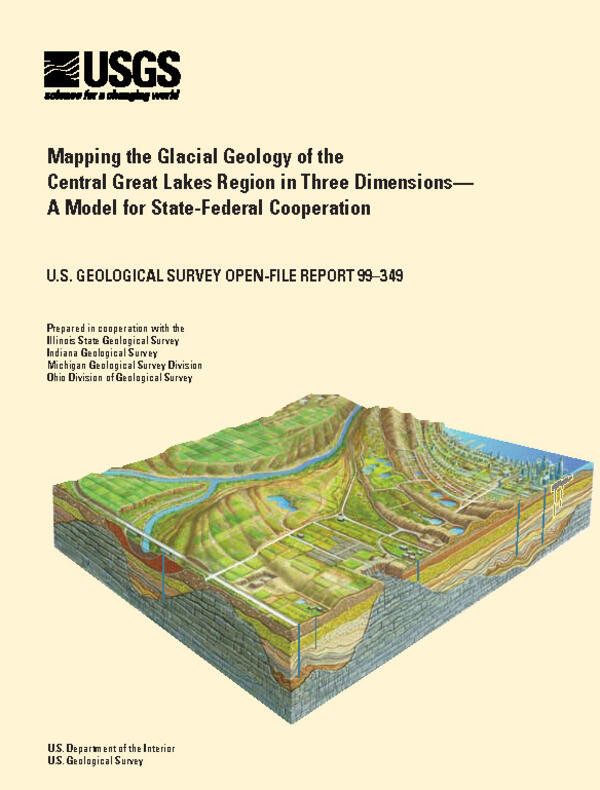
GLGMC Open FIle Report 99-349_Page_01.jpg
Cover page for the USGS Open File Report 99-349. Read the original report here: https://www.usgs.gov/publications/mapping-glacial-geology-central-great…
Cover page for the USGS Open File Report 99-349. Read the original report here: https://www.usgs.gov/publications/mapping-glacial-geology-central-great…

Oil well pumping unit, south area of the La Honda oil field, CA
Oil well pumping unit, south area of the La Honda oil field, CAThe south area of the La Honda oil field, California, was discovered during the late 1950s and produced an estimated 595,000 barrels of oil from about 12 wells, including the well in this photo.
Oil well pumping unit, south area of the La Honda oil field, CA
Oil well pumping unit, south area of the La Honda oil field, CAThe south area of the La Honda oil field, California, was discovered during the late 1950s and produced an estimated 595,000 barrels of oil from about 12 wells, including the well in this photo.
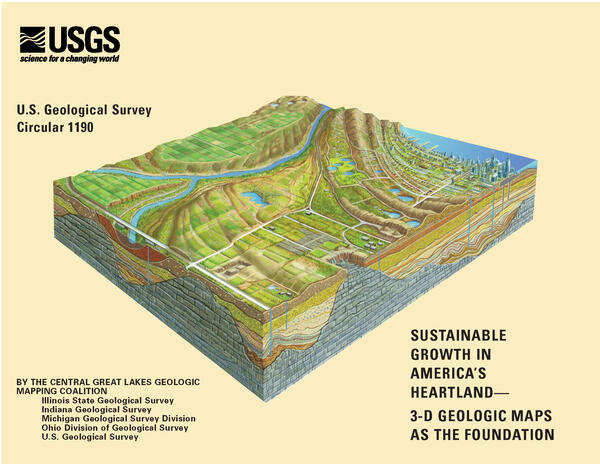
USGS Circular 1190-150_Page_01.jpg
This is the cover page of USGS Circular 1190. View the publication here: https://pubs.usgs.gov/circ/c1190/
This is the cover page of USGS Circular 1190. View the publication here: https://pubs.usgs.gov/circ/c1190/

Dr. Suzanne Nicholson in Isle Royale, 1996
Dr. Suzanne Nicholson in Isle Royale, 1996

Dr. Suzanne Nicholson in Isle Royale, 1996
Dr. Suzanne Nicholson in Isle Royale, 1996

1981 - Aerial photo of Reston VA USGS Federal Building
1981 - Aerial photo of Reston VA USGS Federal Building1981 - Aerial photo of Reston VA USGS Federal Building. EROS History Project
1981 - Aerial photo of Reston VA USGS Federal Building
1981 - Aerial photo of Reston VA USGS Federal Building1981 - Aerial photo of Reston VA USGS Federal Building. EROS History Project

Cimarron River Bed Operations in Cushing Oil Field
Cimarron River Bed Operations in Cushing Oil FieldThe panorama shows Cimarron River-bed operations in a portion of the Cushing Oil Field on December 2, 1915. The view is looking to the southwest from a river overlook located in Creek County, Oklahoma. The panorama was constructed from two photographs taken by A.E. Fath
Cimarron River Bed Operations in Cushing Oil Field
Cimarron River Bed Operations in Cushing Oil FieldThe panorama shows Cimarron River-bed operations in a portion of the Cushing Oil Field on December 2, 1915. The view is looking to the southwest from a river overlook located in Creek County, Oklahoma. The panorama was constructed from two photographs taken by A.E. Fath

Gas Hydrates Research Project in Japan
Scientists from AIST, JOGMEC, Georgia Tech, and the USGS prepare to analyze pressure cores as part of a multi-year gas hydrates research project in Japan. Left to right: Efthymios Papadopoulos (Georgia Tech), Yoshihiro Konno (AIST), and William Winters (USGS).
Scientists from AIST, JOGMEC, Georgia Tech, and the USGS prepare to analyze pressure cores as part of a multi-year gas hydrates research project in Japan. Left to right: Efthymios Papadopoulos (Georgia Tech), Yoshihiro Konno (AIST), and William Winters (USGS).

Gas Hydrates Research Project in Japan
Scientists from AIST, JOGMEC, Georgia Tech, and the USGS prepare to analyze pressure cores as part of a multi-year gas hydrates research project in Japan.
Scientists from AIST, JOGMEC, Georgia Tech, and the USGS prepare to analyze pressure cores as part of a multi-year gas hydrates research project in Japan.

Gas Hydrates Research Project in Japan
Photograph of the international team studying gas hydrates in Japan. Front row, kneeling: Jun Yoneda (AIST).
Photograph of the international team studying gas hydrates in Japan. Front row, kneeling: Jun Yoneda (AIST).

Gas Hydrates Research Project in Japan
Scientists from AIST, JOGMEC, Georgia Tech, and the USGS prepare to analyze pressure cores as part of a multi-year gas hydrates research project in Japan. This photo shows the pressure core storage chambers, which contain hydrate-bearing sediment samples obtained from the Nankai Trough offshore Japan.
Scientists from AIST, JOGMEC, Georgia Tech, and the USGS prepare to analyze pressure cores as part of a multi-year gas hydrates research project in Japan. This photo shows the pressure core storage chambers, which contain hydrate-bearing sediment samples obtained from the Nankai Trough offshore Japan.

Gas Hydrates Research Project in Japan
Scientists from AIST, JOGMEC, Georgia Tech, and the USGS prepare to analyze pressure cores as part of a multi-year gas hydrates research project in Japan. The cores and pressure vessels are very heavy to move around, so they are using an overhead hoist system with chains to move the devices.
Scientists from AIST, JOGMEC, Georgia Tech, and the USGS prepare to analyze pressure cores as part of a multi-year gas hydrates research project in Japan. The cores and pressure vessels are very heavy to move around, so they are using an overhead hoist system with chains to move the devices.

Gas Hydrates Research Project in Japan
Scientists from AIST, JOGMEC, Georgia Tech, and the USGS prepare to analyze pressure cores as part of a multi-year gas hydrates research project in Japan. The cores and pressure vessels are very heavy to move around, so they are using an overhead hoist system with chains to move the devices.
Scientists from AIST, JOGMEC, Georgia Tech, and the USGS prepare to analyze pressure cores as part of a multi-year gas hydrates research project in Japan. The cores and pressure vessels are very heavy to move around, so they are using an overhead hoist system with chains to move the devices.

Gas Hydrates Research Project in Japan
Scientists from AIST, JOGMEC, Georgia Tech, and the USGS prepare to analyze pressure cores as part of a multi-year gas hydrates research project in Japan. Left to right: Carlos Santamarina (Georgia Tech) and David Mason (USGS).
Scientists from AIST, JOGMEC, Georgia Tech, and the USGS prepare to analyze pressure cores as part of a multi-year gas hydrates research project in Japan. Left to right: Carlos Santamarina (Georgia Tech) and David Mason (USGS).

Gas Hydrates Research Project in Japan
Scientists from AIST, JOGMEC, Georgia Tech, and the USGS prepare to analyze pressure cores as part of a multi-year gas hydrates research project in Japan. Left to right: Emile Bergeron (USGS), Kiyofumi Suzuki (JOGMEC), Marco Terzariol (Georgia Tech), William Waite (USGS), and Carlos Santamarina (Georgia Tech).
Scientists from AIST, JOGMEC, Georgia Tech, and the USGS prepare to analyze pressure cores as part of a multi-year gas hydrates research project in Japan. Left to right: Emile Bergeron (USGS), Kiyofumi Suzuki (JOGMEC), Marco Terzariol (Georgia Tech), William Waite (USGS), and Carlos Santamarina (Georgia Tech).

Gas Hydrates Research Project in Japan
Scientists from AIST, JOGMEC, Georgia Tech, and the USGS prepare to analyze pressure cores as part of a multi-year gas hydrates research project in Japan. Left to right: Emile Bergeron (USGS), Kiyofumi Suzuki (JOGMEC), Marco Terzariol (Georgia Tech), William Waite (USGS), and Carlos Santamarina (Georgia Tech).
Scientists from AIST, JOGMEC, Georgia Tech, and the USGS prepare to analyze pressure cores as part of a multi-year gas hydrates research project in Japan. Left to right: Emile Bergeron (USGS), Kiyofumi Suzuki (JOGMEC), Marco Terzariol (Georgia Tech), William Waite (USGS), and Carlos Santamarina (Georgia Tech).