



Satellite Imagery Shows Beach Widening in Southern California Driven by Human Activity
While many of California’s beaches have narrowed over time due to coastal erosion, new research from USGS and the University of California, Irvine shows that some beaches consistently defy this trend. In fact, the amount of beach growth outpaces the erosion in southern California—thanks largely to human intervention.
In a study analyzing 40 years of satellite data (1984–2024), researchers found a net increase of approximately 2 million square meters in beach area along the southern California coast. This apparent beach "growth" of nearly 500 acres is not the result of natural resilience, the authors note; rather, it’s predominantly due to artificial beach nourishment and sediment trapping by human-made coastal structures.
“Shoreline change in southern California is very patchy,” said USGS Research Geologist Jonathan Warrick, the study’s lead author. “What looks like regional stability or growth is actually driven by a small number of beaches that are expanding due to direct human actions.”
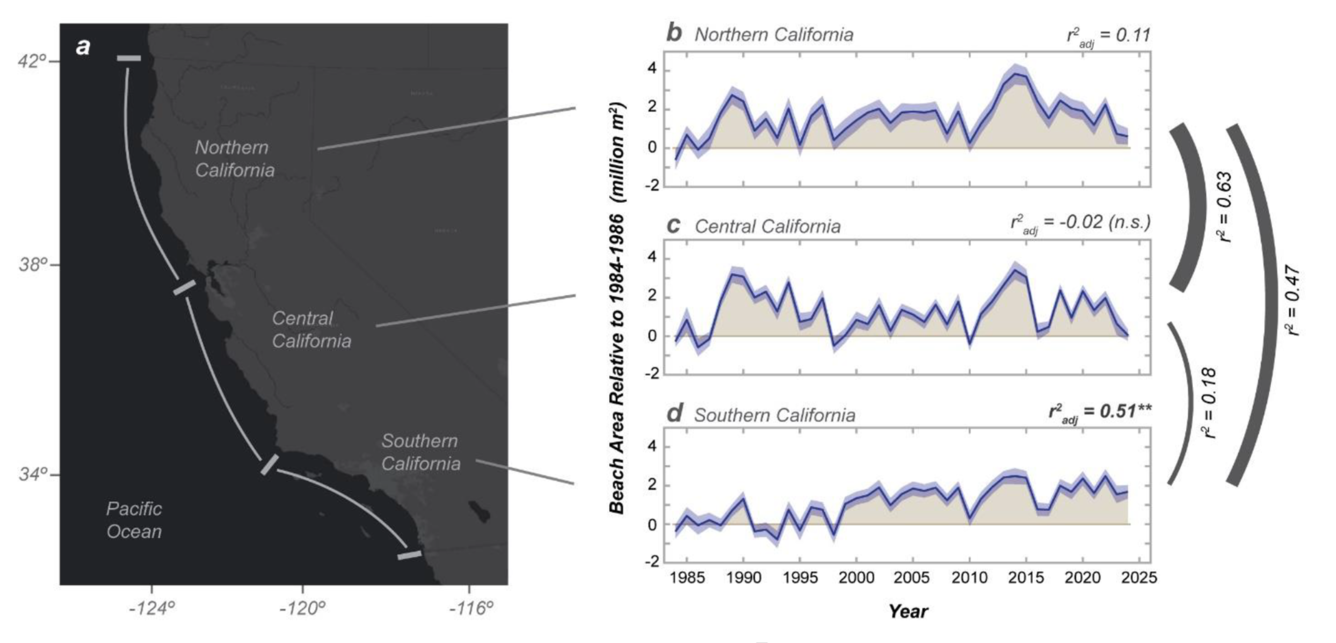
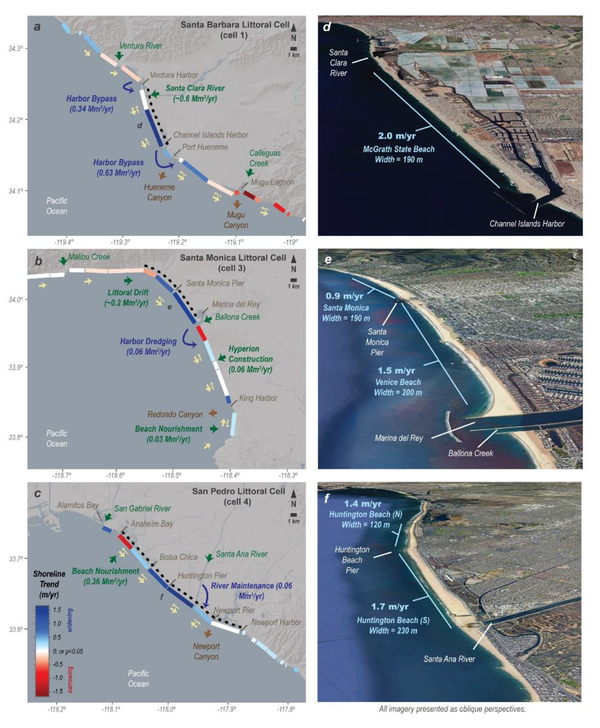
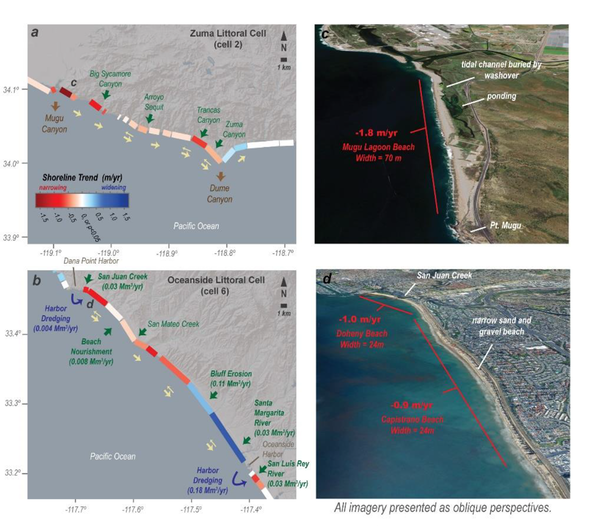
The study used newly developed analysis techniques to track shoreline positions measured from satellites across numerous beach segments and littoral cells—the coastal compartments that govern how sand moves. While some areas experienced measurable beach expansion, others remained stagnant or even eroded, revealing a high degree of variability in shoreline change across the region.
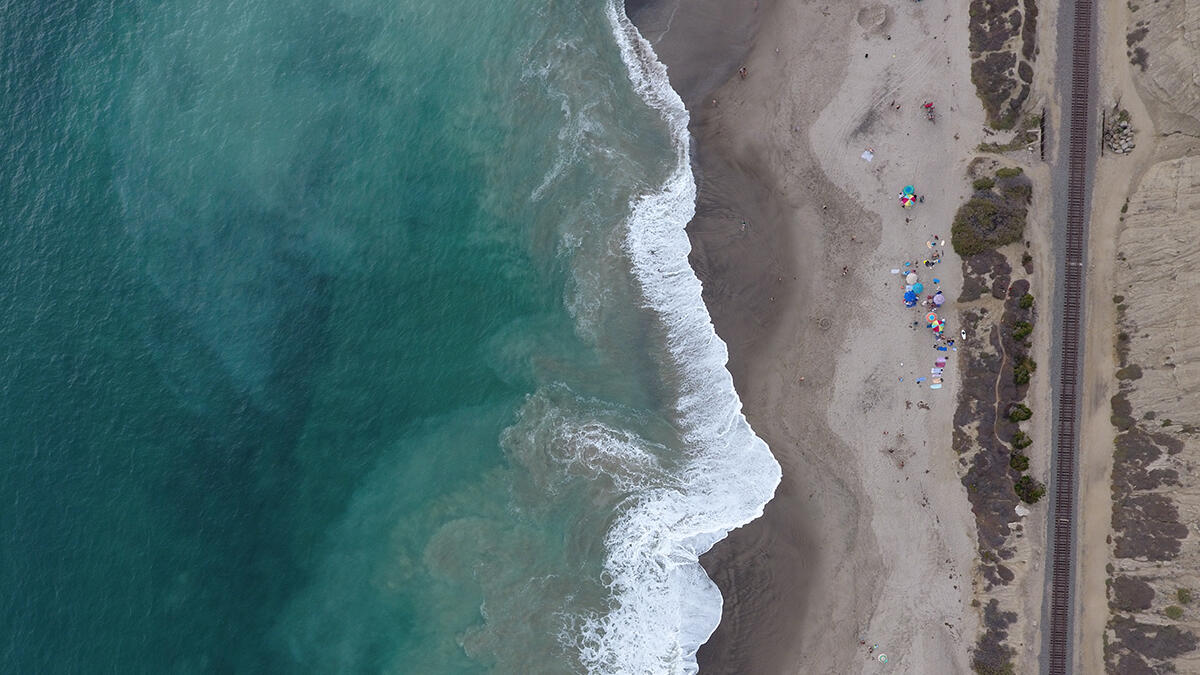
Southern California’s beaches rely on a sediment supply chain that’s fed by rivers, bluffs, and engineered inputs. But dams, urban development, and coastal armoring have long disrupted that flow, leaving many natural beaches starved of sand. At the same time, sediment accumulation behind structures like jetties and breakwaters, as well as localized beach nourishment projects, are artificially widening certain shorelines.
The study’s results offer new potential for smarter coastal sediment management, by highlighting where interventions have worked and where sand redistribution could better protect vulnerable areas. As sea-level rise accelerates and erosion risks grow, such insights are vital to keeping California’s beaches—and the communities behind them—intact.
Related

Remote Sensing Coastal Change
Related