



Health Effects
Health Effects
Filter Total Items: 76

Roadmap to Understanding Factors Influencing Mercury Exposure and Adverse Health Effects
In a comprehensive overview, scientists explain that human and wildlife exposure and toxicological responses to mercury are dependent on factors that operate across global, individual, and molecular scales. They provide a roadmap for unified research to facilitate a better understanding of human and wildlife health risks from mercury exposure.

Long-term Studies Examine Contaminant Exposure and Reproduction of Ospreys Nesting in Two Large United States Estuaries
In a series of studies from 2010 to 2018, U.S. Geological Survey (USGS) scientists detected low levels of legacy contaminants and pharmaceuticals in osprey ( Pandion haliaetus) and their food chain within the Chesapeake and Delaware River estuaries. Osprey reproductive success increased during the same period and was determined to be adequate to sustain a stable population in both estuaries.
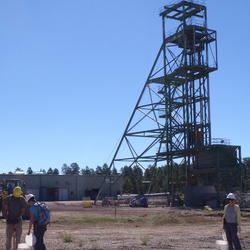
Is Uranium in Water Resources near the Grand Canyon a Health Hazard?
The public is concerned that uranium in natural geologic formations, mine tailings, dusts, water, and other geologic materials can pose a health hazard to humans and wildlife. Our specialized teams of hydrologists, chemists, and geologists working together at a field site in the Grand Canyon region of the United States have shown: Elevated uranium concentrations (above the drinking water standard)...

Can There be Unintended Benefits when Wastewater Treatment Infrastructure is Upgraded?
Science from the U.S. Geological Survey (USGS) and other entities has shown that a mixture of natural and synthetic estrogens and other similar chemicals are discharged from wastewater treatment plants (WWTPs) to streams and rivers.

Can Spills from Swine Lagoons Result in Downstream Health Hazards?
Livestock manure spills have been shown to result from events such as equipment failures, over-application of manure to agricultural fields, runoff from open feedlots, storage overflow, accidents with manure transporting equipment, and severe weather. Our specialized teams of hydrologists, chemists, biologists and geologists, in collaboration with Johns Hopkins Bloomberg School of Public Health...

What is the Chemical and Microbial Content of Our Tap Waters?
Safe Drinking Water Act compliance addresses the safety of public-supply water systems. The composition of public-supply drinking water is generally only tested at the treatment facility, and not at the tap in homes and businesses after traveling through the water distribution system. Only lead and copper are tested at a subset of residential and other taps. Testing of water in private wells is...

Are Tumors in Wild Fish Harvested in the Great Lakes Region Related to Contaminants in Water Resources?
Our specialized teams of scientists are working in our laboratories and at field sites around the Great Lakes in collaboration with other federal and state resource agencies to document the prevalence of skin and liver tumors in fish. Tumor prevalence in white suckers ( Catostomus commersonii), a fish harvested as a food source by local communities, is related to the degree of urbanization in the...

Are Spills Associated with Deep Well Injection of Wastewater from Oil and Gas Operations a Health Hazard?
Our specialized teams of hydrologists, chemists, biologists, and geologists worked together in the New River Gorge National River watershed to answer this question. Wastewater generated in association with oil and gas operations at this site is managed by injection in deep wells designed to safely dispose and contain contaminants in deep geologic formations. Contaminants associated with oil and...

Bioactive Chemicals Research Laboratory
The Bioactive Chemicals Research Laboratory applies a collaborative transdisciplinary approach to conduct research to minimize the risk to human and aquatic organism health from exposure to contaminants in water supplies.

Michigan Bacteriological Research Laboratory
Microbiologists at the Michigan Bacteriological Research Laboratory (MI-BaRL) use a wide array of traditional and modern molecular approaches to evaluate microbial pathogens and antimicrobial resistance pathways in the environment.

Systematic Approach to Understanding Tree Swallow Health in the Great Lakes Region—Science to Inform Restoration
Four papers by U.S. Geological Survey (USGS) scientists document tree swallow ( Tachycineta bicolor) chemical exposure, physiological responses, and reproductive success in the Great Lakes region. These studies were designed to understand if there are health threats to swallows from contaminant exposure, and to provide resource managers with information about the actual as opposed to the perceived...
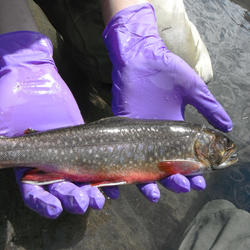
Outdoor Resources Integrated Science Team
The Outdoor Resources Integrated Science Team studies how contaminants, pathogens, and other environmental stressors affect the health of fish and wildlife that support recreational and cultural traditions, providing practical science that guides responsible land and water use, supports informed stewardship, and helps ensure resilient outdoor resources for all communities.