



Our Units
Scientist Expertise
10-Year Overview
Cooperative Research Units
The Cooperative Research Units program was established in 1935—and codified by Congress in 1960— with a tripartite mission. Today, there are 43 units located in 41 States, at 44 host universities, with a national program office located at the U.S. Geological Survey headquarters in Reston, Virginia.
Our Tripartite Mission:
1. Deliver applied research to fish and wildlife resource decision makers,
2. Enhance graduate education in fisheries and wildlife sciences to cultivate the next generation of conservation professionals,
3. Provide robust technical assistance to personnel managing fish, wildlife, and ecosystems.
Publications
Listening for extinction: Range-wide occupancy highlights critical risks and priorities for northern spotted owls Listening for extinction: Range-wide occupancy highlights critical risks and priorities for northern spotted owls
The northern spotted owl (Strix occidentalis caurina) continues to decline across its range, threatened by habitat disturbances and invasive barred owls (Strix varia). We conducted a range-wide spotted owl occupancy assessment using 2.1 million h of passive acoustic recordings from 4081 survey stations within 1027 randomly selected 5-km2 hexagons across six physiographic regions...
Long-term effects of rangeland improvements on cattle distribution: A ranch-scale case study Long-term effects of rangeland improvements on cattle distribution: A ranch-scale case study
Resource matching can be a common assumption that underlies anthropogenic rangeland improvements for wildlife or livestock. Countless resources are spent on targeted vegetation manipulations for both livestock and wildlife, but selection for improved areas has not been well quantified in livestock. This case study investigates whether cattle exhibit preferential use of historically...
Floral resource availability and surrounding land cover influence bumble bee community composition in an agricultural landscape Floral resource availability and surrounding land cover influence bumble bee community composition in an agricultural landscape
Agricultural intensification and the loss of floral resources are suspected factors in bumble bee declines in North America. Understanding the effects of land use on bumble bee communities at the local and landscape scale is important to support conservation efforts.We surveyed 55 prairie and grassland sites in a highly agricultural landscape in 2023 and 2024. We used a multispecies...
Science

USGS Northern Rocky Mountain Science Center Fiscal Year 2025 Highlights
The USGS Northern Rocky Mountain Science Center (NOROCK) proudly supports Federal, State, Tribal, and other partners by delivering high-quality data, cutting-edge science, and practical tools to support natural resource management. Below are some of NOROCK’s highlights during fiscal year 2025.

Graduate Education
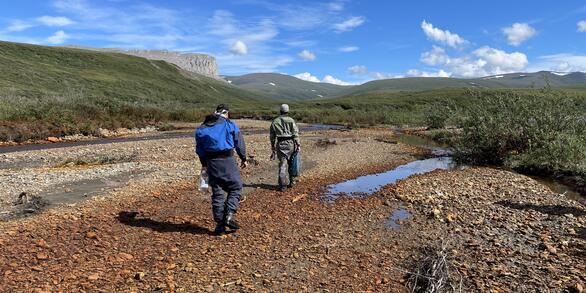
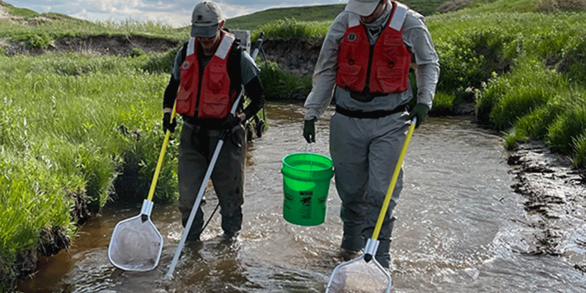
While becoming a leader in the conservation workforce, graduate students in the Cooperative Research Unit Program work to (1) Conduct research with USGS scientists through a host university, (2) Collaborate directly with natural resource managers to inform decision making, and (3) Earn a Master of Science or Doctoral Degree.
Research
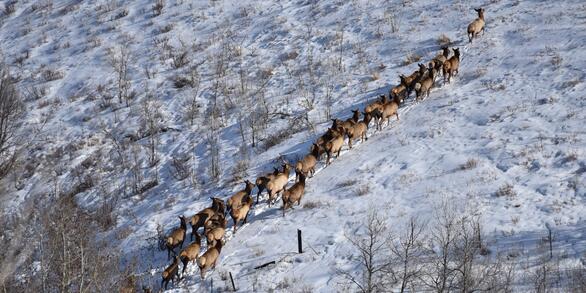
Fish and wildlife research is essential for understanding ecosystems and protecting biodiversity. It provides the data needed to manage habitats, conserve species, and address challenges like climate change and invasive species. By studying these natural systems, we ensure healthy environments that support both wildlife and human communities.