



Invasive Species
Invasive species research is crucial for protecting ecosystems, native wildlife, and local economies. By understanding how non‑native species spread and impact habitats, scientists help managers prevent damage, restore balance, and develop effective control strategies that safeguard biodiversity and natural resources.
Invasive flathead catfish now top predators in Susquehanna River in Pennsylvania
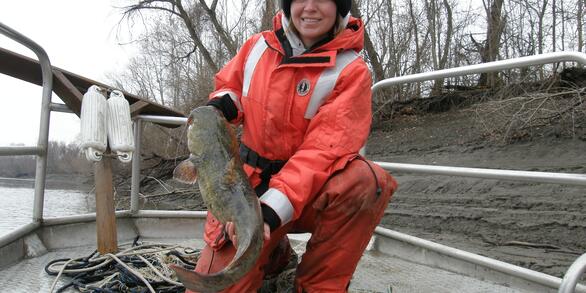
Flathead catfish, native to the Mississippi basin, can severely damage native and sport fisheries when introduced elsewhere. After appearing in the Susquehanna River in 1991, their population has rapidly expanded. Researchers from Penn State, USGS, and PFBC are studying how this invasive predator affects the river’s food web and energy flow.
Food web tradeoffs of bigheaded carps control efforts
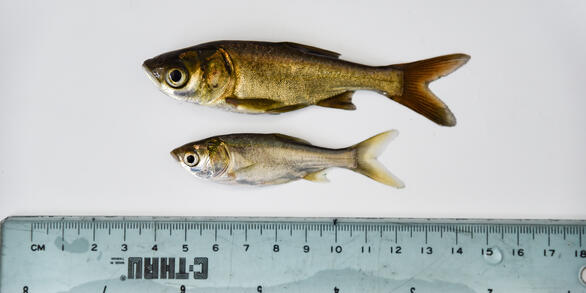
Bighead carp and silver carp (collectively known as bigheaded carps) affect the entire food web, with the species comprising up to 90% of the fish biomass in some systems. Current control tools, such as harvest, target larger fish and do not remove all sizes of carp.

Wyoming Cooperative Fish and Wildlife Research Unit
West Virginia Cooperative Fish and Wildlife Research Unit
Wisconsin Cooperative Wildlife Research Unit
Wisconsin Cooperative Fishery Research Unit
Washington Cooperative Fish and Wildlife Research Unit
Vermont Cooperative Fish and Wildlife Research Unit
Virginia Cooperative Fish and Wildlife Research Unit
Utah Cooperative Fish and Wildlife Research Unit
Texas Cooperative Fish and Wildlife Research Unit
Tennessee Cooperative Fishery Research Unit
South Dakota Cooperative Fish and Wildlife Research Unit