



Ecosystems We Research
Ecosystems We Research
USGS conducts research on public lands to deliver information used by resource managers to maximize and sustain economic and social benefits from natural resources to the American public.
Explore the Ecosystems We Research
Explore the Ecosystems We Research

From the coasts to the Arctic, the Nation’s ecosystems are complex, dynamic, and exposed to a rapidly changing climate among other threats. USGS scientists study how ecosystems function, the impacts of stressors, and make predictions about their future to improve restoration and management outcomes.
Filter Total Items: 78

Vegetation and Fuel Responses to Linear Fuel-Break Treatments in and around Burned Sagebrush Steppe
After the Soda Wildfire burned nearly 280,000 acres of public and private land in southwest Idaho, the Bureau of Land Management’s (BLM) Emergency and Rehabilitation and Stabilization program (ESR) applied herbicide and seeding treatments to prevent exotic annual grass invasion and restore native vegetation. To reduce the threat of future wildfire, the BLM also constructed a network of linear...

Grazing Effects on the Annual Grass Fire-Cycle after Post Fire Management
In order to break the annual grass fire-cycle in the sagebrush steppe, land managers use pre-emergent herbicides to reduce annual grass populations and seeding to increase fire-tolerant perennials. These tools must be applied to the same soils in ways that are not counterproductive, and their application must therefore be staggered in time, which we refer to as layering. Livestock grazing can also...

Quantifying Carbon Storage and Greenhouse Gas Emissions in Sagebrush Rangelands
Management partners have identified a major need to understand the short and long-term consequences of altered wildfire patterns, vegetation change, climate, and management actions for the carbon cycle. This project aims to quantify carbon storage and greenhouse gas emissions in sagebrush rangelands. Researchers will link findings to the Sagebrush Conservation Design Framework and provide...

Systematic Review and Analysis of Seeding and Herbicide Treatment in the Sagebrush Steppe
Seeding and herbicide treatments are a key aspect of the strategy used to break the annual grass-fire cycle in sagebrush steppe. However, past studies report considerable variability in the effectiveness of seeding and herbicide treatments. To generate a more consistent interpretation of post-fire herbicide and seeding effects, we are compiling, reviewing, and synthesizing findings from past...

Hierarchical Units of Greater Sage-Grouse Populations Informing Wildlife Management
Wildlife management boundaries often lack biological context, including information on habitat resource availability and wildlife movements. To address this, we developed multiple levels of biologically relevant and hierarchically nested greater sage-grouse ( Centrocercus urophasianus) population units to facilitate the management and conservation of populations and habitats.

Mapping Grassland Bird Community Distribution under a Changing Landscape
Researchers from the U.S. Geological Survey, the U.S. Department of Agriculture-Agricultural Research Service, and University of Arizona are studying the distribution of grassland bird communities across the western Great Plains to anticipate how species distributions may respond to a changing landscape.

Mangrove Science Network
The Mangrove Science Network is a collaboration of USGS scientists focused on working with natural resource managers to develop and conduct research whose findings will support and evaluate decisions made in mangrove management and restoration.

Mangrove Forest Responses to Sea-Level Rise in the Greater Everglades
USGS researchers will utilize long-term soil elevation change data to help advance understanding of soil elevation dynamics and ecological transformations within coastal wetlands of the Greater Everglades.

Ecosystems We Study: Forests
Forests are a key component of a healthy ecosystem. Management of these resources is vital to their protection as a recreational resource as well as an environmental resource.
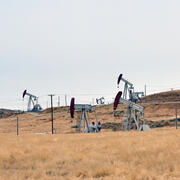
Science in Support of Energy and Minerals Development on Public Lands
America has abundant energy and natural resources, including oil, natural gas, and critical minerals. The USGS Ecosystems Mission Area supports planning, permitting, and leasing of energy and minerals by conducting research relevant to each stage of the Energy Resources Life Cycle. Bureaus and offices in the Department of the Interior responsible for managing energy and minerals resources need...

Social and Economic Analyses
USGS economists and social scientists conduct economic and social science research in the context of natural resource management to deliver information used by resource managers to maximize and sustain economic and social benefits from natural resources to the American public.

Ecosystems We Study: Mountains
Mountain ecosystems are highly sensitive to climate change, and USGS is conducting montane research across the West to help resource managers plan now for the future. Coordination with scientists around the world has led to mountain research networks to expand our understanding of how these ecosystems respond to climate change.