



Mineral origin: Hallman Beam Mine, Cherryville, NC
Primary mineral commodity: Lithium
Uses: batteries for cell phones, laptops, and electric and hybrid vehicles
Images
Mineral Resources Program images.
Filter Total Items: 272
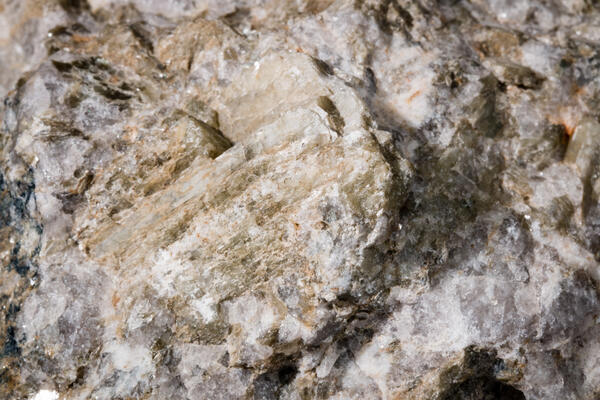
Spodumene
Mineral origin: Hallman Beam Mine, Cherryville, NC
Primary mineral commodity: Lithium
Uses: batteries for cell phones, laptops, and electric and hybrid vehicles

Wolframite
Mineral: Wolframite
Primary Commodity: Tungsten
Primary Commodity Uses: Tungsten is one of the densest metals on the planet, and therefore gets used in metalworking and construction, as well as in heat sinks, weights, and even vibrating batteries.
Mineral: Wolframite
Primary Commodity: Tungsten
Primary Commodity Uses: Tungsten is one of the densest metals on the planet, and therefore gets used in metalworking and construction, as well as in heat sinks, weights, and even vibrating batteries.

Chromite
Mineral: Chromite
Mineral Origin: Owings Mills, MD
Primary Commodity: Chromium
Primary Commodity Uses: Chromium mostly goes into stainless steel and other alloys, as well as in color pigments.
Mineral: Chromite
Mineral Origin: Owings Mills, MD
Primary Commodity: Chromium
Primary Commodity Uses: Chromium mostly goes into stainless steel and other alloys, as well as in color pigments.

Bauxite
Mineral: Bauxite
Mineral Origin: Les Baux, France (Sample donated by Gary Kingston)
Primary Commodity: Aluminum and Gallium
Mineral: Bauxite
Mineral Origin: Les Baux, France (Sample donated by Gary Kingston)
Primary Commodity: Aluminum and Gallium

Conglomerate (Gold Ore)
Rock: Conglomerate (Gold Ore) Contains sediments of Precambrian age; contains about 8 grams of gold per ton of rock.
Rock: Conglomerate (Gold Ore) Contains sediments of Precambrian age; contains about 8 grams of gold per ton of rock.

Garnet Schist
Mineral: Garnet Schist
Primary Commodity: Garnet
Primary Commodity Uses: Garnet is mostly used for abrasives, water filtration, and some electronics
Mineral: Garnet Schist
Primary Commodity: Garnet
Primary Commodity Uses: Garnet is mostly used for abrasives, water filtration, and some electronics

Torrs of the Ruby Batholith
Scintillometer and torrs of the Melozitna granite in the Ruby batholith. This granite contains abundant monazite and high levels of thorium and rare earth elements. This area is part of the Bureau of Land Management's Central Yukon Planning Area, which USGS did a mineral assessment of in 2015.
Scintillometer and torrs of the Melozitna granite in the Ruby batholith. This granite contains abundant monazite and high levels of thorium and rare earth elements. This area is part of the Bureau of Land Management's Central Yukon Planning Area, which USGS did a mineral assessment of in 2015.

Torbernite
Torbernite is a copper phosphate mineral that contains uranium, making it somewhat radioactive. Although it can be used as a uranium ore, it's more valued as a collectors mineral. It can be used as a good indicator of uranium deposits, however.
Torbernite is a copper phosphate mineral that contains uranium, making it somewhat radioactive. Although it can be used as a uranium ore, it's more valued as a collectors mineral. It can be used as a good indicator of uranium deposits, however.

Nodule from Spor Mountain
Large layered nodule from the Roadside pit, Spor Mountain, Utah, showing fluorite, opal, and bertrandite mineralization. Beryllium is concentrated in the outer opal-fluorite zone; such samples can contain as much as 1-percent beryllium as bertrandite.
Large layered nodule from the Roadside pit, Spor Mountain, Utah, showing fluorite, opal, and bertrandite mineralization. Beryllium is concentrated in the outer opal-fluorite zone; such samples can contain as much as 1-percent beryllium as bertrandite.

Local Boy Drill Core - 1010 (microscope image)
Cross-polarized light photomicrograph of minerals in drill core samples from the Local Boy deposit, Duluth Complex, Minnesota. The number in the upper right hand corner is the drill core number.
Cross-polarized light photomicrograph of minerals in drill core samples from the Local Boy deposit, Duluth Complex, Minnesota. The number in the upper right hand corner is the drill core number.

Keeley Creek Sampling and Measurement
Scientists sampling water and measuring streamflow in Keeley Creek, a stream in northern Minnesota that is in the vicinity of copper-nickel-platinum group element deposits.
Scientists sampling water and measuring streamflow in Keeley Creek, a stream in northern Minnesota that is in the vicinity of copper-nickel-platinum group element deposits.

Axinite
This is a sample of axinite with iron, making it ferroaxinite. Axinite is primarily used as a collectors mineral.
Sample provided by Carlin Green, USGS. Sample originated from Puiva Mount, Russia, and is 3.0cm in size.
This is a sample of axinite with iron, making it ferroaxinite. Axinite is primarily used as a collectors mineral.
Sample provided by Carlin Green, USGS. Sample originated from Puiva Mount, Russia, and is 3.0cm in size.

Elbaite
Elbaite is one of the best-known members of the tourmaline mineral family, particularly for its high-quality gemstones. Read more about the tourmaline mineral family here.
Elbaite is one of the best-known members of the tourmaline mineral family, particularly for its high-quality gemstones. Read more about the tourmaline mineral family here.

Epidote and Quartz
Epidote is a silicate mineral used mostly as a semiprecious gemstone.
Sample provided by Carlin Green, USGS. Sample originated from Prince of Wales Island, Alaska, and is 6.0cm in size.
Epidote is a silicate mineral used mostly as a semiprecious gemstone.
Sample provided by Carlin Green, USGS. Sample originated from Prince of Wales Island, Alaska, and is 6.0cm in size.

Sample of Cerussite
This sample is of the mineral cerussite, once an important source of lead for paints and pigments. With the phasing out of lead-based paints, cerussite is now mostly valued as a collectors mineral.
Sample provided by Carlin Green, USGS. Sample originated from Mibladen, Morocco, and is 5.6cm in size.
This sample is of the mineral cerussite, once an important source of lead for paints and pigments. With the phasing out of lead-based paints, cerussite is now mostly valued as a collectors mineral.
Sample provided by Carlin Green, USGS. Sample originated from Mibladen, Morocco, and is 5.6cm in size.

Slag - Calumet Region (microscope image)
Scanning Electron Microscope backscatter image of legacy steelmaking slag from the Calumet region, Chicago, Illinois, showing silicate minerals, some of which may have acid-neutralizing potential.
Scanning Electron Microscope backscatter image of legacy steelmaking slag from the Calumet region, Chicago, Illinois, showing silicate minerals, some of which may have acid-neutralizing potential.

Pyrite and Quartz
A sample of pyrite and quartz. Iron pyrite, also known as Fool's Gold due to its resemblance to gold, often occurs in quartz veins. Pyrite is an important source of sulfur dioxide, which is primarily used to create sulfuric acid, an important industrial acid.
A sample of pyrite and quartz. Iron pyrite, also known as Fool's Gold due to its resemblance to gold, often occurs in quartz veins. Pyrite is an important source of sulfur dioxide, which is primarily used to create sulfuric acid, an important industrial acid.

Native Gold
A sample of native gold. Gold has been treasured since ancient times for its beauty and permanence. Most of the gold that is fabricated today goes into the manufacture of jewelry, but it also performs critical functions in computers, communications equipment, spacecraft, jet aircraft engines, and a host of other products.
A sample of native gold. Gold has been treasured since ancient times for its beauty and permanence. Most of the gold that is fabricated today goes into the manufacture of jewelry, but it also performs critical functions in computers, communications equipment, spacecraft, jet aircraft engines, and a host of other products.

Augelite and Quartz
A sample of augelite and quartz. Augelite is an aluminum phosphate mineral, primarily prized for collecting rather than as a source for its industrial mineral components.
Sample provided by Carlin Green, USGS. Sample originated from Mundo Nuevo Mine, Peru, and is 3.7cm in size.
A sample of augelite and quartz. Augelite is an aluminum phosphate mineral, primarily prized for collecting rather than as a source for its industrial mineral components.
Sample provided by Carlin Green, USGS. Sample originated from Mundo Nuevo Mine, Peru, and is 3.7cm in size.

Sampling at Spor Mountain
USGS scientists gathering samples for analysis at Spor Mountain, Utah.
USGS scientists gathering samples for analysis at Spor Mountain, Utah.

Spor Mountain Rhyolite and Tuff
Overlying Spor Mountain rhyolite caprock and underlying Beryllium Tuff member.
Overlying Spor Mountain rhyolite caprock and underlying Beryllium Tuff member.